As a supplier of Ipe 200 profiles, I often encounter inquiries about the load - bearing capacity of this particular steel profile. Understanding the load - bearing capacity is crucial for various construction and engineering projects, as it directly impacts the safety and functionality of the structures built using these profiles.
Understanding the Ipe 200 Profile
The Ipe 200 profile is a widely used steel profile in the construction industry. It belongs to the group of European wide - flange beams, which are characterized by their high strength - to - weight ratio. The "Ipe" stands for "In dustrie - Profil Européen" or European Industrial Profile. The number "200" refers to the height of the profile in millimeters.
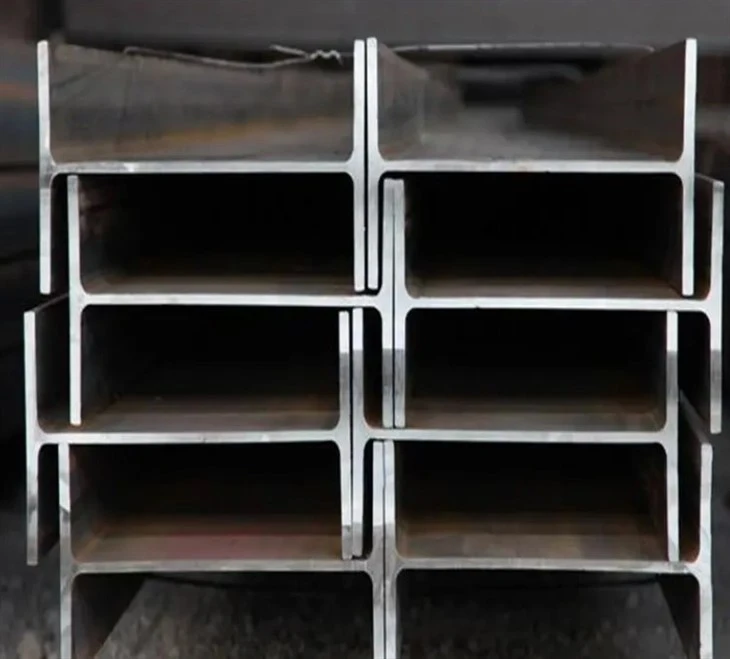
The Ipe 200 profile has a specific cross - sectional shape. It consists of two parallel flanges connected by a web. This design provides excellent resistance to bending and shear forces, making it suitable for a variety of applications, such as building frames, bridges, and industrial structures.
Factors Affecting the Load - Bearing Capacity
Several factors influence the load - bearing capacity of the Ipe 200 profile.
Material Properties
The quality and properties of the steel used in the Ipe 200 profile play a significant role. The most common type of steel for these profiles is carbon steel. Carbon steel offers good strength and ductility. The yield strength, ultimate tensile strength, and modulus of elasticity of the steel are important parameters. A higher yield strength means that the profile can withstand greater stress before it starts to deform permanently. For example, if the steel has a high yield strength, the Ipe 200 profile can support heavier loads without undergoing excessive plastic deformation.
Profile Dimensions
The dimensions of the Ipe 200 profile are precisely defined. The height, width of the flanges, and thickness of the flanges and web all affect its load - bearing capacity. A wider flange can distribute the load more evenly, increasing the profile's ability to resist bending. Similarly, a thicker web can enhance the shear - resistance of the profile.
Support Conditions
How the Ipe 200 profile is supported also impacts its load - bearing capacity. If the profile is simply supported at both ends, it will have a different load - bearing capacity compared to a profile that is fixed at both ends. Fixed - end supports provide more restraint against rotation, which can increase the bending - moment capacity of the profile. In a continuous beam system, where the Ipe 200 profile is part of a series of connected beams, the load - sharing between the beams also affects the overall load - bearing capacity of each individual profile.
Loading Conditions
The type of load applied to the Ipe 200 profile is another crucial factor. Loads can be classified as dead loads (the weight of the structure itself and any permanently attached components), live loads (temporary loads such as people, furniture, or vehicles), wind loads, and seismic loads. Different loading conditions require different design considerations. For example, a structure in a high - wind area will need to be designed to withstand the lateral forces exerted by the wind.
Calculating the Load - Bearing Capacity
To calculate the load - bearing capacity of the Ipe 200 profile, engineers typically use structural analysis methods and design codes.
Structural Analysis
Structural analysis involves using mathematical models to determine the internal forces (such as bending moments, shear forces, and axial forces) in the profile under different loading conditions. Finite element analysis (FEA) is a commonly used method in modern engineering. FEA software can simulate the behavior of the Ipe 200 profile under complex loading scenarios by dividing the profile into small elements and solving the equations of equilibrium for each element.
Design Codes
Design codes provide guidelines and standards for the design of steel structures. In Europe, the Eurocode standards are widely used. These codes specify the allowable stresses, safety factors, and design procedures for different types of steel profiles, including the Ipe 200. By following these codes, engineers can ensure that the structures built using Ipe 200 profiles are safe and reliable.
Applications of Ipe 200 Profile Based on Load - Bearing Capacity
Due to its load - bearing capacity, the Ipe 200 profile is used in a variety of applications.
Building Frames
In low - to medium - rise buildings, the Ipe 200 profile can be used as beams and columns in the building frame. As beams, they support the floor and roof loads, transferring them to the columns. The load - bearing capacity of the Ipe 200 profile allows it to span reasonable distances, reducing the need for excessive intermediate supports.
Bridges
For small - scale bridges, the Ipe 200 profile can be used as girders. The profile's ability to resist bending and shear forces makes it suitable for supporting the traffic loads on the bridge deck.
Industrial Structures
In industrial buildings, the Ipe 200 profile can be used in the construction of mezzanine floors, crane runways, and support structures for equipment. The load - bearing capacity of the profile ensures that it can handle the heavy loads associated with industrial operations.
Comparison with Other Profiles
When considering the load - bearing capacity, it is useful to compare the Ipe 200 profile with other similar profiles.
Carbon Steel H Beam
Carbon steel H beams are similar in shape to the Ipe 200 profile but may have different dimensions and material properties. Depending on the specific requirements of a project, a carbon steel H beam may offer a higher or lower load - bearing capacity. For example, a larger - sized carbon steel H beam may be able to support heavier loads than an Ipe 200 profile, but it may also be more expensive and heavier.
H Shaped Steel Column
H - shaped steel columns are designed primarily to carry axial loads. While the Ipe 200 profile can also carry axial loads, its design is more optimized for bending and shear. In a structure where the main load is axial, a dedicated H - shaped steel column may be a better choice. However, in situations where both bending and axial loads are present, the Ipe 200 profile can be a suitable option.
H Beam 300 X 300
The H Beam 300 X 300 is larger in size compared to the Ipe 200 profile. Generally, it has a higher load - bearing capacity due to its larger cross - sectional area. However, the choice between the two depends on the specific requirements of the project, such as the available space, the magnitude of the loads, and the cost - effectiveness.
Conclusion
The load - bearing capacity of the Ipe 200 profile is a complex topic that depends on multiple factors, including material properties, profile dimensions, support conditions, and loading conditions. As a supplier of Ipe 200 profiles, I understand the importance of providing high - quality products that meet the specific needs of different projects.
If you are involved in a construction or engineering project and are considering using Ipe 200 profiles, I encourage you to contact us for more detailed information. Our team of experts can assist you in determining the most suitable profiles for your project based on the load - bearing requirements. We can also provide technical support and guidance throughout the procurement process. Whether you need a small quantity for a DIY project or a large - scale supply for a commercial development, we are here to serve you.

References
- Eurocode 3: Design of steel structures - Part 1 - 1: General rules and rules for buildings.
- Structural Steel Design Handbook, various editions.
- Finite Element Analysis: Theory and Application with ANSYS, by J. N. Reddy.