


H Beam
What is H Beam?
A H beam, also known as an H-shaped beam or I-beam, is a structural steel beam with an H-shaped cross-section. It derives its name from its distinctive shape, which resembles the letter "H" when viewed in cross-section. H beams are widely used in construction and engineering projects due to their structural strength and versatility.
Why Choose Us?
Reliable Product Quality
To uphold our commitment to quality, we will:
● Assess and monitor our performance against the standard
● Document every quality issue in a non-conformance report (NCR)
● Report all externally created NCRs and the ratio of internally to externally generated NCRs
● Strive for continuous improvement
● Regularly seek feedback on our performance
Professional Technical Team
Our professional service team is at the heart of our operations. Comprising industry experts and dedicated personnel, our team ensures that every order, be it regular exports or project-specific, is handled with utmost care and efficiency. From order placement to delivery, our team provides comprehensive support, ensuring a smooth and hassle-free experience for our clients.
Competitive Price
Thanks to our consistent quality and competitive prices, we have earned the respect of clients worldwide. YM maintains stable and long-term working relationships with more than 80 countries and regions, including the United States, the Middle East, Southeast Asia, South America, and Africa.
Excellent Customer Service
YM Group always prioritizes "satisfying customers", organizing production, technology, quality, and sales personnel to engage with customers, develop the most suitable products, solve practical difficulties, and provide comprehensive, fast, and considerate services to users from pre-sales, sales, to after-sales.


Advantages of H Beam
Compared with the I-beam, the section modulus is large, and the bearing condition is the same at the same time, the metal can be saved by 10-15%.
In the case of the same beam height,the steel structure is 50% larger than the concrete structure, making the layout more flexible.
Compared with the concrete structure, the weight of the structure is light, the reduction of the weight of the structure, reduce the internal force of the structure design, can make the building structure foundation processing requirements are low, the construction is simple, the cost is reduced.
The hot rolled H-beam is the main steel structure, its structure is scientific and reasonable, good plasticity and flexibility, high structural stability, suitable for bearing vibration and impact load of large building structure, strong ability to resist natural disasters, especially suitable for some building structures in earthquake zones.
Compared with concrete structure, steel structure column section area is small, which can increase the effective use area of the building, depending on the different forms of the building, can increase the effective use area of 4-6%.
Compared with welding H-beam steel, it can significantly save labor and materials, reduce the consumption of raw materials, energy and labor, low residual stress, good appearance and surface quality
Easy to attach and install structurally, but also easy to remove and reuse.
The use of H-section steel can effectively protect the environment, which is reflected in three aspects: first, compared with concrete, it can use dry construction, resulting in less noise and less dust; Second, due to the weight reduction, less soil extraction for foundation construction, small damage to land resources, in addition to a large reduction in the amount of concrete, reduce the amount of rock excavation, conducive to the protection of ecological environment; Third, after the service life of the building structure expires, the amount of solid garbage generated after the structure is dismantled is small, and the recycling value of scrap steel resources is high.
The steel structure based on hot rolled H beam has a high degree of industrial production, which is convenient for machinery manufacturing, intensive production, high precision, easy installation, easy quality assurance, and can be built into a real house manufacturing factory, bridge manufacturing factory, industrial plant manufacturing factory, etc. The development of steel structure has created and driven the development of hundreds of new industries.
Small footprint, and suitable for all-weather construction, little influence by climate conditions. The construction speed of the steel structure made of hot rolled H beam is about 2-3 times that of the concrete structure, the capital turnover rate is doubled, the financial cost is reduced, so as to save investment.
Types of H Beam

H Shaped Steel
H Shaped Steel is a kind of steel beam that has a cross-section shape like the letter H. It is also called H-beam, H-section, or H-bar. H Sections is widely used in various fields, such as construction, bridge, shipbuilding, machinery, etc.
Galvanized Steel H Beam
Galvanized Steel H Beam is a type of steel beam that has been coated with a layer of zinc to prevent corrosion and rust. It is also known as hot-dip galvanized steel beam or zinc-coated steel beam. H Shaped Beam is widely used in various structures, such as buildings, bridges, towers, cranes, etc.
Galvanized H Beam
Galvanized H Beam is a kind of steel beam that has been hot dipped in a zinc rich galvanizing process to prevent corrosion and rust. It is also known as hot dip H Beam or HDG H beam, and has the advantages of high strength, low cost, easy installation and maintenance. H Beam is widely used in various fields, such as steel structure buildings, bridges, towers, supports, solar projects, agricultural and industrial facilities, etc.
Carbon Steel H Beam
Carbon Steel H Beam is a kind of economic section steel, which has a more optimized cross-sectional area distribution and a more reasonable strength-to-weight ratio. It is named because its section is the same as the English letter "H". It has many advantages, such as strong bending resistance, simple construction, cost saving and light weight in all directions.
Application of H Beam
Bridges
Beam bridges are simple structures that are supported by H-beams, depending on their load requirements. H-beams enable the weight to be distributed evenly throughout the beam, making them a better choice for the bridge, as the structure can now support more weight without any trouble.
Platforms
H-beams can be ideal when you're on a construction site and you're looking to give the structure greater durability and strength. When you're considering H-beam vs I-beam, consider your construction requirements. H-beams are more suitable when you're looking to build solid structures, like platforms.
Mezzanines
If you're planning to build various intermediate floors in a building, you need beams that can hold the weight without looking too unsightly. H-beams are perfect for this because they enable even weight distribution and ultimate functionality without ruining the aesthetics of the mezzanine floor from any angle.
Trailers
Any trailer model requires a solid structure so that it can remain durable throughout the years. Just as beams in a building help support the roof and other physical components, beams in a trailer help ensure its structural integrity long-term.
Commercial Buildings
When you're looking to ensure that the commercial building you're constructing can withstand higher load requirements without any problems, using heavier and sturdier H-beams can be an ideal option. H-beams can ensure that your customers are also satisfied with the quality of the building.
Skyscrapers
High-rise buildings require innovative and creative ways to be supported while ensuring that they don't lose their visual charm. When you're looking to create the ideal skyscraper without various, unsightly supporting structures, using H-beams within the structural foundation can be ideal.
Framing for Truck/Trailer Beds
Trucks need to handle a lot of volume and weight while transporting various goods across thousands of miles. Using H-beams to support these frames helps ensure that there are no accidents or adverse incidents that might otherwise occur when using weaker support beams.
Welding is another popular technique used for manufacturing such beams. The process involves combining two or more metal pieces using a welding machine. It is typically used for producing custom-sized beams or repairing damaged ones.
The welding process begins with the selection of raw materials, which are generally steel plates. The plates are then cut to the required size and shape using a plasma cutter or other cutting tool. The pieces are then welded together using a welding machine, which fuses the metal together to create a strong and durable bond.
Welding is a versatile technique that can be used to create beams of various sizes and shapes. However, the process can be time-consuming and expensive, especially for small-scale production runs.

What's the Difference Between an I Beam and H Beam?
Which One Weighs More?
An H-beam will typically have more weight than an I-beam (as well as greater length), which means that an H-beam can support heavier loads than its counterpart. That's not always what you're looking for in a steel beam, however. Different structures won't call for the use of H-beams because the extra weight on the wall can lead to structural problems. In cases where a beam's weight is a concern, an I-beam presents a better option due to its lightweight design.
Which One Is Stronger?
An I-beam can be perfect for supporting loads that cause local buckling. Local buckling means that an individual portion cannot support its weight load and as a result, it becomes unstable and poses a threat to the integrity of the project as a whole. Though I-beams can prevent local buckling, they will not be able to handle the same force as an H-beam due to their lighter design. Overall, the title of “Stronger Beam” goes to H-beams.
What About the Beveling?
H-beams have a bevel where three pieces of steel join and look like one piece of solid metal (when we're talking about high-quality, expertly-welded beams). I-beams do not have this type of bevel, as they're made from a single piece of steel. I-beams are not fabricated by riveting sheets or welding. Milling or rolling creates shorter top and bottom flanges on I-beams.
What Do the Flanges Look Like?
An H-beam has flanges at the top and bottom that extend further from the web than those of an I-beam. Though an I-beam also has top and bottom flanges, they're not as wide as an H-beam's flanges. They're also shorter than an H-beam's flanges. Shorter and thinner flanges might not sound desirable in plenty of situations, but again, the unique design of an I-beam gives it certain advantages over an H-beam.
What's the Span?
H-beams cover spans of up to 330 feet. I-beams cover spans that range from 33 to 100 feet. That said, a single H-beam will cover a great distance, while construction teams using I-beams will need to use at least three units to equal the distance an H-beam can cover.
What Does the Web Center Look Like?
An H-beam's central web has more thickness (usually equal to the length and thickness of the flanges), which means it has a sturdier construction. An I-beam's central web is taller than the flanges are wide, so it isn't as thick in the central web. This means that I-beams cannot handle the same amount of force as their counterpart.

Hot rolling is one of the most popular techniques employed for manufacturing a H beam. The process involves heating a metal billet and then passing it through a series of rollers to create the desired shape. The high temperature during hot rolling allows the metal to be easily shaped and formed.
In the hot rolling process, the metal billet undergoes a series of steps. First, it is heated above its recrystallization point to facilitate deformation. Subsequently, the billet is passed through multiple rollers that gradually reduce its thickness and mold it into the desired shape. Following this, the beam is allowed to cool and subsequently cut to the required length.
Hot rolling is a highly efficient process that can produce large quantities quickly and cost-effectively. The resulting beams have a smooth surface finish and excellent structural properties, making them ideal for use in construction projects.
A common question we get asked is the difference between an H-beam and a W-beam. Both steel members have a very similar cross-section with wide flanges that are almost the same length as the vertical web.
H-beams and W-beams have very similar structural properties. They have high torsional strength and are highly resistant to bending making them suitable for horizontal and vertical use as structural beams and columns.
The only difference is how they are manufactured.
W-beams are made by rolling molten steel through a series of caliber rolls that gradually create the H shape. After this first process, the beam is passed through a universal mill where horizontal and vertical rollers hold the beam in place and fine-tune the shape to adjust the flange width.
H-beams are built up from three rolled steel lengths – the two flanges and the web. These three lengths are held in place between horizontal and vertical rollers and are welded together along the length of the beam. This welded fabrication method improves the strength of an H-beam by up to 20% compared to a W-beam.

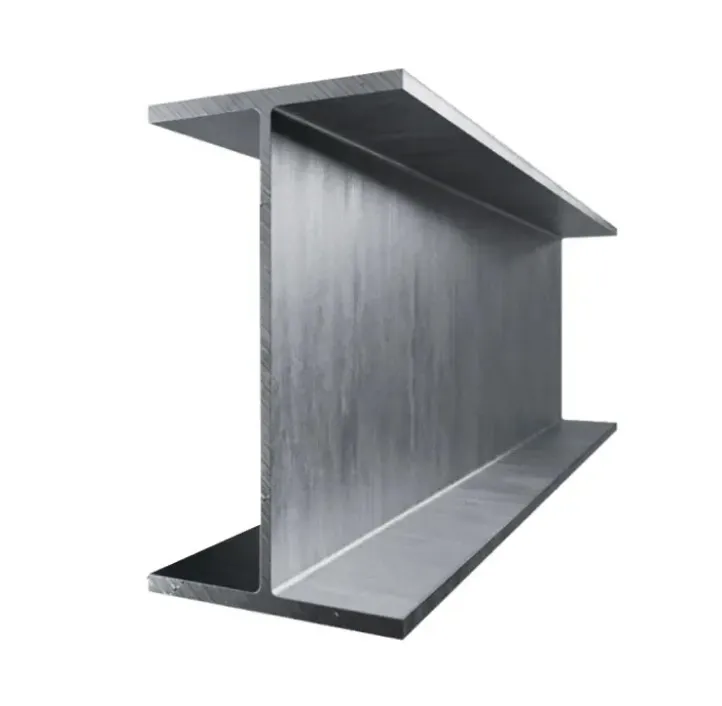
The selection of an appropriate H-Beam size for a specific construction project depends on various factors, including the anticipated load-bearing requirements, span length, and engineering calculations.
Structural engineers perform calculations to determine the suitable beam size based on factors such as bending moment, shear force, deflection, and load distribution.
It is crucial to consult with a qualified engineer or utilize appropriate structural design software to ensure the H-Beam size meets the project’s specific requirements.
Standardization plays a vital role in the construction industry as it facilitates efficiency, compatibility, and cost-effectiveness. By adhering to standardized sizes, architects, engineers, and construction professionals can plan and design structures more effectively.
Standard sizes of H-Beams ensure that they can be easily sourced, manufactured, transported, and assembled, eliminating the need for custom fabrication and reducing overall project costs.

H Beam Production Process Selection
The first production process is to use traditional steel ingot as raw material. First, the ingot is rolled into rectangular billets or billets on the blooming mill, and then these rectangular billets or billets are heated and sent to the billet cutter for rolling. There are two different pass systems, namely closed pass and open pass. In closed pass, the material deformation is uniform, but this requires more pass number and longer roll length, for this reason, closed pass is widely used in the production of medium section steel; The open pass is mainly used in the production of large section steel with larger waist width and leg width. If you want to use the closed pass rolling large section steel, you need two preforming machines in order to achieve satisfactory results in technology.
The second production process is to adopt continuous casting rectangular billet. The difference between it and the first production process is that no blooming mill is required, and the second process can produce H-beam steel with higher yield, better finished product quality and better economic benefits than the first process. The only limitation of this process is the wide leg of the H-beam steel produced, because the thickness of the billet used is limited by the equipment conditions of the continuous casting machine. The rolling process of continuous casting billet in the section steel plant is the same as the first kind.
The third production process is the use of continuous casting special-shaped billet. Its advantage is that the use of one or a small number of continuous casting special-shaped billets can produce the full size of H-beam steel, which can be achieved by using the wide spread method on the billet machine, and its pass can be closed or open. Compared with the first two processes, this production process has a smaller number of passes. The shortcoming of this process is limited by the leg width of the special-shaped billet. The rolling process after billet opening is the same as the first two methods, which needs to be formed by universal roughing mill and universal finishing mill.
The fourth production process is the use of continuous casting slab. It is more economical to produce H-beam steel by using continuous casting slab as raw material than by using primary rolling slab and continuous casting special-shaped slab, but it needs to design a special pass on the billet. This pass is similar to the pass of a rolled rail, which is a cut wedge with a certain Angle to roll the slab to form a shaped section similar to a “dog bone”. For this purpose, the slab is first rolled vertically in the first hole to form the desired leg width, and then rolled into the next shaped hole (open or closed holes can be) to resemble a “dog bone” shaped blank. This production process is more uniform than the first three kinds of deformation, and its advantage is that only one billet machine plus universal roughing mill and universal finishing mill can produce large H-beam steel. There is also a transformation process in the preforming machine, that is, the preforming machine uses a universal slab preforming machine, and the side pressure formed by the horizontal roll and the vertical roll at a certain Angle can be directly rolled out the shaped section of “dog bone”. The latter process is the same as the first process.
The fifth production process is to use a very thin waist thickness of continuous casting shaped billet as raw material. This thin continuous casting special-shaped billet is close to the finished H-shape steel size, so it can be roughed and finished directly on the universal unit, without the need for a billet machine. In this case, the direction of increasing production is to require the continuous casting machine to have a higher casting speed and can cast a thinner shaped section. Its rolling feature is that the deformation of the whole rolling process is more uniform.

H-Beams are available in a range of sizes, denoted by their depth (height), flange width, flange thickness, and web thickness.
The depth of an H-Beam is typically represented by its nominal size, followed by its weight per foot. For example, a “W8x10” H-Beam has a depth of 8 inches and weighs 10 pounds per foot.
Commonly used standard sizes include W4x13, W6x9, W8x18, W10x22, W12x30, and W14x38. The standard sizes may vary depending on regional and international specifications.
Selecting the Right Size H Beam for Your Project
When selecting the right size H-beam for your project, there are several factors to consider. Some of the most important factors include:
Load-Bearing Capacity
The load-bearing capacity of an H-beam is determined by its weight per meter, as well as its depth and width. Make sure to select an H-beam that can support the weight of your project.
Span Length
The span length of your project will also impact the size of the H-beam you need. Longer spans require larger beams to provide adequate support.
Height and Clearance
The height and clearance of your project will also impact the size of the H-beam you need. Make sure to select a beam that provides adequate clearance for your project requirements.
Cost
The cost of the H-beam you select will depend on the size and weight of the beam. Be sure to select a beam that fits within your budget.
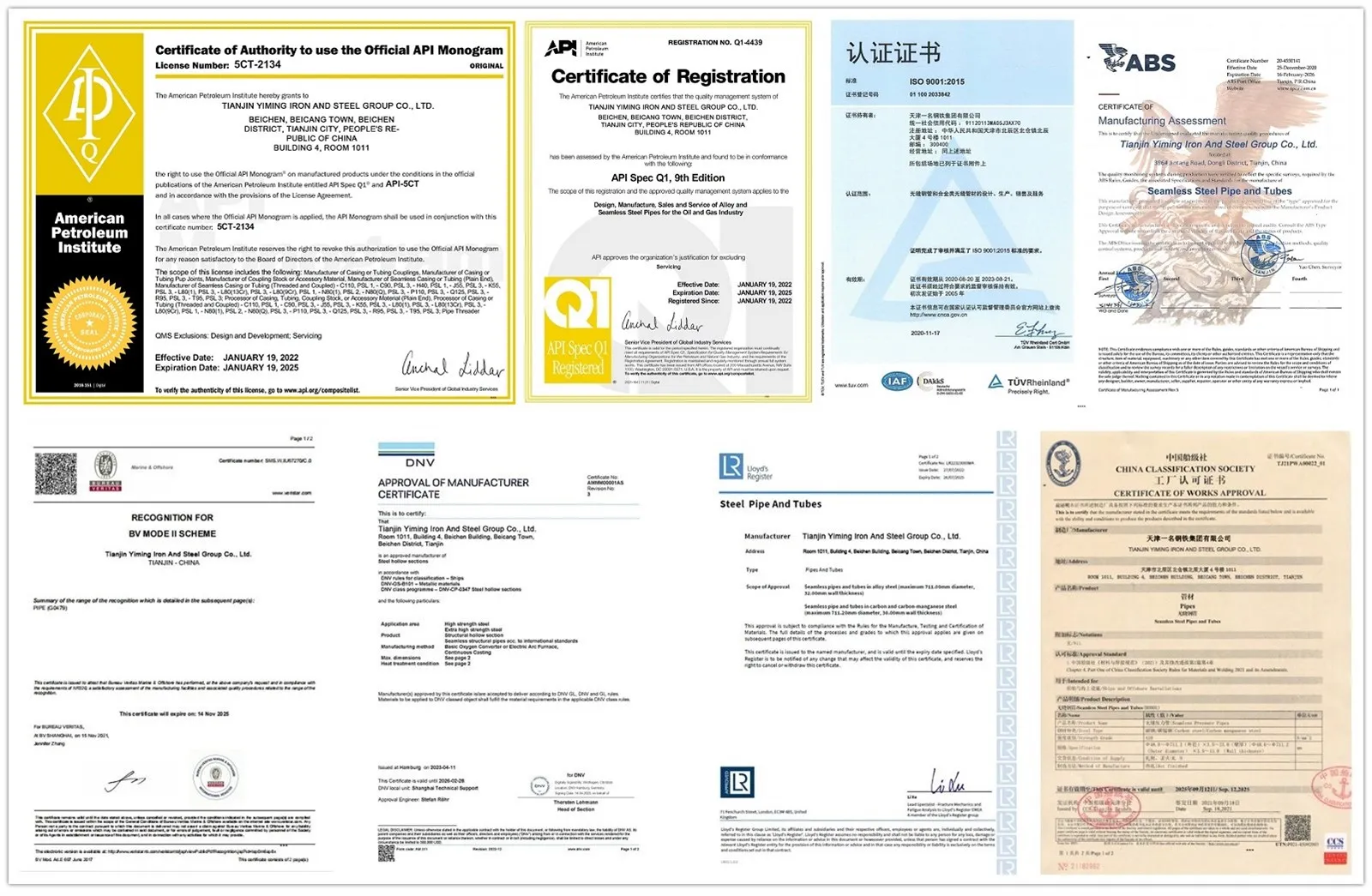
Certifications
Our Factory

Established in 2008, Tianjin Yiming Iron and Steel Group Co., Ltd (YM Group) has made a significant impact in the steel product industry. With an initial investment of 65 million RMB, our Tianjin City-based factory spans 50,000 square meters and holds ISO 9001/14001/18001 certifications. Our team comprises over 300 dedicated individuals, including more than 50 engineering technicians.
Ultimate FAQ Guide to H Beam
Q: Which is cheaper I-beam or H beam?
Q: Which is stronger an I-beam or an H beam?
Q: What is the strongest steel beam shape?
Q: What is the strongest beam design?
Q: What is the strongest steel section?
Q: What is the strongest beam support?
Q: What is the standard size of H-beam?
Q: What are better H-beam or I-beam connecting rods?
Q: Are H beams welded?
Q: Why are H beams so strong?
Q: What is the most efficient beam?
Q: What does an H-beam look like?
Q: How do you strengthen steel beams?
Q: What is the difference between H-beam and box beam?
Q: Which is cheaper I-beam or H beam?
Q: What is a steel H-beam called?
Q: Where is a beam most likely to fail?
Q: What are the benefits of H beams?
Q: Which is cheaper I-beam or H-beam?
Q: What is another name for the H-beam?