


Square Tube
What is Square Tube?
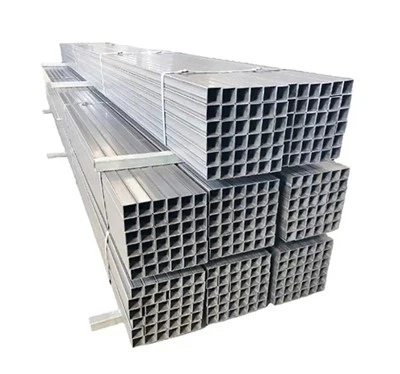
Square tube is tubing that is manufactured using welding. This kind of tubing is of structural grade. It comes in either type A513 or A500 Grade B. The different kinds of steel tube are determined by the size and how thick the tube’s wall is. Regardless of the grade, steel tubing is used for a variety of purposes. Typical uses of square tube include construction and structural uses. It is also used for a wide variety of manufacturing and fabrication applications. You can find square steel tubes in vehicles, trailers, agricultural and transport equipment, and much more. The square shape of this steel tubing is ideal for many different reasons. It offers strength that channeled or angled tubing does not. It is also more rigid than channeled or angled tubing too. Square tube is also versatile. Manufacturers like to use it because it is easy to cut and weld into new applications.
Why Choose Us?
Reliable Product Quality
To uphold our commitment to quality, we will:
● Assess and monitor our performance against the standard
● Document every quality issue in a non-conformance report (NCR)
● Report all externally created NCRs and the ratio of internally to externally generated NCRs
● Strive for continuous improvement
● Regularly seek feedback on our performance
Professional Technical Team
Our professional service team is at the heart of our operations. Comprising industry experts and dedicated personnel, our team ensures that every order, be it regular exports or project-specific, is handled with utmost care and efficiency. From order placement to delivery, our team provides comprehensive support, ensuring a smooth and hassle-free experience for our clients.
Competitive Price
Thanks to our consistent quality and competitive prices, we have earned the respect of clients worldwide. YM maintains stable and long-term working relationships with more than 80 countries and regions, including the United States, the Middle East, Southeast Asia, South America, and Africa.
Excellent Customer Service
YM Group always prioritizes "satisfying customers", organizing production, technology, quality, and sales personnel to engage with customers, develop the most suitable products, solve practical difficulties, and provide comprehensive, fast, and considerate services to users from pre-sales, sales, to after-sales.



Advantages of Square Tube
Light weight
Compared with other building materials, square tubes are lighter in weight, easy to transport and install, and reduce the load-bearing requirements of the building.
High strength
Square tubes are produced from high-quality cold-rolled steel plates, which have high strength and toughness and can withstand large loads and forces.
Low cost
Compared with other metal materials, the cost of square tubes is relatively low, and production tasks can be completed while saving costs.
Strong anti-corrosion ability
The surface of square pipes can be treated in various ways, such as coating and spray painting, to improve its anti-corrosion ability.
Material of Square Tube

Carbon structural steel
Carbon structural steel is one of the most commonly used square tube materials at present. Its main component is carbon and a small amount of other elements. The advantages of this material are high strength, good toughness, easy processing, and relatively low cost. It is widely used in construction, machinery, automobiles and other fields. However, carbon structural steel also has shortcomings. It is easily corroded and oxidized and requires frequent protective treatment.
Low alloy high strength steel
Low-alloy high-strength steel is a new type of square tube material that is widely used for its high strength, corrosion resistance, heat resistance, fatigue resistance and other characteristics. Among them, the more common steel types include Q345B, 16Mn and other steel types, which are mainly used in bridges, ships, pipelines and other fields. Common standards include ASTM A500.
Stainless steel
Stainless steel is a square tube material with excellent corrosion resistance. Its main components are chromium and nickel. It is characterized by being non-rusting, non-corrosive and non-deformable, and is widely used in construction, medical, food and other industries that require high hygiene, high temperature resistance and corrosion resistance.
Aluminum alloy
Aluminum alloy square tube has the characteristics of light weight, high strength and good corrosion resistance. It is a material widely used in various fields. In addition, aluminum alloy square tubes also have the advantages of wear resistance and good electrical conductivity, and are widely used in light industry, high-end construction and other fields.
Types of Square Tube
Steel Square Tubes
Steel square tubes are among the most popular and widely used. They are available in various grades and types, including carbon steel and stainless steel. Carbon steel square tubes are known for their high strength and durability and are commonly used in structural applications. Stainless steel square tubes offer corrosion resistance and are ideal for applications where exposure to moisture or corrosive substances is a concern. They are used in frames, roll cages, truck racks, trailers, and railings.
Aluminum Square Tubes
Aluminum square tubes are lightweight, corrosion-resistant, and have good strength-to-weight ratios. They are often used in applications where weight is a critical factor, such as in the aerospace and automotive industries. Aluminum square tubes are also used in architectural and decorative projects due to their aesthetic appeal and resistance to corrosion. They are frequently used in frameworks, support columns, gates, fencing, and handrails.
Copper Square Tubes
Copper square tubes are known for their excellent electrical conductivity and thermal conductivity. They are commonly used in electrical and plumbing applications. Copper’s natural antimicrobial properties make it suitable for applications where hygiene is essential, such as in medical equipment and plumbing systems.
Brass Square Tubes
Brass square tubes are a combination of copper and zinc and offer good corrosion resistance, electrical conductivity, and an attractive golden appearance. They are often used in decorative applications, musical instruments, and plumbing fittings.
Bronze Square Tubes
Bronze square tubes, composed primarily of copper and tin, are known for their durability, corrosion resistance, and attractive appearance. They are commonly used in marine applications, art and sculpture, and historical restoration projects.
Plastic Square Tubes
Plastic square tubes are lightweight, corrosion-resistant, and often used in applications where electrical insulation is required. Materials like PVC (polyvinyl chloride) and HDPE (high-density polyethylene) are common choices for plastic square tubing.
Fiberglass Square Tubes
Fiberglass square tubes are lightweight, non-conductive, and resistant to corrosion. They find applications in industries like construction, aerospace, and marine, where a combination of strength and corrosion resistance is needed.
Carbon Fiber Square Tubes
Carbon fiber square tubes are exceptionally lightweight and have high tensile strength. They are commonly used in aerospace, automotive, and sports equipment industries where weight reduction and strength are critical.
Titanium Square Tubes
Titanium square tubes are known for their high strength-to-weight ratio, corrosion resistance, and biocompatibility. They are often used in aerospace, medical, and marine applications.
Application of Square Tube

Columns
Square tubes are structural steel or metal products that can be used to form a network of building columns. This is one of its most suitable uses because square tubes are capable of bearing different loads, despite the material variation. Contrary to popular belief, the hollow form of the square tubing is still capable of supporting such loads. It may even be more preferable than other similar building materials that are solid in shape, primarily due to the tube's lightweight. This provides the tubes with an excellent strength-to-weight ratio that rivals pure concrete, wood, or PVC.
Fencing
Square tubes are also ideal for fencing structures, be it residential or agricultural. For agriculture, square tube fencing can provide a safe enclosure to house and protect farm equipment, machinery, harvests, and livestock. In modern residential homes, the square tube is a viable building material option for backyards, separated spaces, and even garden areas. Machinable square tubes can be shaped and cut in different sizes to build a fence structure that satisfies individual preferences. Compared to other fencing materials, square tubes are more practical because they do not rust. This is true especially for galvanized steel grades or coated steel tubes that provide protective enhancement for the materials' surface.


Entry Gates
Similarly, square tubes make the perfect option for residential entry gates. Homeowners looking to complete their ultramodern or contemporary home will definitely want the appeal and finish that the sleek square tube provides, not to mention its functionality. Generally, any residential gate will improve the security of the property, but square tubing takes this up a notch by adding a design element. For example, cold-formed square tubes are highly ductile and malleable, allowing them to be modified in different designs. They can also be fitted with other modern home solutions, such as automatic gate openers, turnstiles (for commercial buildings), and even access control.
Railing
Another structural use for the square tubes is railings that can be found in almost any kind of building. While basic designs of square tube railings are popular, coming up with other designs like a craftsman, sawn baluster, fan, or sunburst is also feasible with this material.
Different building constructions will benefit from metal railings. In the logistics industry, for example, railings can become a low-cost option for barebones mezzanines built to increase storage space and warehouse value. Meanwhile, factories and manufacturing plants have also been using metal tube railings for many years now. They're affordable, easy to set up, and are widely manufactured by steel suppliers, alongside other useful metal products.


Decorative Dividers
Typical dividers or wall partitions are mainly installed as ornaments, but they do have a few key functions as well. Well-built square tube dividers, for example, help in separating spaces in a given building interior. They also complement well with other elements, like metal wall cladding, roofing, or industrial ceilings.
If you're ever planning on setting up dividers for your space, you can't go wrong with choosing square tubing over wood or synthetic materials. Metal dividers hold exceptionally well under extreme environments, be it excessive moisture or heat. In addition, they need only be coated once — either with zinc, powder coating, or sandblasting — with little-to-no maintenance required. Compare this with wooden dividers which are expensive to maintain and may need staining from time to time.
Characteristics of Square Tubes
Square tubes or square tubing, possess several distinct characteristics that make them a popular choice in various applications. Here are the key characteristics of square tubes:
Square Cross-Section: The uniform, square-shaped cross-section sets square tubes apart from other types of tubing, such as round or rectangular tubes, and provides specific advantages.
Uniform Sides: Square tubes have four equal-length sides and 90-degree angles between adjacent sides. This uniformity in shape simplifies design and construction processes.
Variety of Sizes: Square tubes come in a wide range of sizes, typically measured by their outer dimensions. Common sizes range from small, such as 1/2 inch by 1/2 inch, to larger sizes like 24 inches by 24 inches, providing flexibility in design and use.
Strength and Load-Bearing Capacity: Square tubes are known for their high strength-to-weight ratio. The square shape distributes loads evenly across all sides, making them suitable for bearing heavy loads and resisting torsional forces. This property is valuable in structural and load-bearing applications.
Stiffness: Square tubes offer excellent stiffness and rigidity, which is important for maintaining the structural integrity of a design. This stiffness helps prevent sagging or deformation under heavy loads.
Ease of Fabrication: Square tubes are relatively easy to cut, weld, and machine, making them versatile and adaptable for various projects. This ease of fabrication simplifies the manufacturing process.
Durability: Depending on the material used, square tubes can exhibit high durability and resistance to wear and tear. For example, stainless steel or aluminum square tubes are often chosen for their corrosion resistance, making them suitable for outdoor and marine applications.
Versatility: Square tubes find applications in a wide range of industries, including construction, manufacturing, transportation, furniture design, architectural detailing, and DIY projects. Their versatility makes them a valuable choice for different purposes.
Aesthetic Appeal: The clean lines and modern appearance of square tubes make them popular in architectural and design contexts.
Customization: Square tubes can be easily customized to meet specific project requirements. This includes variations in size, thickness, material, and finishes.

To determine the answer to the question, how strong is square tube, it’s important to consider how much weight it can hold. In steel tubing, the strength rating of the tube is measure by weight per foot.
This standard measurement is useful if you need to compare different manufacturers or products. The standard measure also lets you know if the steel tubing you are considering will meet your structural needs. Square steel tubing comes in a variety of different sizes. There are also two standard thicknesses of the steel itself.
Let’s look at a couple of standard sizes of square steel tube to see how strong it is. A 2-inch x 2-inch piece of square steel tube with a wall thickness of 0.1875 inches can carry 4.32 lbs per foot of length. A 4-inch x 4-inch piece of square steel tube with a wall thickness of 0.25 inches can carry 5.41 lbs per foot of length.
As square steel tube gets bigger, the wall thickness also increases. So, for example, at 8-inches x 8-inches, you can choose from a wall thickness of 0.25, 0.375, 0.5, and 0.625 inches. At 16-inches x 16-inches, which is one the largest square steel tubing sizes available, the wall thickness is either 0.3125, 0.375, or 0.5 inches.
As you might imagine, the tubing’s larger dimensions and thicker walls allow for greater load-bearing capacities. So, a 16-inch x 16-inch square tube with a wall of 0.5 inches can carry 103.3 lbs per foot. Square steel tubing is plenty strong enough for many construction and manufacturing uses. It is also strong enough for significant weight-bearing uses in vehicles and much more.
Specification of Square Tubes
When specifying square tubing for a project, it's essential to provide detailed information to ensure that you receive the right material that meets your specific requirements. Here's a step-by-step guide on how to specify square tubing:
Material Type
Start by specifying the type of material you need for your square tubing. Common materials include steel, aluminum, stainless steel, copper, brass, bronze, plastics (e.g., PVC, HDPE), fiberglass, carbon fiber, and titanium.
Material Grade or Alloy
If applicable, specify the grade or alloy of the material. For example, if you're using steel, you might need to specify the grade (e.g., ASTM A500 Grade B for structural steel).
Dimensions
Specify the outer dimensions (size) of the square tubing, including the width and height of the square cross-section. For example, if you need a 2-inch by 2-inch square tube, make sure to provide these measurements.
Wall Thickness
Indicate the desired wall thickness of the square tubing. Wall thickness is a critical factor in determining the strength and load-bearing capacity of the tubing.
Length
Specify the required length of each piece of square tubing. Be clear about whether you need standard lengths or custom-cut pieces to specific dimensions.
Quantity
Clearly state the quantity of square tubing you need for your project. This helps the supplier provide an accurate quote and ensure that you receive the correct amount.
Tolerances
Specify any tolerance requirements for the dimensions of the square tubing. Tolerances are typically given as a range of acceptable deviations from the specified dimensions.
Surface Finish
If a specific surface finish or treatment is required (e.g., polished, galvanized, painted), include this information in your specifications.
Protective Coatings
Depending on the material and application, mention protective coating or finish requirements to enhance corrosion resistance and longevity.
Tips For Welding Square Tube


Welding square tube successfully can be accomplished in the same manner in which any other material is welded. On a standard 45 degree corner, you will use one fillet weld, one corner weld and two flat welds. There is no preparation work required on the two areas where the corner and fillet welds will be placed other than removing any rust, dirt or debris that may be in the weld area. Before performing the two flat welds you will need to clean and bevel the metal being used. The use of a bevel on the flat welds will ensure that you achieve proper penetration on both pieces of the square tubing being welded.
To begin the welding process you will need to cut two pieces of square tubing ensuring that both pieces have one 45 degree angled end. To do this you will want to set your band saw on a 45 degree miter cut. Once you have properly set your band saw you will need to clamp the square tubing into the band saw vise. After both of your pieces of square tubing have been mitered you should now use your grinder with a 4-inch hard grinding wheel to remove any burr from all four sides of each piece of tubing that you cut. Once this has been done you should now bevel each side of the square tubing that has been cut to a 45 degree angle.
After you have finished mitering the square tubing you should now place the two pieces of square tubing on your flat work area with the miter cuts facing each other. Bringing the mitered sides of the square tubing together you should leave a 1/16 space between both pieces. Next you will need to place a framing square at the corner that you created by joining the two pieces of tubing together at 90 degrees. Once the framing square has been put in place you are now ready to power on your welding machine. You should also take this time to also put on all of your welding safety gear. Once you are properly attired you can now begin welding using a tack weld on the inside point of the mitered corners at the fillet weld. While welding the tubing together you should continuously check the corner against the framing square to ensure that your corner is still at 90 degrees. Now you should place a tack weld on the back of the mitered corner and another tack weld on the flat surface of the square tubing that has the 45 degree cut on it. After you have successfully placed these tack welds you should now flip the piece over and perform the same tack welds on the back.
After the tack welds have been completed the next step is to weld the rear corner of square tubing first. To do this you should place your MIG gun at the top of the corner and press the trigger, dragging the weld puddle downhill to perform the weld. Once this has been completed you will now want to spin the two pieces of square tubing and perform the fillet weld on the inside of the corner starting the weld at the top and dragging the weld downhill while moving the MIG gun in a circular pattern to stitch the weld evenly between both pieces of the square tubing. The 45 degree miter cut should be welded flat by starting the weld at the inside corner and working the weld to the outside corner of the mitered joint. After this step has been completed you should now flip the tubing over and weld the final flat 45 degree cut side. Once you have completed all of the welding you can now grind the corners and have a perfect 90 degree bend in the square tubing.
The weight of a square tube depends on multiple factors, primarily the dimensions—specifically, the width, height, and thickness of the tube walls. Thicker walls typically contribute to increased weight, while larger dimensions overall result in a heavier tube. Additionally, the type and grade of stainless steel used also impact the weight, as different alloys possess varying densities.
Factors such as these may have an impact on the total weight of the tubing:
● Investment Casting: When the tube is cast using investment casting, the weight may be heavier due to the thickness of the walls.
● Galvanized Coating: Galvanized coating can add a layer of protection to the tube, which will add weight.
● Stress testing of the tubing is also essential to ensure it can withstand the weight of the items it must support.

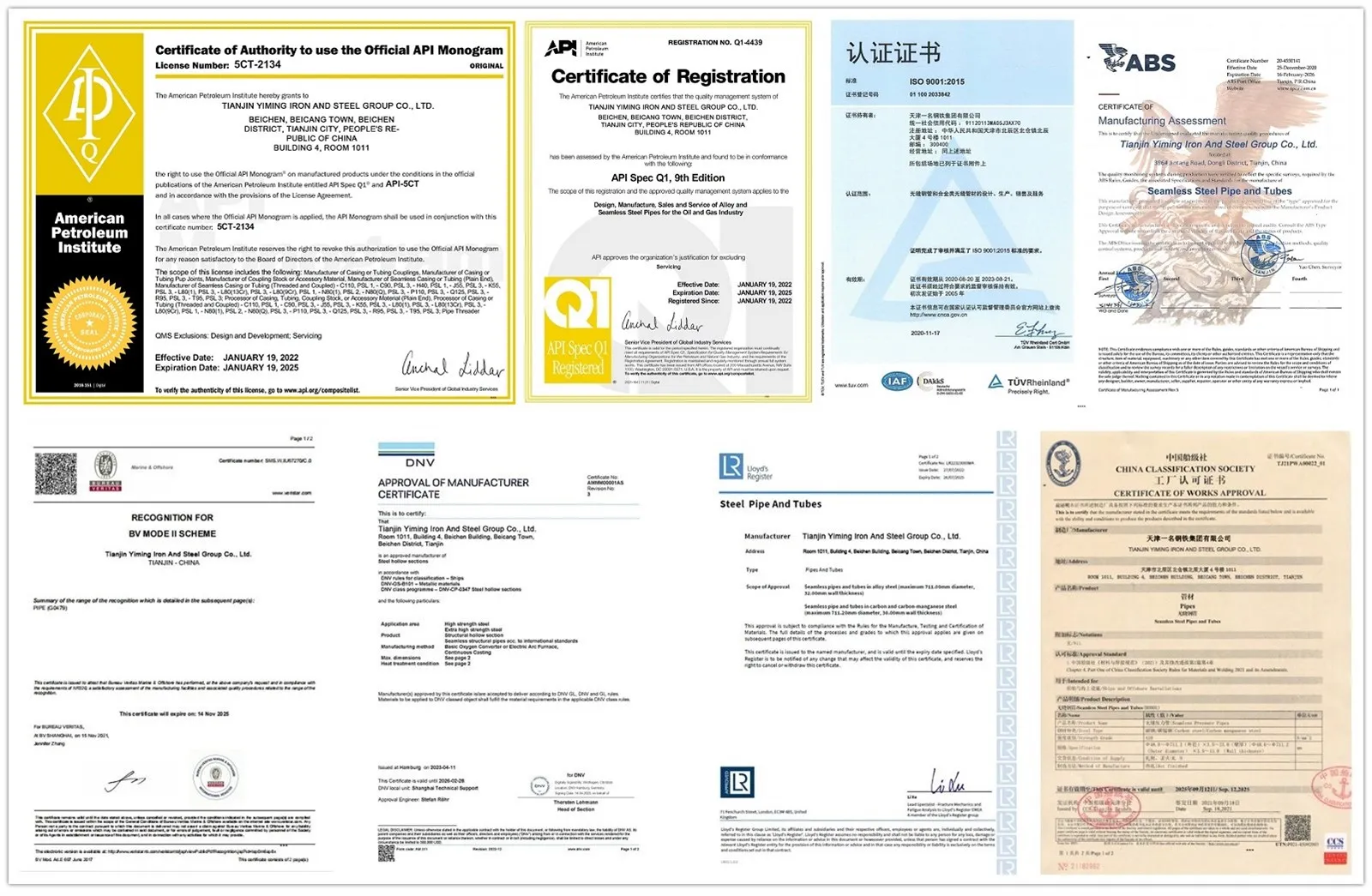
Certifications
Our Factory

Established in 2008, Tianjin Yiming Iron and Steel Group Co., Ltd (YM Group) has made a significant impact in the steel product industry. With an initial investment of 65 million RMB, our Tianjin City-based factory spans 50,000 square meters and holds ISO 9001/14001/18001 certifications. Our team comprises over 300 dedicated individuals, including more than 50 engineering technicians.
Ultimate FAQ Guide to Square Tube
Q: What do you use square tubing for?
Q: What's stronger round or square tubing?
Q: How much weight can 2 inch square tubing hold?
Q: What is stronger square tubing or I beam?
Q: Can square tubing be bent?
Q: Will a pipe bender bend square tubing?
Q: Is square tube stronger than angle iron?
Q: Is square tubing stronger than rectangular tubing?
Q: What grade of steel is square tubing?
Q: What is the strongest type of tubing?
Q: What is square tubing called?
Q: What tubing should not be assembled in straight line?
Q: Can square tubing fit inside each other?
Q: How do you straighten square tubing?
Q: How do you bend tubing without kinking?
Q: What is stronger square tubing or I beam?
Q: Can you bend square tubing?
Q: What is the purpose of square tubing?
Q: What is the strongest tube shape?
Q: Which class of tubing should compression fittings not be used with?