What is the torsional strength of equal angle bars?
As a supplier of equal angle bars, I often encounter inquiries about the torsional strength of these versatile structural components. Torsional strength is a crucial property that determines how well an equal angle bar can withstand twisting forces without experiencing failure. In this blog post, I will delve into the concept of torsional strength, explain its significance in various applications, and discuss the factors that influence the torsional strength of equal angle bars.
Understanding Torsional Strength
Torsional strength refers to the maximum amount of torque or twisting force that a material or component can withstand before it begins to deform or break. When a torque is applied to an equal angle bar, it causes the bar to twist around its longitudinal axis. The torsional strength of the bar is determined by its ability to resist this twisting motion and maintain its structural integrity.
In engineering terms, torsional strength is typically measured in units of force per unit area, such as pounds per square inch (psi) or megapascals (MPa). The torsional strength of an equal angle bar depends on several factors, including its material properties, cross-sectional shape, dimensions, and the way it is supported and loaded.

Significance of Torsional Strength in Applications
The torsional strength of equal angle bars is of great importance in a wide range of applications, especially those where the bars are subjected to twisting forces. Some common examples include:
- Structural Engineering: In building construction, equal angle bars are often used as structural members to provide support and stability. They are commonly used in frameworks, trusses, and bracing systems, where they may be subjected to torsional forces due to wind loads, seismic activity, or other external factors. A high torsional strength ensures that the angle bars can withstand these forces without failing, thereby maintaining the structural integrity of the building.
- Mechanical Engineering: Equal angle bars are also widely used in mechanical engineering applications, such as machinery frames, conveyor systems, and automotive components. In these applications, the bars may be subjected to torsional forces during operation, such as when a machine is starting or stopping, or when a vehicle is turning. A sufficient torsional strength is essential to prevent the bars from deforming or breaking, which could lead to equipment failure and safety hazards.
- Marine Engineering: In the marine industry, equal angle bars are used in the construction of ships, boats, and offshore structures. They are often exposed to harsh environmental conditions, including waves, wind, and corrosion, which can subject the bars to significant torsional forces. A high torsional strength is necessary to ensure the durability and reliability of the marine structures, as well as the safety of the crew and passengers.
Factors Influencing Torsional Strength
The torsional strength of equal angle bars is influenced by several factors, which can be broadly categorized into material properties, cross-sectional shape, and dimensions.
- Material Properties: The material from which the equal angle bar is made plays a significant role in determining its torsional strength. Different materials have different mechanical properties, such as yield strength, ultimate strength, and modulus of elasticity, which affect their ability to resist torsional forces. For example, steel is a commonly used material for equal angle bars due to its high strength and good ductility. However, the torsional strength of steel can vary depending on its composition, heat treatment, and manufacturing process.
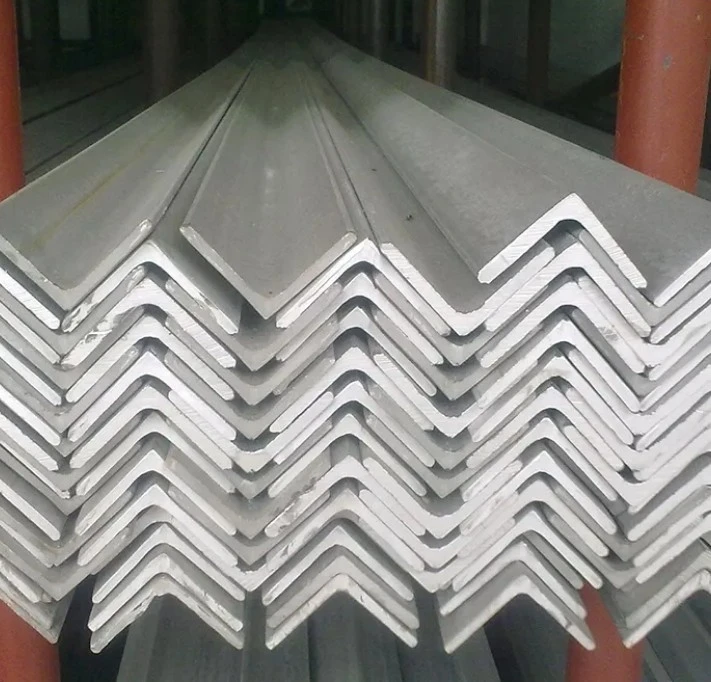
- Cross-sectional Shape: The cross-sectional shape of the equal angle bar also affects its torsional strength. Equal angle bars have a L-shaped cross-section, which provides some resistance to torsional forces. However, the torsional strength can be further enhanced by using bars with a larger cross-sectional area or a more efficient shape. For example, bars with a thicker leg or a wider flange can provide greater torsional resistance than bars with a thinner leg or a narrower flange.
- Dimensions: The dimensions of the equal angle bar, such as its length, width, and thickness, also have an impact on its torsional strength. Generally, longer bars are more susceptible to torsional failure than shorter bars, as they have a greater length over which the twisting forces can act. Similarly, bars with a smaller cross-sectional area or a thinner thickness are more likely to fail under torsional loads than bars with a larger cross-sectional area or a thicker thickness.
Calculating Torsional Strength
The torsional strength of an equal angle bar can be calculated using various methods, depending on the complexity of the problem and the available information. One of the most common methods is to use the torsion formula, which relates the torsional stress in the bar to the applied torque and the polar moment of inertia of the cross-section.
The torsion formula is given by:
τ = T * r / J
where τ is the torsional stress, T is the applied torque, r is the distance from the center of the cross-section to the outer fiber, and J is the polar moment of inertia of the cross-section.
The polar moment of inertia is a measure of the resistance of the cross-section to torsional deformation. It depends on the shape and dimensions of the cross-section and can be calculated using the appropriate formula for the specific shape.
For an equal angle bar with a L-shaped cross-section, the polar moment of inertia can be calculated using the following formula:
J = (b * h^3 + h * b^3) / 12
where b is the width of the leg and h is the height of the leg.
Once the torsional stress is calculated, it can be compared to the allowable torsional stress of the material to determine whether the bar can withstand the applied torque without failing. The allowable torsional stress is typically determined based on the material properties and the safety factor required for the specific application.
Improving Torsional Strength
There are several ways to improve the torsional strength of equal angle bars, depending on the specific requirements of the application. Some common methods include:
- Using Higher-Strength Materials: One of the most effective ways to improve the torsional strength of equal angle bars is to use higher-strength materials. For example, using a steel with a higher yield strength or ultimate strength can significantly increase the torsional resistance of the bar. However, it is important to note that higher-strength materials may also be more expensive and may require special handling and processing.
- Optimizing the Cross-sectional Shape: Another way to improve the torsional strength of equal angle bars is to optimize the cross-sectional shape. This can be done by increasing the thickness of the leg or the width of the flange, or by using a more efficient shape, such as a hollow section or a box section. However, it is important to ensure that the optimized cross-sectional shape does not compromise the other properties of the bar, such as its weight, cost, or ease of fabrication.
- Providing Adequate Support and Bracing: In some cases, the torsional strength of equal angle bars can be improved by providing adequate support and bracing. This can help to reduce the length of the bar over which the twisting forces can act, thereby reducing the torsional stress. For example, using intermediate supports or braces at regular intervals along the length of the bar can help to prevent excessive twisting and deformation.
Conclusion
In conclusion, the torsional strength of equal angle bars is a crucial property that determines their ability to withstand twisting forces without experiencing failure. It is of great importance in a wide range of applications, especially those where the bars are subjected to torsional loads. The torsional strength of equal angle bars is influenced by several factors, including material properties, cross-sectional shape, and dimensions. By understanding these factors and taking appropriate measures to improve the torsional strength, such as using higher-strength materials, optimizing the cross-sectional shape, and providing adequate support and bracing, we can ensure the reliability and durability of equal angle bars in various applications.
If you are interested in purchasing equal angle bars for your project, we offer a wide range of A36 Angle Bar, Galvanised Angle Bar, and Right Angle Bar. Our products are made from high-quality materials and are manufactured to meet the highest standards of quality and performance. We are committed to providing our customers with the best products and services, and we would be happy to discuss your specific requirements and help you find the right equal angle bars for your application. Please feel free to contact us for more information or to request a quote.
References
- Budynas, R. G., & Nisbett, J. K. (2011). Shigley's Mechanical Engineering Design. McGraw-Hill.
- Young, W. C., & Budynas, R. G. (2002). Roark's Formulas for Stress and Strain. McGraw-Hill.
- Timoshenko, S. P., & Goodier, J. N. (1970). Theory of Elasticity. McGraw-Hill.