Hey there! As a supplier of H Beam Ss400, I often get asked about the surface roughness of these beams. In this blog post, I'm gonna break down what surface roughness is, why it matters for H Beam Ss400, and how it can impact your projects.
First off, let's talk about what surface roughness actually means. Surface roughness is a measure of the texture of a surface. It refers to the microscopic irregularities on the surface of a material. These irregularities can be caused by a variety of factors, such as the manufacturing process, the type of material, and any post - processing treatments.
When it comes to H Beam Ss400, the surface roughness can have several implications. For starters, it can affect the beam's corrosion resistance. A rough surface has more crevices and pits where moisture and corrosive agents can accumulate. Over time, this can lead to rust and corrosion, which can weaken the beam and reduce its lifespan.
On the other hand, a smoother surface is less likely to trap moisture and is generally more resistant to corrosion. This is especially important if the H Beam Ss400 is going to be used in outdoor or high - humidity environments.
Another aspect where surface roughness plays a role is in the beam's mechanical properties. In some cases, a slightly rough surface can improve the bonding strength when the beam is used in a welded or bolted connection. The irregularities on the surface can provide more contact area for the welding material or the bolts, enhancing the overall strength of the joint.
However, if the surface is too rough, it can also cause stress concentrations. These stress concentrations can lead to premature failure of the beam under load. So, finding the right balance in surface roughness is crucial.
Now, let's get into the manufacturing process of H Beam Ss400 and how it affects surface roughness. H Beam Ss400 is typically produced through hot - rolling. During the hot - rolling process, the steel is heated to a high temperature and passed through a series of rollers to shape it into the desired H - beam profile.
The hot - rolling process can leave some surface irregularities on the beam. The temperature, the speed of the rollers, and the quality of the steel can all influence the final surface roughness. After hot - rolling, some beams may undergo additional processes like shot - blasting or grinding to improve the surface finish.

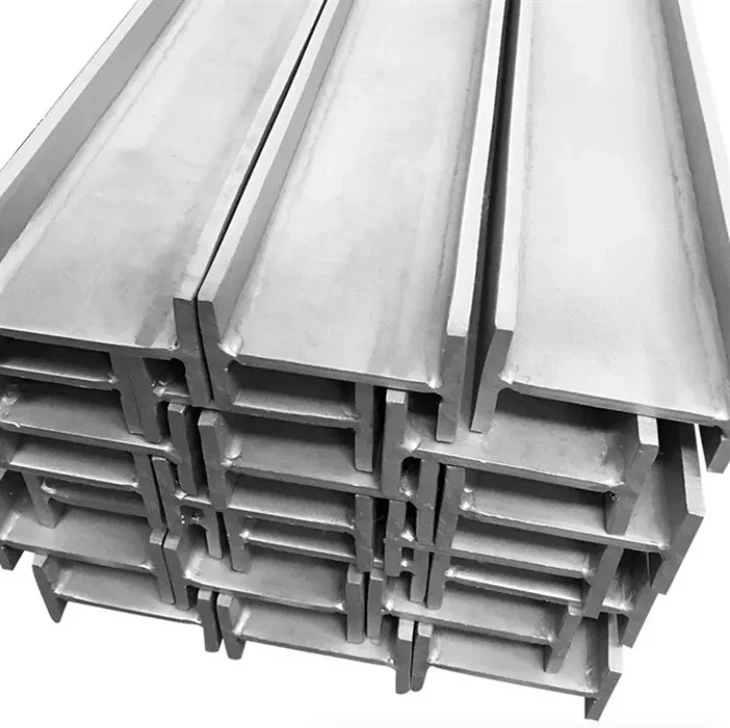
Shot - blasting involves propelling small steel shots at high speed onto the surface of the beam. This helps to remove any scale, rust, or contaminants and can also smooth out the surface to some extent. Grinding, on the other hand, uses abrasive wheels to physically remove material from the surface, resulting in a smoother finish.
As a supplier, I understand that different customers have different requirements for surface roughness. Some may need a very smooth surface for aesthetic reasons, while others may prioritize a surface that provides good bonding strength. That's why we offer a range of surface finishes for our H Beam Ss400.
If you're in the market for H Beam Ss400, you might also be interested in other types of steel beams. For example, the A572 A992 Steel H Beam is a popular choice for many construction projects. It has different mechanical properties and may have different surface roughness characteristics compared to H Beam Ss400.
Another option is the Ipe 200 Profile. This profile is commonly used in building structures and can be a great alternative depending on your specific needs. And if you're looking for a different shape, the Profil Upn 100 might be worth considering.
When it comes to measuring the surface roughness of H Beam Ss400, there are several methods available. One of the most common methods is using a profilometer. A profilometer measures the height variations of the surface along a specified line. It can provide detailed information about the surface roughness parameters, such as the average roughness (Ra), the maximum peak - to - valley height (Rz), and others.
We use advanced profilometers in our quality control process to ensure that our H Beam Ss400 meets the required surface roughness standards. This way, you can be confident that you're getting a high - quality product.
In summary, the surface roughness of H Beam Ss400 is an important factor that can affect its corrosion resistance, mechanical properties, and overall performance. As a supplier, we're committed to providing you with H Beam Ss400 that meets your specific surface roughness requirements. Whether you need a smooth finish for a decorative application or a slightly rough surface for better bonding, we've got you covered.
If you're interested in purchasing H Beam Ss400 or have any questions about surface roughness or our other products, don't hesitate to reach out. We're here to help you find the right solution for your project.
References
- ASTM International standards on steel beam surface roughness
- Textbooks on steel manufacturing and materials science