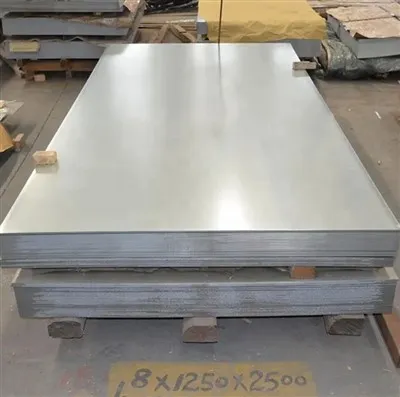
When it comes to structural steel in construction and engineering projects, H beams are a popular choice due to their high strength-to-weight ratio and excellent load-bearing capabilities. As an H beam supplier, I often encounter questions from clients about the differences between welded and rolled H beams. In this blog post, I'll delve into the key distinctions between these two types of H beams to help you make an informed decision for your project.
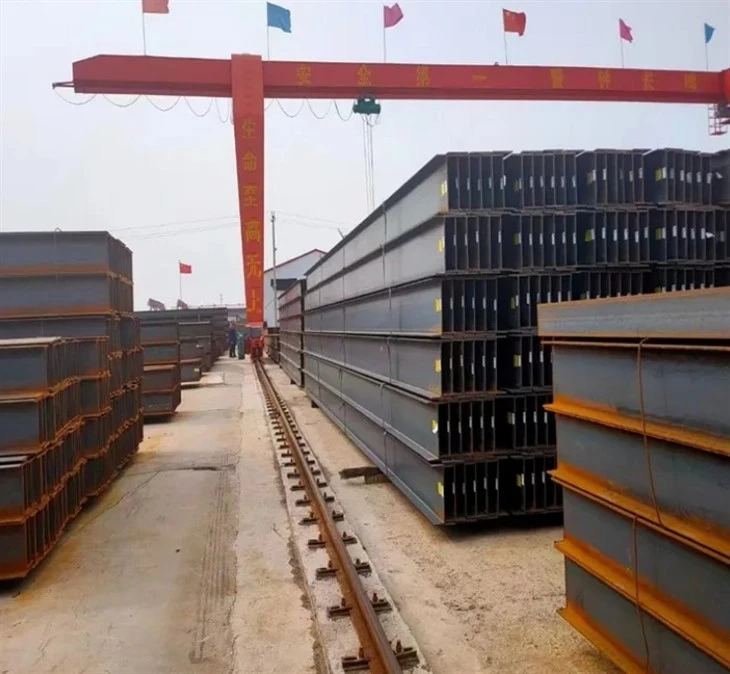

Manufacturing Process
The most fundamental difference between welded and rolled H beams lies in their manufacturing processes.
Rolled H beams are produced through a hot-rolling process. In this method, a large steel billet is heated to a very high temperature until it becomes malleable. Then, it is passed through a series of rollers that gradually shape it into the characteristic H shape. The rollers apply pressure to the steel, compressing and elongating it to achieve the desired dimensions. This process is highly efficient and can produce H beams in large quantities with consistent quality.
On the other hand, welded H beams are fabricated by welding together separate steel plates. The web (the vertical part of the H) and the flanges (the horizontal parts) are cut from steel plates of the appropriate thickness and length. These components are then joined together using welding techniques such as submerged arc welding or gas metal arc welding. Welding allows for greater flexibility in terms of customizing the dimensions and properties of the H beam.
Dimensional Accuracy
Rolled H beams typically offer superior dimensional accuracy compared to welded H beams. The hot-rolling process is highly controlled, and modern rolling mills can produce H beams with very tight tolerances. This means that the dimensions of the web height, flange width, and thickness are more precise, which is crucial for applications where accurate fit-up is required.
In contrast, the welding process used to fabricate H beams can introduce some variability in dimensions. Welding causes the steel to expand and contract, which can lead to minor distortions. While skilled fabricators can minimize these effects, achieving the same level of dimensional accuracy as rolled H beams can be more challenging.
Strength and Structural Integrity
Both welded and rolled H beams can provide excellent strength and structural integrity, but there are some differences to consider.
Rolled H beams generally have a more uniform grain structure throughout the cross-section. The hot-rolling process aligns the steel grains in a way that enhances the beam's overall strength and toughness. This makes rolled H beams well-suited for applications where high load-carrying capacity and resistance to fatigue are required, such as in large-scale building structures and bridges.
Welded H beams, on the other hand, can be designed to have specific strength characteristics by selecting the appropriate steel plates and welding techniques. The welding process can create a strong bond between the web and the flanges, resulting in a beam that can withstand significant loads. However, the heat affected zone (HAZ) around the welds can have different properties compared to the base metal. In some cases, the HAZ may be more susceptible to corrosion and cracking, especially if the welding is not performed correctly.
Cost
Cost is often a significant factor in the decision between welded and rolled H beams.
Rolled H beams are generally more cost-effective for standard sizes and large quantities. The high-volume production capabilities of rolling mills allow for economies of scale, which can result in lower per-unit costs. Additionally, the relatively simple manufacturing process of rolled H beams reduces production time and labor costs.
Welded H beams, on the other hand, are typically more expensive. The fabrication process involves cutting, welding, and quality control steps, which require more labor and specialized equipment. However, for custom sizes and small quantities, welded H beams may be the more cost-effective option, as the cost of setting up a rolling mill for a small production run can be prohibitive.
Application Suitability
The choice between welded and rolled H beams also depends on the specific application requirements.
Rolled H beams are commonly used in general construction projects, such as commercial buildings, industrial facilities, and residential structures. Their high strength, dimensional accuracy, and cost-effectiveness make them a popular choice for a wide range of applications. For example, in a multi-story office building, rolled H beams can be used as columns and beams to support the weight of the structure.
Welded H beams are often preferred for applications that require custom dimensions or unique structural properties. They are commonly used in heavy industrial structures, such as steel mills, power plants, and offshore platforms. In these applications, the ability to customize the H beam's dimensions and strength characteristics can be crucial for ensuring the safety and performance of the structure. For instance, in an offshore oil rig, welded H beams can be designed to withstand the harsh environmental conditions and high loads associated with the operation.
Availability of Standard Sizes
Rolled H beams are available in a wide range of standard sizes, which can be easily sourced from steel suppliers. These standard sizes are designed to meet the most common requirements in the construction industry, making it convenient for engineers and contractors to specify and procure the appropriate H beams for their projects. For example, you can find standard sizes of A36 A572 50 Standard Steel I Beam that are suitable for various load-bearing applications.
Welded H beams, on the other hand, offer greater flexibility in terms of custom sizing. If you need an H beam with non-standard dimensions, a welded H beam can be fabricated to meet your specific requirements. However, this may require longer lead times and higher costs compared to using standard rolled H beams. For instance, if you need an Ipe 200 Profile with a custom thickness or length, a welded H beam can be the solution.
Corrosion Resistance
Both welded and rolled H beams can be susceptible to corrosion, especially in environments where they are exposed to moisture, chemicals, or saltwater. However, the welding process used in fabricated H beams can create areas where corrosion may be more likely to occur.
The heat affected zone around the welds can have a different microstructure compared to the base metal, which can make it more prone to corrosion. Additionally, the presence of weld seams can create crevices where moisture and contaminants can accumulate, further accelerating the corrosion process. To mitigate these risks, proper surface treatment and coating are essential for welded H beams.
Rolled H beams, on the other hand, have a more uniform surface and fewer potential areas for corrosion to start. However, they still require appropriate corrosion protection measures, such as galvanizing or painting, to ensure long-term durability. For applications in corrosive environments, such as in coastal areas or chemical plants, H Shaped Steel Column should be selected and treated accordingly.
Conclusion
In summary, the choice between welded and rolled H beams depends on a variety of factors, including dimensional accuracy, strength requirements, cost, application suitability, and corrosion resistance. Rolled H beams are generally preferred for standard sizes, high-volume production, and applications where dimensional accuracy and cost-effectiveness are key. Welded H beams, on the other hand, offer greater flexibility in terms of custom sizing and can be designed to meet specific strength and structural requirements.
As an H beam supplier, I understand the importance of helping my clients make the right choice for their projects. Whether you need a standard rolled H beam or a custom-fabricated welded H beam, I can provide you with high-quality products and expert advice. If you have any questions or would like to discuss your specific requirements, please don't hesitate to contact me. I'm here to assist you in finding the best H beam solution for your project.
References
- "Structural Steel Design," by Jack C. McCormac and Russell H. Brown
- "Steel Construction Manual," published by the American Institute of Steel Construction
- "Welding Handbook," by the American Welding Society