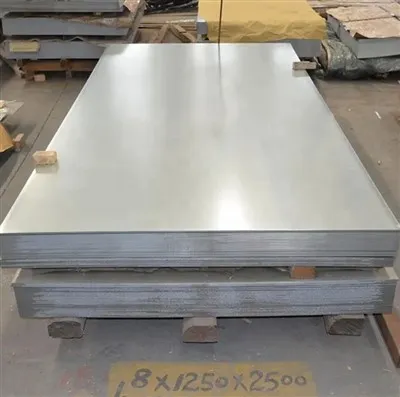
As a seasoned supplier of Ss304 plates, I often receive inquiries from clients about how to calculate the weight of these plates. Understanding the weight of an Ss304 plate is crucial for various reasons, such as transportation planning, structural design, and cost estimation. In this blog post, I'll guide you through the process of calculating the weight of a specific Ss304 plate, step by step.
Understanding Ss304 Plates
Ss304, also known as 304 stainless steel, is a widely used austenitic stainless steel. It contains approximately 18% chromium and 8% nickel, which gives it excellent corrosion resistance, good formability, and high strength. Ss304 plates are commonly used in a variety of industries, including construction, food processing, and chemical engineering.
Factors Affecting the Weight of Ss304 Plates
The weight of an Ss304 plate is determined by several factors:
- Dimensions: The length, width, and thickness of the plate are the primary factors that affect its weight. The larger the dimensions, the heavier the plate.
- Density: The density of Ss304 stainless steel is approximately 7.93 g/cm³. This value is used to calculate the weight of the plate based on its volume.
- Surface Finish: The surface finish of the plate can also affect its weight slightly. For example, a plate with a polished finish may weigh slightly less than a plate with a rough finish due to the removal of a small amount of material during the polishing process.
Calculating the Weight of an Ss304 Plate
The formula for calculating the weight of an Ss304 plate is as follows:
[
\text{Weight (kg)} = \text{Length (m)} \times \text{Width (m)} \times \text{Thickness (mm)} \times \text{Density (g/cm³)} \div 1000
]
Let's break down the steps involved in using this formula:
- Measure the Dimensions: Use a measuring tape or a caliper to measure the length, width, and thickness of the plate. Make sure to measure in the appropriate units (meters for length and width, and millimeters for thickness).
- Determine the Density: As mentioned earlier, the density of Ss304 stainless steel is approximately 7.93 g/cm³. You can use this value in the formula.
- Plug in the Values: Substitute the measured dimensions and the density value into the formula.
- Calculate the Weight: Perform the calculations to determine the weight of the plate in kilograms.
Example Calculation
Let's say you have an Ss304 plate with the following dimensions:
- Length: 2 meters
- Width: 1 meter
- Thickness: 5 millimeters
Using the formula, we can calculate the weight of the plate as follows:
[
\text{Weight (kg)} = 2 \text{ m} \times 1 \text{ m} \times 5 \text{ mm} \times 7.93 \text{ g/cm³} \div 1000
]
First, convert the thickness from millimeters to centimeters:
[
5 \text{ mm} = 0.5 \text{ cm}
]
Then, substitute the values into the formula:
[
\text{Weight (kg)} = 2 \text{ m} \times 1 \text{ m} \times 0.5 \text{ cm} \times 7.93 \text{ g/cm³} \div 1000
]
[
\text{Weight (kg)} = 7.93 \text{ kg}
]
So, the weight of the Ss304 plate is approximately 7.93 kilograms.


Online Calculators
If you don't want to perform the calculations manually, there are many online calculators available that can help you calculate the weight of an Ss304 plate. Simply enter the dimensions of the plate, and the calculator will do the rest.
Importance of Accurate Weight Calculation
Accurately calculating the weight of an Ss304 plate is important for several reasons:
- Transportation Planning: Knowing the weight of the plate is essential for planning its transportation. It helps determine the appropriate mode of transportation, such as trucks, trains, or ships, and ensures that the transportation vehicle can safely carry the load.
- Structural Design: In structural design, the weight of the plate is a critical factor in determining the strength and stability of the structure. Accurate weight calculations help engineers design structures that can withstand the loads imposed by the plates.
- Cost Estimation: The weight of the plate is directly related to its cost. By accurately calculating the weight, you can estimate the cost of the plate more accurately and make informed purchasing decisions.
Different Types of Ss304 Plates
There are various types of Ss304 plates available in the market, each with its own unique characteristics and applications. Some of the common types include:
- 304L Stainless Steel Plate: This type of plate contains a lower carbon content than standard 304 stainless steel, which makes it more resistant to intergranular corrosion. It is commonly used in applications where welding is required.
- 1 4 Inch Stainless Steel Plate: This plate has a thickness of 1/4 inch and is widely used in a variety of industries, including construction, manufacturing, and transportation.
- 304 Stainless Steel Plate: This is the standard type of Ss304 plate and is the most commonly used. It offers excellent corrosion resistance and good formability.
Conclusion
Calculating the weight of an Ss304 plate is a relatively simple process that involves measuring the dimensions of the plate and using a formula to calculate its weight based on its density. Accurate weight calculations are important for transportation planning, structural design, and cost estimation. As a supplier of Ss304 plates, I am committed to providing high-quality products and accurate information to my clients. If you have any questions about calculating the weight of an Ss304 plate or need assistance with your purchasing decision, please feel free to contact me. I look forward to working with you and helping you find the right Ss304 plate for your needs.
References
- ASM Handbook Volume 1: Properties and Selection: Irons, Steels, and High-Performance Alloys
- ASTM A240/A240M - Standard Specification for Chromium and Chromium-Nickel Stainless Steel Plate, Sheet, and Strip for Pressure Vessels and for General Applications