Hey there! I'm an H Beam supplier, and today I wanna chat about the shear capacity of an H Beam. It's a topic that might seem a bit technical at first, but I'll break it down in a way that's easy to understand.
First off, let's talk about what shear capacity actually means. Shear is a force that tries to make one part of a material slide past another part. In the case of an H Beam, shear capacity is the maximum amount of this shearing force that the beam can handle without failing.
You might be wondering why shear capacity is so important. Well, in construction and engineering projects, H Beams are often used to support heavy loads. If the shear capacity of an H Beam isn't sufficient for the load it's supposed to carry, it can lead to serious problems, like the beam bending or even breaking. This can compromise the safety and stability of the entire structure.
There are several factors that affect the shear capacity of an H Beam. One of the most important ones is the material the beam is made of. Different materials have different strengths and properties. For example, steel is a popular choice for H Beams because it has high strength and good ductility. Ductility means that the material can deform to some extent before it breaks, which is a great property when dealing with shear forces.
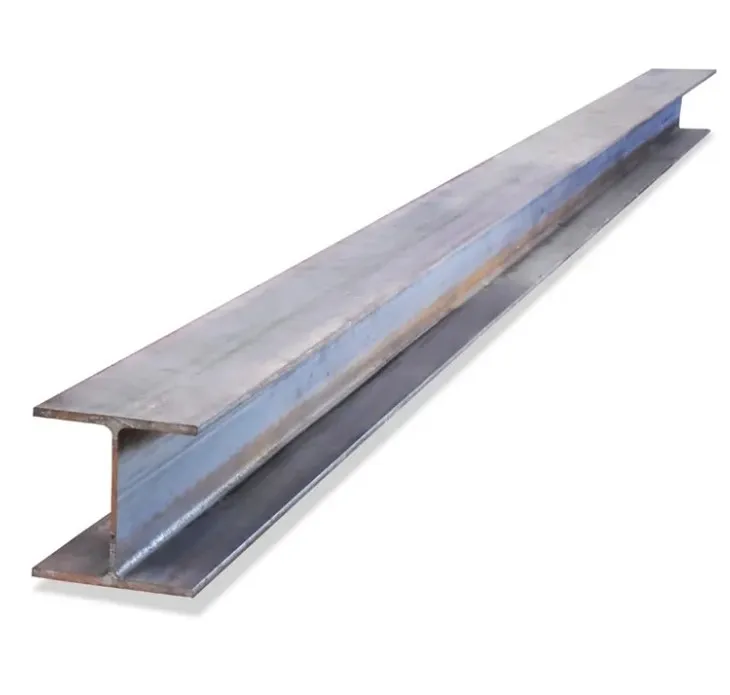
The dimensions of the H Beam also play a crucial role. The height, width, and thickness of the flanges and the web of the beam all affect its shear capacity. Generally, a wider and thicker web can handle more shear force. The flanges, on the other hand, help to distribute the load and increase the overall stability of the beam.
Another factor is the way the H Beam is supported and loaded. If the beam is simply supported at both ends and has a uniformly distributed load, the shear forces will be different compared to a beam that is fixed at one end and has a concentrated load at the other end. Engineers need to carefully analyze these loading conditions to accurately calculate the shear capacity of the beam.
Now, let's get into some numbers. Calculating the shear capacity of an H Beam is a complex process that involves using engineering formulas and standards. One common formula used to estimate the shear capacity of a steel H Beam is based on the yield strength of the material and the cross - sectional area of the web.
Let's say we have a steel H Beam with a yield strength of (f_y) and the cross - sectional area of the web is (A_w). The shear capacity (V_n) can be estimated using the formula (V_n = 0.6f_yA_w). However, this is a simplified formula, and in real - world applications, engineers need to consider other factors such as the shape of the beam, the presence of holes or notches, and the type of loading.
When it comes to our products, we offer a wide range of H Beams with different specifications to meet various shear capacity requirements. For example, our Galvanized H Beam is not only strong but also has excellent corrosion resistance. The galvanization process adds a protective layer to the beam, which is especially useful in outdoor or corrosive environments.
We also have the Profil Upn 100, which is a popular choice for many construction projects. This profile has specific dimensions and properties that make it suitable for different shear force scenarios. And if you're looking for a beam with a specific size, our Ipe 200 Profile might be the right one for you. It has been designed to provide a good balance between strength and cost - effectiveness.
To ensure the quality and accuracy of our H Beams' shear capacity, we follow strict manufacturing standards. Our production process includes careful inspection and testing at every stage. We use advanced equipment and techniques to ensure that each beam meets or exceeds the required shear capacity.
If you're working on a construction or engineering project and need H Beams, it's crucial to choose the right ones with the appropriate shear capacity. You don't want to take any risks when it comes to the safety and stability of your structure. That's where we come in. As an experienced H Beam supplier, we can provide you with expert advice on which beam is the best fit for your project.
We understand that every project is unique, and we're willing to work closely with you to understand your specific requirements. Whether you need a small quantity of H Beams for a DIY project or a large order for a commercial construction site, we've got you covered.
So, if you're interested in our H Beams or have any questions about shear capacity, don't hesitate to reach out. We're here to help you make the right choice and ensure the success of your project.
References:

- "Structural Steel Design" by Jack C. McCormac and Russell H. Gallagher
- "Steel Construction Manual" published by the American Institute of Steel Construction