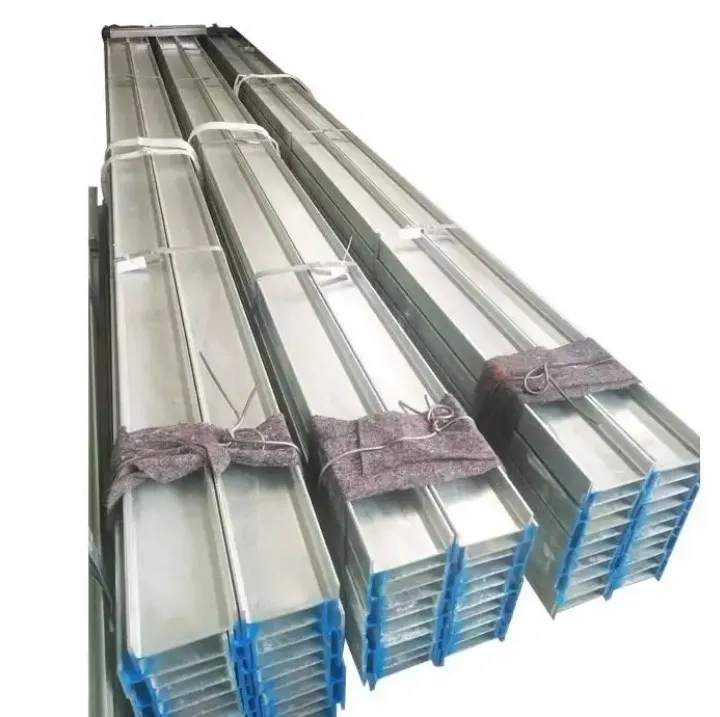
Hey there! As a supplier of Ipe 200 Profile, I'm super excited to dive into the details of this amazing product with you. In this blog, I'll be talking about the dimensions of the Ipe 200 Profile, what makes it so special, and how it compares to other similar products in the market.
What is the Ipe 200 Profile?
First things first, let's get a clear understanding of what the Ipe 200 Profile is. It's a type of steel profile that's widely used in construction and engineering projects. The "Ipe" stands for International Parallel Flange Beams, and the "200" refers to the height of the profile in millimeters.
Dimensions of the Ipe 200 Profile
The Ipe 200 Profile has some specific dimensions that are crucial for its performance and application. Here are the main ones:
- Height: As mentioned earlier, the height of the Ipe 200 Profile is 200 mm. This height gives it a good balance between strength and weight, making it suitable for a variety of structural applications.
- Width: The width of the flanges (the horizontal parts at the top and bottom of the "I" shape) is typically 100 mm. This width provides a stable base for the profile and helps distribute the load evenly.
- Thickness: The web (the vertical part connecting the flanges) usually has a thickness of around 5.2 mm, while the flanges have a thickness of about 8.2 mm. These thicknesses are designed to ensure the profile can withstand the stresses and loads it will encounter in real-world applications.
- Mass per meter: The mass per meter of the Ipe 200 Profile is approximately 25.4 kg/m. This weight is an important factor to consider when planning a project, as it affects the overall weight of the structure and the cost of transportation and installation.
Why Choose the Ipe 200 Profile?
There are several reasons why the Ipe 200 Profile is a popular choice among builders and engineers:
- Strength and Durability: Thanks to its well-designed dimensions and high-quality steel material, the Ipe 200 Profile offers excellent strength and durability. It can withstand heavy loads and harsh environmental conditions, making it suitable for long-term use in various construction projects.
- Versatility: The Ipe 200 Profile can be used in a wide range of applications, including building frames, bridges, industrial structures, and more. Its versatility makes it a go-to choice for many different types of projects.
- Cost-Effective: Compared to some other types of steel profiles, the Ipe 200 Profile offers a good balance between performance and cost. Its relatively low weight reduces transportation and installation costs, while its long lifespan means less maintenance and replacement expenses in the long run.
Comparing with Other Profiles
Now, let's take a look at how the Ipe 200 Profile compares to some other similar products in the market. For example, the Profil Upn 100 is another type of steel profile that's commonly used in construction. While the Profil Upn 100 has its own advantages, such as a more compact design, the Ipe 200 Profile generally offers greater strength and load-bearing capacity due to its larger dimensions.
Another popular option is the H Beam Ss400. The H Beam Ss400 is known for its high strength and is often used in heavy-duty construction projects. However, it may be overkill for some smaller-scale applications where the Ipe 200 Profile can provide sufficient strength at a lower cost.
The H Shaped Steel Column is also a competitor in the market. Similar to the Ipe 200 Profile, it has an "H" shape, but it's typically designed for use as a column in a structure. The Ipe 200 Profile, on the other hand, is more commonly used as a beam, offering a different set of benefits and applications.
Applications of the Ipe 200 Profile
The Ipe 200 Profile can be used in a variety of construction and engineering projects. Here are some common applications:
- Building Frames: It's often used as a beam in building frames to support the floors and roofs. Its strength and durability ensure the stability of the building structure.
- Bridges: The Ipe 200 Profile can be used in the construction of small to medium-sized bridges. Its ability to withstand heavy loads makes it a reliable choice for this type of application.
- Industrial Structures: In industrial settings, such as factories and warehouses, the Ipe 200 Profile can be used to build support structures, mezzanines, and other components.
How to Choose the Right Profile for Your Project
When choosing a steel profile for your project, it's important to consider several factors:
- Load Requirements: Determine the amount of load the profile will need to support. This will help you choose a profile with the appropriate strength and dimensions.
- Project Size and Scope: Consider the size and scope of your project. For smaller projects, a lighter and more cost-effective profile like the Ipe 200 Profile may be sufficient. For larger and more demanding projects, you may need a stronger profile.
- Environmental Conditions: Think about the environmental conditions the profile will be exposed to. If it will be in a corrosive environment, you may need to choose a profile with a protective coating or made from a corrosion-resistant material.
Contact Us for Your Ipe 200 Profile Needs
If you're interested in purchasing the Ipe 200 Profile for your project, don't hesitate to get in touch with us. We're a reliable supplier with a wide range of high-quality steel profiles. Our team of experts can help you choose the right profile for your specific needs and provide you with all the necessary information and support.
Whether you have questions about the dimensions, applications, or pricing of the Ipe 200 Profile, we're here to assist you. Contact us today to start the conversation and take the first step towards a successful project.
References
- Steel Construction Manual, American Institute of Steel Construction
- European Standard EN 10210: Hot-finished structural hollow sections of non-alloy and fine grain steels
That's all for today's blog. I hope you found it informative and helpful. If you have any more questions or comments, feel free to leave them below. Thanks for reading!