Hey there! As a supplier of H Beams, I've seen firsthand the wide range of applications these versatile steel structures have. In this blog, I'll share some of the most common uses of H Beams and why they're such a popular choice in various industries.
Construction Industry
One of the primary applications of H Beams is in the construction industry. They're used extensively in building frames, providing the structural support needed to hold up large buildings. Whether it's a commercial skyscraper, a residential apartment complex, or an industrial warehouse, H Beams are a go - to choice.
The unique shape of H Beams, with their wide flanges and a central web, gives them excellent load - bearing capacity. They can withstand heavy vertical and horizontal loads, making them ideal for supporting the weight of floors, roofs, and walls. For example, in high - rise buildings, H Beams are used as columns and beams to transfer the weight of the upper floors down to the foundation.
If you're looking for a specific H Beam profile for your construction project, you might be interested in the Ipe 200 Profile. It's a commonly used profile that offers a good balance between strength and cost - effectiveness.
Bridge Building
Bridges are another area where H Beams shine. They're used to construct the superstructure of bridges, including the girders and cross - beams. The strength and durability of H Beams are crucial in bridge construction, as they need to support the weight of vehicles, pedestrians, and the bridge itself.
H Beams can be pre - fabricated off - site and then transported to the bridge construction site for assembly. This reduces construction time and costs. For instance, in a medium - sized bridge, H Beams can be used to span the distance between piers, providing a stable and reliable structure. If you're in the market for high - quality steel for bridge building, the A572 A992 Steel H Beam is a great option. It meets the strict standards required for bridge construction and offers excellent corrosion resistance.
Industrial Applications
In industrial settings, H Beams are used in a variety of ways. They're often used to build factory frames, mezzanines, and conveyor systems. In factories, H Beams provide the structural framework for large machinery and equipment. They can support the weight of heavy manufacturing equipment, such as presses and lathes.
Mezzanines, which are intermediate floors built within a factory or warehouse, are typically constructed using H Beams. They create additional usable space without the need for a full - scale expansion of the building. Conveyor systems, which are used to transport materials within a factory, also rely on H Beams for support.
The H Beam 300 X 300 is a popular choice for industrial applications. Its large size and high strength make it suitable for supporting heavy loads in industrial environments.
Agricultural Uses
Agriculture is another sector that benefits from H Beams. They're used in the construction of barns, sheds, and other agricultural buildings. These buildings need to be strong enough to withstand the elements, such as wind, rain, and snow, as well as the weight of livestock and equipment.
H Beams provide the necessary structural support for large - scale agricultural buildings. They can be used to create the frame of a barn, with the ability to span long distances without the need for excessive internal supports. This allows for more open and flexible interior spaces, which are ideal for housing animals and storing equipment.
Shipbuilding
In the shipbuilding industry, H Beams are used to construct the internal framework of ships. They provide the structural integrity needed to withstand the stresses of the sea, including waves, wind, and the weight of the ship's cargo.
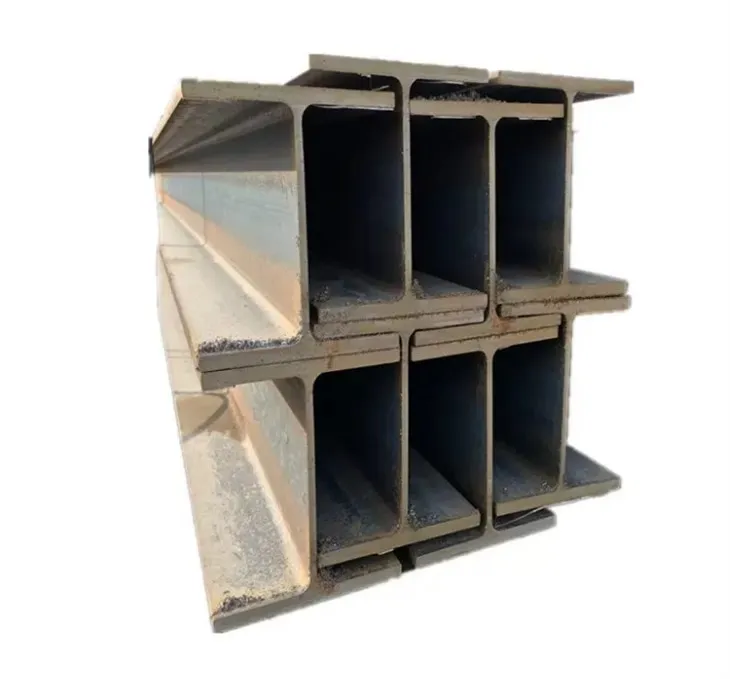

H Beams are used in the construction of bulkheads, decks, and other structural components of a ship. Their strength - to - weight ratio is crucial in shipbuilding, as it helps to keep the weight of the ship down while still providing the necessary strength.
Energy Sector
The energy sector, including power plants and wind farms, also makes use of H Beams. In power plants, H Beams are used in the construction of the building structures that house the power - generating equipment. They need to support the weight of large turbines, generators, and other heavy machinery.
In wind farms, H Beams are used in the construction of the towers that support the wind turbines. The towers need to be tall and stable to capture the maximum amount of wind energy. H Beams provide the strength and stability required for these tall structures.
Advantages of Using H Beams
There are several reasons why H Beams are so popular in these various applications. Firstly, their shape gives them a high moment of inertia, which means they can resist bending and torsion better than other shapes. This makes them ideal for applications where they need to support heavy loads over long spans.
Secondly, H Beams are relatively easy to fabricate and install. They can be cut, welded, and bolted together to create the desired structure. This flexibility in fabrication and installation reduces construction time and costs.
Thirdly, H Beams are made from high - strength steel, which offers excellent durability and corrosion resistance. This means they can last for a long time, even in harsh environments.
Conclusion
As you can see, H Beams have a wide range of applications across different industries. Whether it's construction, bridge building, industrial use, agriculture, shipbuilding, or the energy sector, H Beams play a crucial role in providing strong and reliable structural support.
If you're working on a project that requires H Beams, I'd love to help you find the right products. We have a wide selection of H Beams in different sizes and profiles to meet your specific needs. Don't hesitate to reach out for a quote or to discuss your project requirements. Let's work together to make your project a success!
References
- "Steel Construction Manual" by the American Institute of Steel Construction
- "Bridge Engineering Handbook" edited by Wei - Li Duan and Gang Wang
- "Ship Structure Design and Analysis" by J. Paik and M. Thayamballi