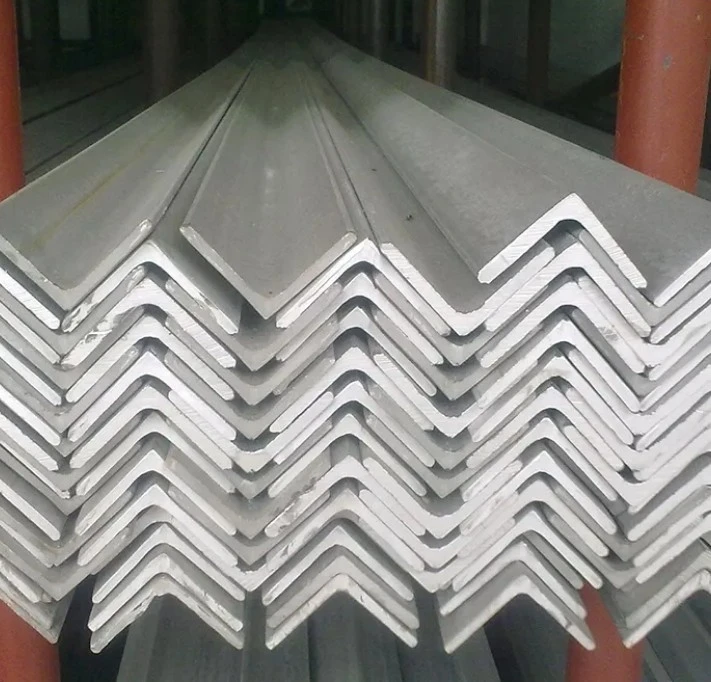
Hey there! As a supplier of equal angle bars, I've seen firsthand how these versatile pieces of metal play a crucial role in various industries. Today, I want to dive into one specific area: the water treatment industry. You might be wondering, "What on earth do equal angle bars have to do with water treatment?" Well, stick around, and I'll break it down for you.
Structural Support in Water Treatment Plants
First off, equal angle bars are like the unsung heroes when it comes to providing structural support in water treatment plants. These plants are massive complexes with all sorts of equipment, tanks, and pipelines. And you need a sturdy framework to hold everything together.
Let's talk about the tanks. Water treatment tanks can be huge, holding thousands or even millions of gallons of water. They need a strong foundation and support structure to prevent any sagging or collapsing. That's where equal angle bars come in. We can use them to build the frames that support the tanks. For example, we can create a lattice-like structure using A36 Angle Bar around the base and sides of the tank. A36 angle bars are made of carbon steel, which is known for its high strength and durability. They can withstand the weight of the water and the pressure exerted on the tank walls.
The same goes for pipelines. Water treatment involves a complex network of pipes that transport water, chemicals, and treated effluent. These pipes need to be properly supported to prevent leaks and ensure smooth flow. Equal angle bars can be used to create brackets and supports for the pipelines. They can be easily welded or bolted together to form custom shapes and sizes to fit the specific needs of the pipeline system.
Corrosion Resistance in Harsh Environments
Another important aspect of water treatment is dealing with corrosive substances. Water treatment plants often use chemicals like chlorine, sulfuric acid, and sodium hydroxide to treat the water. These chemicals can be highly corrosive and can damage metal structures over time. That's why corrosion resistance is a top priority.
This is where Galvanised Angle Bar shines. Galvanised angle bars are coated with a layer of zinc, which acts as a protective barrier against corrosion. The zinc coating prevents the underlying steel from coming into contact with the corrosive chemicals in the water. Even if the zinc coating gets scratched or damaged in some areas, it will still protect the steel through a process called cathodic protection. This means that the zinc will corrode preferentially, sacrificing itself to protect the steel.
In addition to chemical corrosion, water treatment plants are also exposed to moisture and humidity, which can cause rusting. Galvanised angle bars are highly resistant to rust and can maintain their structural integrity in these damp environments. This makes them an ideal choice for use in water treatment plants, where the conditions can be quite harsh.

Customization for Specific Applications
One of the great things about equal angle bars is their versatility. They can be easily customized to meet the specific requirements of different water treatment applications.
For example, in some water treatment processes, you might need to build a special filtration system. This could involve creating a frame for a filter media bed or a support structure for a membrane filtration unit. With equal angle bars, you can cut, bend, and weld them to create the exact shape and size you need. You can also choose different types of angle bars, such as Alloy Angle Bar, depending on the specific properties you require. Alloy angle bars are made by adding other elements like chromium, nickel, or molybdenum to the steel. This can enhance the strength, corrosion resistance, or other properties of the angle bar.
Let's say you're building a small-scale water treatment plant for a community or a commercial building. You might have limited space and need a compact and efficient design. Equal angle bars can be used to create a modular and lightweight structure that can be easily assembled and disassembled if needed. You can also use them to build platforms and walkways for maintenance and inspection purposes.
Cost-Effectiveness
When it comes to any industry, cost is always a major consideration. Water treatment plants are no exception. They need to find ways to keep their costs down while still maintaining high-quality treatment processes.
Equal angle bars offer a cost-effective solution for water treatment applications. They are relatively inexpensive compared to other types of structural materials, such as stainless steel or aluminum. And because they are so versatile, you can use them in a variety of applications, which means you don't have to buy different types of materials for different parts of the plant.
In addition, the long lifespan of equal angle bars, especially when they are properly protected against corrosion, means that you won't have to replace them as often. This can save you a significant amount of money in the long run. You'll also save on maintenance costs because equal angle bars are easy to repair and maintain. If a part gets damaged, you can simply replace that one piece without having to replace the entire structure.
Conclusion
So, there you have it! Equal angle bars are an essential component in the water treatment industry. They provide structural support, corrosion resistance, customization options, and cost-effectiveness. Whether you're building a large-scale municipal water treatment plant or a small-scale industrial water treatment system, equal angle bars can play a vital role in ensuring the smooth and efficient operation of the plant.
If you're in the water treatment industry and are looking for high-quality equal angle bars for your projects, I'd love to hear from you. We have a wide range of equal angle bars, including A36 angle bars, galvanised angle bars, and alloy angle bars, to meet your specific needs. Feel free to reach out and let's start a conversation about how we can work together to make your water treatment projects a success.
References
- "Structural Steel Design Handbook" by William T. Segui
- "Corrosion Resistance of Metals and Alloys" by Robert W. Revie
- "Water Treatment Processes: Principles and Design" by David W. Hendricks