Hey there! I'm a supplier of Angle Bar 2X2X1 4, and today I wanna share with you how to inspect the quality of these angle bars during production. It's super important to ensure that the products we make meet high - quality standards, and that's what I'll be walking you through.
1. Raw Material Inspection
First things first, we gotta start with the raw materials. The quality of the steel used to make Angle Bar 2X2X1 4 directly affects the final product. When the raw steel arrives at our factory, we check its certification. The supplier should provide documents showing the chemical composition and mechanical properties of the steel.
We also do a visual inspection. The steel should be free from obvious cracks, pits, and rust. Any surface defects on the raw material can lead to problems in the finished angle bar. For example, a crack in the steel might expand during the manufacturing process, weakening the entire structure.
2. Dimensional Inspection
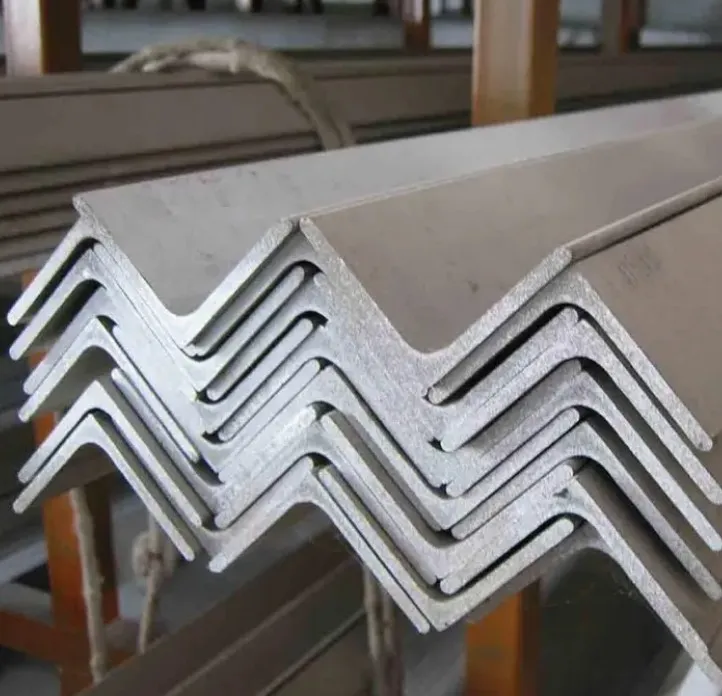
Accurate dimensions are crucial for Angle Bar 2X2X1 4. The "2X2" refers to the two sides of the angle bar being 2 inches each, and "1/4" indicates the thickness. We use precision measuring tools like calipers and micrometers to check these dimensions at regular intervals during production.
During the rolling process, the shape of the angle bar is formed. We make sure that the angles are exactly 90 degrees. Even a small deviation can cause problems when the angle bar is used in construction or other applications. For instance, if the angle is off, it won't fit properly with other components.
We also measure the length of the angle bar. It should meet the customer's requirements precisely. If the length is too short or too long, it can lead to waste or installation issues.

3. Surface Finish Inspection
The surface finish of the Angle Bar 2X2X1 4 is another important aspect. A smooth surface not only looks better but also has better corrosion resistance. We visually inspect the surface for any rough spots, scratches, or unevenness.
Sometimes, we use a surface roughness tester to measure the smoothness quantitatively. This helps us ensure that the surface meets the required standards. A rough surface can also affect the paint adhesion if the angle bar is going to be painted later.
4. Chemical Composition Analysis
To ensure the mechanical properties of the Angle Bar 2X2X1 4, we conduct chemical composition analysis. This is done using techniques like spectroscopy. We check the amounts of elements such as carbon, manganese, silicon, and sulfur in the steel.
The carbon content, for example, affects the hardness and strength of the angle bar. If the carbon content is too high, the angle bar might be too brittle; if it's too low, it might not be strong enough. By analyzing the chemical composition, we can make sure that the angle bar has the right balance of properties.
5. Mechanical Property Testing
We perform several mechanical property tests on the Angle Bar 2X2X1 4. One of the most common tests is the tensile test. In this test, we take a sample of the angle bar and pull it until it breaks. This helps us determine the ultimate tensile strength and the yield strength of the material.
We also do a hardness test. Using a hardness tester, we measure how resistant the angle bar is to indentation. A proper hardness is necessary for the angle bar to withstand the loads it will be subjected to in its intended application.
6. Special Considerations for Different Types of Angle Bars
There are different types of angle bars, such as Perforated Angle Bar, Galvanised Angle Bar, and Angle Bar Beam.
For perforated angle bars, we need to check the size, shape, and spacing of the perforations. The perforations should be evenly spaced and have the correct diameter. Any deviation can affect the structural integrity and the functionality of the perforated angle bar.
Galvanised angle bars have a zinc coating for corrosion protection. We inspect the thickness and quality of the zinc coating. A thin or uneven coating won't provide adequate protection against rust.
Angle bar beams are designed to carry heavy loads. So, in addition to the regular inspections, we pay extra attention to their load - bearing capacity. We use advanced testing methods to ensure that they can handle the expected loads without failure.
Conclusion
Inspecting the quality of Angle Bar 2X2X1 4 during production is a multi - step process. From raw material inspection to mechanical property testing, every step is crucial to ensure that we deliver high - quality products to our customers.
If you're in the market for Angle Bar 2X2X1 4 or any of the other types of angle bars I mentioned, I'd love to have a chat with you. Let's discuss your requirements and see how we can meet them with our top - notch products. Reach out and let's start the conversation about your angle bar needs!
References
- "Steel Structures: Design and Behavior" by Segui, William T.
- "Metallurgy for Engineers" by Dieter, George E.