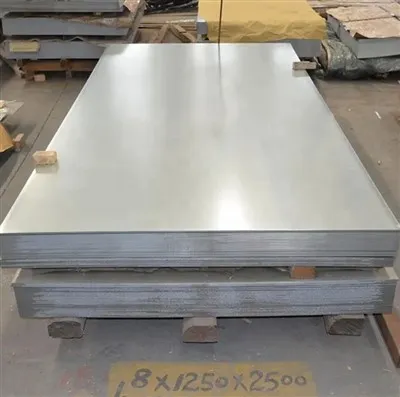
As an angle bar supplier deeply involved in the metal industry, I've witnessed firsthand the importance of recycling in today's environmentally - conscious world. Angle bars, which are widely used in construction, manufacturing, and various other sectors, play a significant role in the economy. Understanding their recycling process is not only crucial for sustainable development but also for resource conservation.
Collection of Angle Bars
The first step in the recycling process of angle bars is collection. Angle bars can come from a variety of sources. In the construction industry, when a building is being renovated or demolished, old angle bars are removed. These can be from structural supports, frames, or partitions. Manufacturing plants also generate scrap angle bars during the production process. For instance, if there are errors in cutting or shaping, the defective angle bars are discarded.
We, as an angle bar supplier, often collect scrap angle bars from our clients. Some of them may have leftover angle bars after a project is completed, and they are willing to sell these to us for recycling. We also collaborate with waste management companies and scrap metal dealers. These entities have established networks for collecting various types of scrap metals, including angle bars, from different locations. This collaborative approach ensures a steady supply of scrap angle bars for the recycling process.
Sorting and Inspection
Once the angle bars are collected, they need to be sorted and inspected. Sorting is essential because angle bars can be made from different materials such as mild steel, stainless steel, and galvanized steel. Each type of material has different properties and recycling requirements.
During the sorting process, we use various methods. Visual inspection is the most basic one. We can identify different types of angle bars by their appearance. For example, Galvanised Angle Bar has a distinct shiny, zinc - coated surface, which makes it easily distinguishable from non - galvanized ones.
We also use more advanced techniques like magnetic testing. Mild steel angle bars are magnetic, while some stainless steel angle bars are non - magnetic. This test helps us separate different types of steel angle bars efficiently. After sorting, the angle bars are inspected for any contaminants. Contaminants such as paint, grease, or other non - metal materials can affect the quality of the recycled product. If there are contaminants, the angle bars may need to undergo additional cleaning processes.
Shredding and Crushing
After sorting and inspection, the angle bars are sent for shredding and crushing. The goal of this step is to reduce the size of the angle bars into smaller pieces. Shredding and crushing make the angle bars easier to melt and process further.
We use industrial - grade shredders and crushers for this purpose. These machines are designed to handle large and heavy angle bars. The shredders have sharp blades that cut the angle bars into smaller segments, while the crushers apply high pressure to break them into even smaller pieces. The size of the shredded and crushed pieces can vary depending on the requirements of the subsequent melting process. Smaller pieces generally melt faster and more uniformly, which improves the efficiency of the recycling process.
Melting
The shredded and crushed angle bar pieces are then transported to a melting furnace. Melting is a critical step in the recycling process as it transforms the solid angle bars back into a liquid state.
There are different types of melting furnaces, such as electric arc furnaces (EAF) and induction furnaces. Electric arc furnaces use an electric arc to generate heat, which can reach very high temperatures. This type of furnace is suitable for melting large quantities of scrap metal. Induction furnaces, on the other hand, use electromagnetic induction to heat the metal. They are more energy - efficient for smaller - scale melting operations.
During the melting process, the impurities in the angle bars are separated from the molten metal. For example, non - metal contaminants rise to the surface of the molten metal and form a slag layer. This slag can be skimmed off, leaving behind relatively pure molten metal. The temperature and duration of the melting process are carefully controlled to ensure that the metal reaches the appropriate melting point and that the impurities are effectively removed.
Refining
After melting, the molten metal needs to be refined. Refining is the process of further purifying the metal to meet the quality standards required for producing new angle bars.
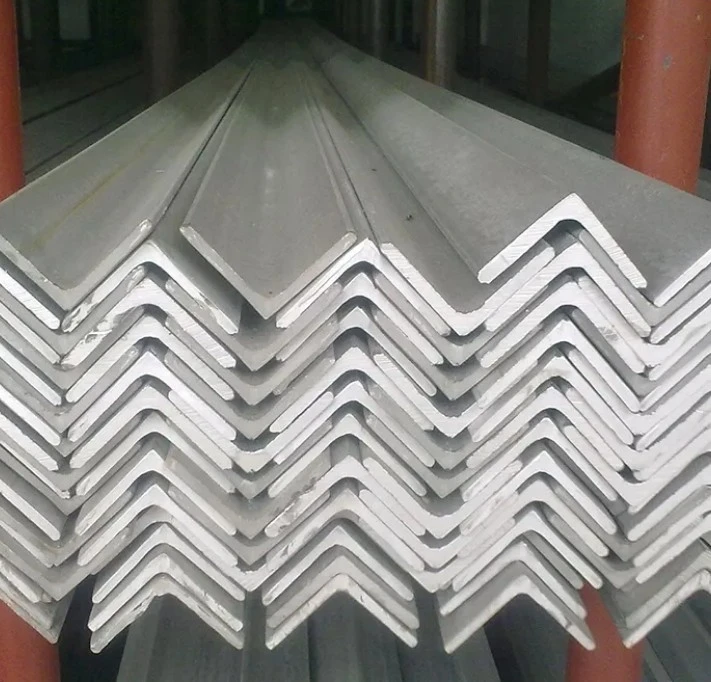
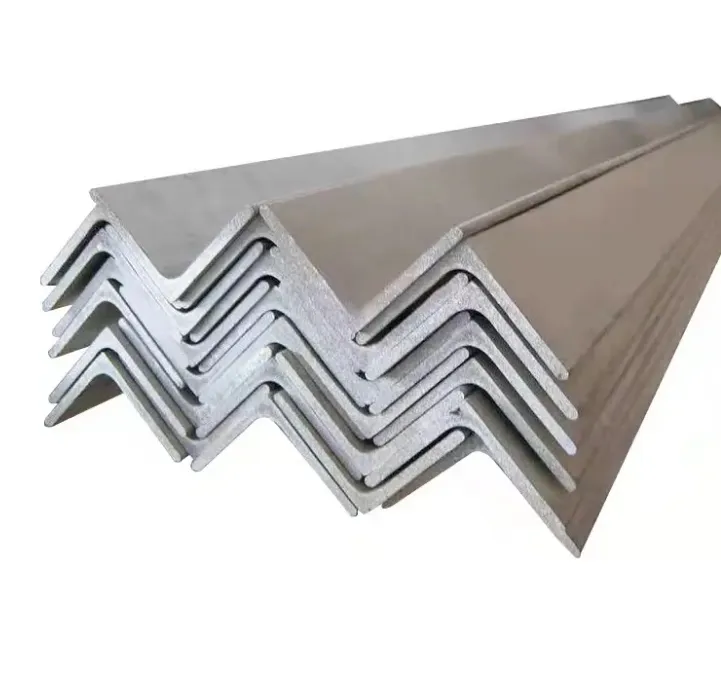
One common refining method is oxygen blowing. In this process, oxygen is blown into the molten metal. The oxygen reacts with the remaining impurities such as carbon, sulfur, and phosphorus, forming oxides that can be removed. Another method is the addition of fluxes. Fluxes are substances that react with the impurities in the molten metal and help to separate them. For example, limestone can be used as a flux to remove sulfur from the molten steel.
The refining process also allows us to adjust the chemical composition of the metal. We can add alloying elements such as chromium, nickel, or manganese to the molten metal to improve its properties. For example, adding chromium to steel can increase its corrosion resistance, which is important for Galvanized Steel Angle Bar.
Casting and Forming
Once the molten metal is refined, it is ready for casting and forming. Casting is the process of pouring the molten metal into a mold to give it a specific shape. In the case of angle bars, the molds are designed to create the characteristic L - shaped cross - section.
There are different casting methods, such as sand casting and continuous casting. Sand casting is a traditional method where the mold is made of sand. It is suitable for producing small - scale or custom - shaped angle bars. Continuous casting, on the other hand, is a more modern and efficient method. In continuous casting, the molten metal is continuously poured into a water - cooled mold, and a long, continuous strand of metal is formed. This strand can then be cut into the desired lengths to make angle bars.
After casting, the angle bars may undergo additional forming processes such as rolling or forging. Rolling is used to improve the surface finish and dimensional accuracy of the angle bars. Forging can enhance the mechanical properties of the angle bars by aligning the grain structure of the metal.
Quality Control
Quality control is an integral part of the entire recycling process. After the angle bars are cast and formed, they are thoroughly inspected to ensure that they meet the required quality standards.
We use a variety of quality control methods. Dimensional inspection is carried out to check if the angle bars have the correct size and shape. We use precision measuring tools such as calipers and micrometers to measure the dimensions of the angle bars accurately.
Mechanical testing is also conducted to evaluate the strength and ductility of the angle bars. Tensile tests are commonly used to determine the maximum stress that the angle bars can withstand before breaking. Hardness testing is another important test. It helps us ensure that the angle bars have the appropriate hardness for their intended applications.
Environmental Benefits of Recycling Angle Bars
Recycling angle bars offers significant environmental benefits. First of all, it reduces the demand for virgin materials. Mining and extracting new metals from ores require a large amount of energy and can cause environmental damage such as deforestation, soil erosion, and water pollution. By recycling angle bars, we can conserve natural resources and reduce the environmental impact of metal production.
Secondly, recycling angle bars consumes less energy compared to producing new angle bars from raw materials. The energy required for melting and recycling scrap metal is much lower than that for mining, refining, and processing new ores. This reduction in energy consumption helps to lower greenhouse gas emissions and combat climate change.
Contact for Procurement
If you are interested in purchasing high - quality recycled angle bars or have any questions about our products, feel free to contact us. We are committed to providing you with the best angle bar solutions that meet your specific needs. Whether you need Galvanised Angle Bar, Right Angle Bar, or Galvanized Steel Angle Bar, we have a wide range of products to choose from.
References
- Metals Handbook: Properties and Selection: Irons and Steels, ASM International.
- Recycling and Waste Management in the Steel Industry, World Steel Association.
- Principles of Metal Casting, McGraw - Hill Education.