When it comes to the construction and engineering industries, square tubes are a staple material, known for their versatility and strength. As a leading square tube supplier, I often encounter a common question from clients and industry professionals alike: "What is the maximum load a square tube can bear?" This is a complex question that depends on several factors, and in this blog post, I'll delve into the details to provide a comprehensive answer.
Understanding Square Tubes
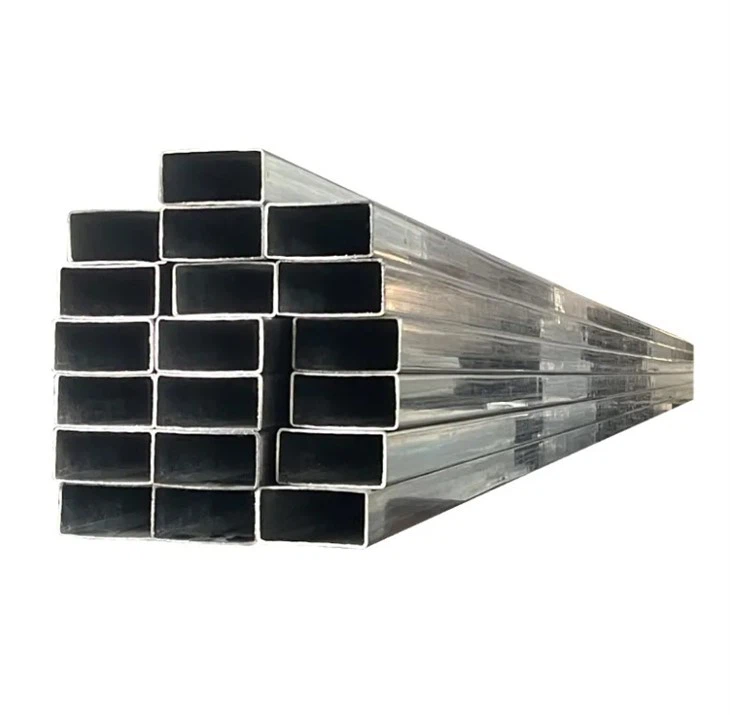
Before we discuss the maximum load capacity, let's briefly understand what square tubes are. Square tubes, also known as Square Hollow Section Steel, are structural steel products with a square cross - section. They are widely used in various applications, including building frames, machinery, and automotive components. The square shape provides excellent resistance to bending and torsional forces, making them ideal for load - bearing structures.
Factors Affecting the Maximum Load Capacity
The maximum load a square tube can bear is influenced by multiple factors. Let's take a closer look at each of these factors:
1. Material Properties
The material from which the square tube is made plays a crucial role in determining its load - bearing capacity. Common materials for square tubes include carbon steel, stainless steel, and aluminum. Carbon steel is a popular choice due to its high strength and relatively low cost. Stainless steel offers corrosion resistance, making it suitable for outdoor or harsh environments. Aluminum is lightweight and has good strength - to - weight ratio, which is beneficial in applications where weight is a concern.
The mechanical properties of the material, such as yield strength and ultimate tensile strength, are key indicators of its load - bearing ability. Yield strength is the stress at which a material begins to deform plastically, while ultimate tensile strength is the maximum stress the material can withstand before failure. A square tube made from a material with higher yield and ultimate tensile strength will generally be able to bear a greater load.
2. Dimensions of the Square Tube
The size and thickness of the square tube are also significant factors. Larger square tubes with greater cross - sectional areas can typically bear more load. For example, a 100Mm Box Section will generally have a higher load - bearing capacity than a smaller section. Additionally, the wall thickness of the tube affects its strength. A thicker - walled tube is more resistant to bending and buckling, allowing it to support heavier loads.
3. Type of Loading
The way the load is applied to the square tube is another important consideration. There are different types of loading, including axial loading, bending loading, and torsional loading.
- Axial Loading: This occurs when the load is applied along the axis of the tube. In axial compression, the tube is pushed together, and in axial tension, it is pulled apart. Square tubes are relatively strong in axial loading, especially when the load is evenly distributed.
- Bending Loading: Bending occurs when a load is applied perpendicular to the axis of the tube, causing it to bend. The ability of a square tube to resist bending depends on its cross - sectional shape and material properties. A tube with a larger moment of inertia (a measure of an object's resistance to changes in rotation) will be more resistant to bending.
- Torsional Loading: Torsional loading involves twisting the tube around its axis. Square tubes have good torsional resistance due to their closed - section shape, but the load - bearing capacity under torsion still depends on the material and dimensions.
4. End Conditions
The way the ends of the square tube are supported or fixed also affects its load - bearing capacity. There are different end conditions, such as fixed - fixed, fixed - free, and pinned - pinned. A tube with fixed ends is more rigid and can generally bear a greater load than a tube with pinned ends, as the fixed ends prevent rotation and provide additional support.
Calculating the Maximum Load Capacity
Calculating the maximum load capacity of a square tube is a complex engineering task that typically involves using mathematical formulas and structural analysis software. For simple cases of axial loading, the following formula can be used to estimate the maximum axial load (P) a tube can bear:
[P = A\times\sigma_y]
where (A) is the cross - sectional area of the tube and (\sigma_y) is the yield strength of the material.
However, for more complex loading conditions, such as bending and torsion, more advanced calculations are required. These calculations take into account the moment of inertia, section modulus, and other factors related to the tube's geometry and material properties.
Real - World Applications and Examples
Let's consider some real - world applications to understand how the maximum load capacity of square tubes is relevant.
In building construction, square tubes are often used as columns to support the weight of the structure. The load - bearing capacity of these columns is carefully calculated to ensure the safety of the building. For example, in a multi - story building, the lower columns need to bear a greater load than the upper columns due to the cumulative weight of the floors above.
In the automotive industry, square tubes are used in the frame of vehicles. The frame needs to withstand various types of loads, including the weight of the vehicle, the forces generated during acceleration and braking, and the impact forces in case of a collision. The design of the frame, including the selection of square tubes with appropriate load - bearing capacity, is crucial for the safety and performance of the vehicle.
Importance of Quality and Testing
As a square tube supplier, I understand the importance of providing high - quality products. Quality control is essential to ensure that the square tubes meet the required standards and have the expected load - bearing capacity. We conduct various tests on our Box Metal Tube products, including tensile tests, hardness tests, and non - destructive testing.
Tensile tests are used to determine the mechanical properties of the material, such as yield strength and ultimate tensile strength. Hardness tests provide information about the material's resistance to indentation and wear. Non - destructive testing methods, such as ultrasonic testing and magnetic particle testing, are used to detect internal defects in the tubes, which could reduce their load - bearing capacity.

Conclusion
In conclusion, the maximum load a square tube can bear is a complex function of material properties, dimensions, type of loading, and end conditions. As a square tube supplier, I am committed to providing our customers with the information and products they need to make informed decisions. Whether you are working on a construction project, a machinery design, or an automotive application, understanding the load - bearing capacity of square tubes is crucial for ensuring the safety and performance of your structure or product.
If you are in need of high - quality square tubes for your project and would like to discuss the specific load - bearing requirements, please feel free to contact us. Our team of experts is ready to assist you in selecting the right square tubes and providing you with detailed technical support.
References
- Gere, J. M., & Timoshenko, S. P. (1997). Mechanics of Materials. PWS Publishing Company.
- Boresi, A. P., & Schmidt, R. J. (2003). Advanced Mechanics of Materials. Wiley.
- Structural Steel Design Handbook, various editions.