What is the elastic modulus of H Beam 300 X 300?
As a supplier of H Beam 300 X 300, I often encounter inquiries regarding the technical specifications of our products, especially the elastic modulus. Understanding the elastic modulus of H Beam 300 X 300 is crucial for engineers, architects, and construction professionals as it directly influences the structural performance and design of various projects. In this blog post, I will delve into the concept of elastic modulus, explain its significance for H Beam 300 X 300, and provide some practical insights based on my experience in the industry.
Understanding the Elastic Modulus
The elastic modulus, also known as Young's modulus, is a fundamental material property that measures the stiffness of a material. It represents the ratio of stress (force per unit area) to strain (deformation per unit length) within the elastic range of a material. In simpler terms, it indicates how much a material will deform under a given load before it reaches its elastic limit and starts to experience permanent deformation.
Mathematically, the elastic modulus (E) is defined as:
[ E = \frac{\sigma}{\epsilon} ]
where (\sigma) is the stress and (\epsilon) is the strain.
The elastic modulus is expressed in units of pressure, typically pascals (Pa) or gigapascals (GPa). A higher elastic modulus indicates a stiffer material that will deform less under a given load, while a lower elastic modulus means the material is more flexible and will experience greater deformation.
Elastic Modulus of H Beam 300 X 300
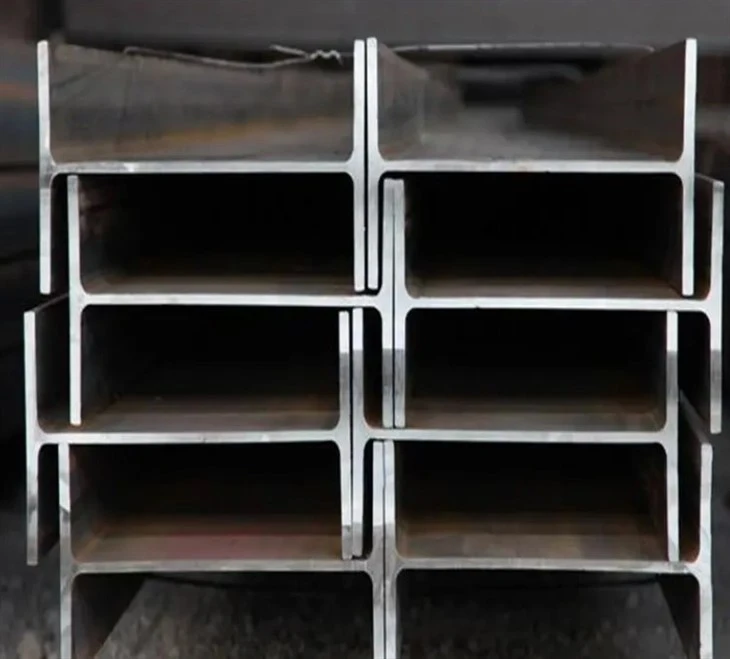
The elastic modulus of H Beam 300 X 300 depends primarily on the material from which it is made. Most H beams, including H Beam 300 X 300, are made of steel, which has a relatively high elastic modulus compared to other construction materials.
For structural steel, the standard elastic modulus is approximately 200 GPa (200 x 10⁹ Pa). This value is widely accepted in the industry and is used in structural design calculations for steel members, including H beams. It is important to note that this is an average value, and the actual elastic modulus of a specific H Beam 300 X 300 may vary slightly depending on factors such as the steel grade, manufacturing process, and any heat treatment applied.
For example, if you are using A36 A572 50 Standard Steel I Beam, which is a common steel grade for H beams, the elastic modulus will be close to the standard 200 GPa. These steel grades are known for their good strength and ductility, making them suitable for a wide range of structural applications.
Significance of Elastic Modulus in Structural Design
The elastic modulus plays a crucial role in the structural design of H Beam 300 X 300 and other steel members. Here are some key aspects where the elastic modulus is important:
Deflection Calculations
One of the primary considerations in structural design is to ensure that the deflection of a beam under a given load is within acceptable limits. Deflection refers to the amount of bending or sagging that a beam experiences when subjected to a load. The elastic modulus is used in the deflection calculations to determine how much a H Beam 300 X 300 will deflect under a specific load.

The formula for the maximum deflection ((\delta)) of a simply supported beam with a uniformly distributed load (w) is:
[ \delta = \frac{5wL^4}{384EI} ]
where L is the length of the beam, E is the elastic modulus, and I is the moment of inertia of the beam's cross-section.
As you can see from the formula, the deflection is inversely proportional to the elastic modulus. A higher elastic modulus will result in less deflection, which is desirable in most structural applications to ensure the stability and functionality of the structure.
Stress Analysis
The elastic modulus is also used in stress analysis to determine the stress levels in a H Beam 300 X 300 under a given load. By knowing the elastic modulus and the strain (deformation) of the beam, engineers can calculate the stress using the formula (\sigma = E\epsilon).
This information is crucial for ensuring that the stress levels in the beam do not exceed the allowable stress of the steel material. If the stress exceeds the allowable stress, the beam may experience permanent deformation or even failure, which can have serious consequences for the safety of the structure.
Structural Stability
In addition to deflection and stress analysis, the elastic modulus also affects the structural stability of H Beam 300 X 300. A stiffer beam with a higher elastic modulus is less likely to buckle or experience lateral-torsional buckling, which is a form of instability that can occur when a beam is subjected to a compressive load.
By considering the elastic modulus in the design process, engineers can ensure that the H Beam 300 X 300 is designed to resist buckling and maintain its structural integrity under various loading conditions.
Factors Affecting the Elastic Modulus of H Beam 300 X 300
While the standard elastic modulus of structural steel is approximately 200 GPa, there are several factors that can affect the actual elastic modulus of a specific H Beam 300 X 300:
Steel Grade
Different steel grades have different chemical compositions and mechanical properties, which can affect the elastic modulus. For example, high-strength steel grades may have a slightly higher elastic modulus compared to lower-strength grades due to their different microstructures.
Manufacturing Process
The manufacturing process of H Beam 300 X 300 can also influence the elastic modulus. Processes such as hot rolling, cold rolling, and heat treatment can affect the grain structure and mechanical properties of the steel, which in turn can impact the elastic modulus.
Temperature
The elastic modulus of steel is also temperature-dependent. As the temperature increases, the elastic modulus of steel decreases. This is an important consideration in applications where the H Beam 300 X 300 may be exposed to high temperatures, such as in fire-resistant structures.
Our H Beam 300 X 300 Products
At our company, we offer high-quality H Beam 300 X 300 products that are manufactured to meet the highest industry standards. Our H beams are made of premium steel grades, ensuring a consistent and reliable elastic modulus close to the standard 200 GPa.
We understand the importance of providing accurate technical information to our customers, and we can provide detailed material test reports for our H Beam 300 X 300 products, including the elastic modulus and other mechanical properties. Our experienced team of engineers and technicians is also available to assist you with any questions or concerns you may have regarding the design and application of our H beams.
Applications of H Beam 300 X 300
H Beam 300 X 300 is a versatile structural member that is widely used in various construction applications, including:
Building Construction
In building construction, H Beam 300 X 300 is commonly used as columns and beams to support the weight of the structure. Its high strength and stiffness make it suitable for large-span structures, such as industrial buildings, warehouses, and commercial buildings.
Bridge Construction
H Beam 300 X 300 is also used in bridge construction to provide support for the bridge deck and to resist the forces exerted by traffic and environmental loads. Its excellent load-bearing capacity and structural stability make it an ideal choice for bridge structures.
Industrial Structures
In industrial settings, H Beam 300 X 300 is used in the construction of industrial frames, platforms, and mezzanines. It can withstand heavy loads and provide a stable foundation for industrial equipment and machinery.
Conclusion
In conclusion, the elastic modulus of H Beam 300 X 300 is an important material property that significantly affects its structural performance and design. For most structural steel H beams, including H Beam 300 X 300, the standard elastic modulus is approximately 200 GPa. Understanding the elastic modulus and its significance in structural design is crucial for ensuring the safety and functionality of various construction projects.
As a leading supplier of H Beam 300 X 300, we are committed to providing high-quality products and excellent customer service. If you are in the market for H Beam 300 X 300 or have any questions regarding our products, please do not hesitate to contact us. Our team is ready to assist you with your procurement needs and provide you with the technical support you require.
References
- Budynas, R. G., & Nisbett, J. K. (2011). Shigley's Mechanical Engineering Design. McGraw-Hill.
- Salmon, C. G., & Johnson, J. E. (1996). Steel Structures: Design and Behavior. HarperCollins College Publishers.
- American Institute of Steel Construction (AISC). (2017). Specification for Structural Steel Buildings.