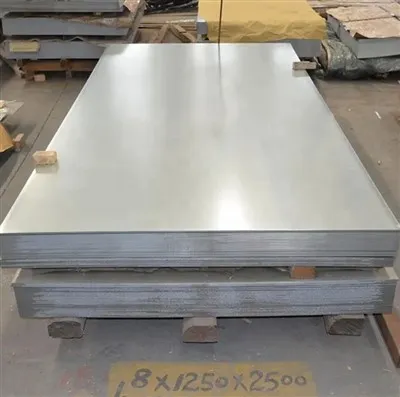
When it comes to stainless steel products, Ss304 Plate is one of the most widely used materials in various industries. As a supplier of Ss304 Plate, I often get asked about its density. In this blog post, I will delve into the topic of the density of Ss304 Plate, its significance, and how it relates to the properties and applications of this popular stainless - steel product.
Understanding Ss304 Plate
Before we discuss the density, let's briefly introduce Ss304 Plate. Ss304 is a type of austenitic stainless steel, which is known for its excellent corrosion resistance, high strength, and good formability. Ss304 Plate is commonly used in a wide range of applications, including construction, food processing, chemical industry, and automotive manufacturing.
The composition of Ss304 typically contains about 18 - 20% chromium and 8 - 10.5% nickel, along with small amounts of carbon, silicon, and manganese. These alloying elements contribute to its unique properties, making it a preferred choice for many engineering and industrial applications.
Density of Ss304 Plate
The density of Ss304 Plate is approximately 7.93 g/cm³ (grams per cubic centimeter). This value may vary slightly depending on the exact composition of the alloy, the manufacturing process, and the presence of any impurities. However, 7.93 g/cm³ is a widely accepted standard value for Ss304 stainless steel.
To put this into perspective, let's compare it with some other common materials. For example, the density of aluminum is around 2.7 g/cm³, which is significantly lower than that of Ss304. On the other hand, the density of lead is about 11.34 g/cm³, much higher than Ss304. This shows that Ss304 has a moderate density, which is one of the reasons for its versatility in different applications.
Significance of Density in Ss304 Plate
The density of Ss304 Plate plays a crucial role in several aspects of its use and performance.


1. Weight Calculation
One of the most practical applications of knowing the density is for weight calculation. When designing structures or manufacturing products using Ss304 Plate, it is essential to accurately estimate the weight. For instance, if you are building a stainless - steel storage tank, you need to know the weight of the Ss304 Plate to ensure that the supporting structure can bear the load. The formula for calculating the weight of a Ss304 Plate is:
Weight (kg)=Density (g/cm³)×Volume (cm³)÷1000
If you know the dimensions of the plate (length, width, and thickness), you can easily calculate its volume and then determine the weight using the density value.
2. Material Selection
Density also influences material selection. In applications where weight is a critical factor, such as aerospace or automotive industries, a material with a lower density may be preferred. However, in applications where strength and corrosion resistance are more important, Ss304 Plate's moderate density can be a reasonable trade - off.
3. Transportation and Handling
The density of Ss304 Plate affects its transportation and handling. Heavier materials require more robust handling equipment and may incur higher transportation costs. By knowing the density, logistics planners can better organize the shipping and storage of Ss304 Plate.
Comparison with Other Stainless - Steel Plates
It is interesting to compare the density of Ss304 Plate with other types of stainless - steel plates. For example, 303 Stainless Plate has a density of approximately 7.93 g/cm³, which is very similar to Ss304. This is because both 303 and Ss304 are austenitic stainless steels with similar compositions.
On the other hand, 304L Stainless Steel Plate also has a density close to that of Ss304, usually around 7.9 g/cm³. The “L” in 304L stands for “low carbon,” which means it has a lower carbon content than standard Ss304. This difference in carbon content may result in slightly different mechanical properties, but the density remains relatively consistent.
Factors Affecting the Density of Ss304 Plate
Although the standard density of Ss304 Plate is 7.93 g/cm³, several factors can cause slight variations.
1. Composition Variation
As mentioned earlier, the exact composition of the alloy can affect the density. Small differences in the amounts of chromium, nickel, and other alloying elements can lead to minor changes in density. For example, if the nickel content is slightly higher, the density may increase slightly due to the higher density of nickel compared to some other elements in the alloy.
2. Manufacturing Process
The manufacturing process can also influence the density. Processes such as hot rolling, cold rolling, and annealing can cause changes in the microstructure of the Ss304 Plate, which may in turn affect its density. For instance, cold rolling can increase the density slightly by compacting the material.
3. Impurities
The presence of impurities in the Ss304 Plate can also have an impact on density. Impurities such as sulfur, phosphorus, or other non - metallic inclusions can change the overall density of the material. High - quality Ss304 Plate with fewer impurities will have a density closer to the standard value.
Applications of Ss304 Plate Based on Density
The density of Ss304 Plate, along with its other properties, makes it suitable for a wide range of applications.
1. Construction Industry
In the construction industry, Ss304 Plate is used for building facades, structural components, and roofing. Its moderate density allows for easy handling during construction while providing sufficient strength and corrosion resistance. For example, in coastal areas where the air is salty, Ss304 Plate can resist corrosion, making it an ideal choice for building structures.
2. Food Processing Industry
The food processing industry requires materials that are hygienic, corrosion - resistant, and easy to clean. Ss304 Plate meets these requirements, and its density is suitable for making equipment such as storage tanks, conveyors, and processing machinery. The moderate weight of the plate makes it easy to install and maintain in a food - processing environment.
3. Chemical Industry
In the chemical industry, Ss304 Plate is used for manufacturing chemical storage tanks, pipes, and reaction vessels. Its corrosion resistance and appropriate density make it capable of withstanding the harsh chemical environments. The weight of the plate also ensures the stability of large - scale chemical equipment.
Conclusion
In conclusion, the density of Ss304 Plate is an important property that affects its use, performance, and application in various industries. With an approximate density of 7.93 g/cm³, Ss304 Plate offers a good balance between weight, strength, and corrosion resistance. Understanding the density and its influencing factors can help engineers, designers, and manufacturers make better decisions when using Ss304 Plate.
If you are interested in purchasing Ss304 Plate or have any questions about its properties and applications, please feel free to contact us. We are a professional Ss304 Plate supplier, committed to providing high - quality products and excellent customer service. Let's start a discussion about your specific requirements and find the best solution for your project.
References
- ASM Handbook Volume 1: Properties and Selection: Irons, Steels, and High - Performance Alloys.
- Stainless Steel Handbook by Carl A. Zapffe.