Hey there! As a supplier of carbon steel pipes, I often get asked about the standards for these pipes. It's a crucial topic, especially for those in construction, manufacturing, and various industries that rely on carbon steel pipes for their projects. So, let's dive right in and explore what these standards are all about.
Understanding Carbon Steel Pipes
First off, let's quickly go over what carbon steel pipes are. Carbon steel is an alloy of iron and carbon, with the carbon content typically ranging from 0.05% to 2.0%. The amount of carbon in the steel affects its properties, like strength, hardness, and ductility. Carbon steel pipes are widely used because they're strong, durable, and relatively inexpensive compared to other types of pipes.
Industry Standards for Carbon Steel Pipes
There are several key standards that govern the production and use of carbon steel pipes. These standards ensure that the pipes meet certain quality, safety, and performance requirements.
ASTM Standards
The American Society for Testing and Materials (ASTM) has a set of standards for carbon steel pipes. One of the most well - known is Astm A106 Pipe. ASTM A106 is used for seamless carbon steel pipes for high - temperature service. These pipes are commonly used in power plants, refineries, and other industrial applications where high - temperature and high - pressure conditions exist.
ASTM A106 pipes are divided into three grades: A, B, and C. Grade A has the lowest carbon content and is suitable for lower - temperature applications. Grade B is the most commonly used grade, offering a good balance of strength and ductility. Grade C has the highest carbon content and is used for more demanding high - temperature applications.
API Standards
The American Petroleum Institute (API) also has standards for carbon steel pipes, particularly for the oil and gas industry. Api 5L Steel Pipe is a widely recognized standard. API 5L pipes are used for conveying oil, gas, and other fluids in the oil and gas exploration and production process.
API 5L pipes come in different grades, such as X42, X52, X60, etc. The numbers represent the minimum yield strength of the pipe in thousands of pounds per square inch (ksi). For example, an X52 pipe has a minimum yield strength of 52 ksi. These pipes are designed to withstand the harsh conditions of the oil and gas industry, including high pressures, corrosive environments, and long - distance transportation.
Other Standards
In addition to ASTM and API standards, there are also international standards like ISO (International Organization for Standardization). ISO standards ensure that carbon steel pipes meet global quality and safety requirements, which is important for international trade.
Physical and Chemical Requirements
Standards for carbon steel pipes also specify physical and chemical requirements.
Chemical Composition
The chemical composition of carbon steel pipes is carefully controlled. As mentioned earlier, the carbon content is a key factor. But other elements like manganese, sulfur, phosphorus, and silicon also play important roles. Manganese helps improve the strength and hardness of the steel, while sulfur and phosphorus are usually kept at low levels because they can reduce the ductility and toughness of the steel.
Mechanical Properties
Mechanical properties such as yield strength, tensile strength, and elongation are also specified in the standards. Yield strength is the stress at which the steel begins to deform plastically. Tensile strength is the maximum stress the steel can withstand before breaking. Elongation measures the ability of the steel to stretch before failure. These properties ensure that the pipes can perform well under different loading conditions.

Dimensional Requirements
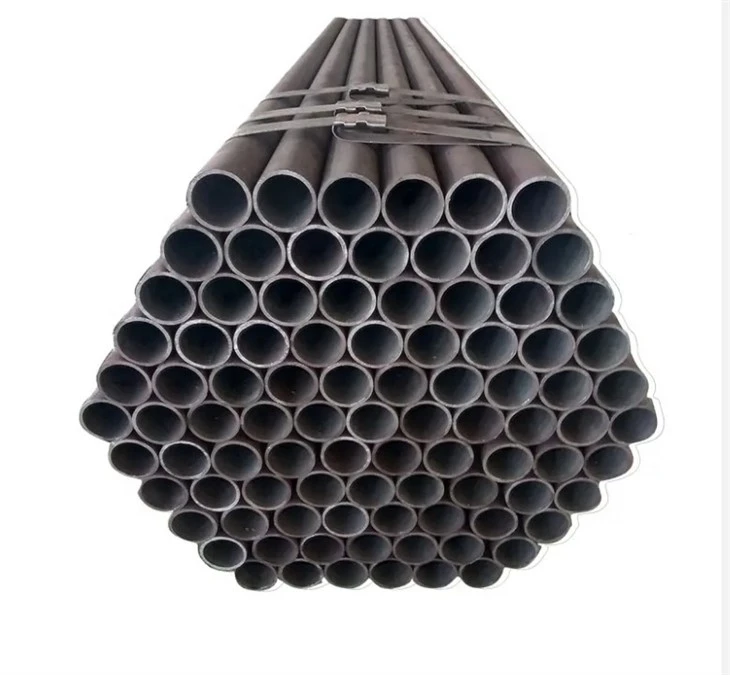
Standards also define the dimensional requirements of carbon steel pipes, including the outer diameter, wall thickness, and length. The outer diameter and wall thickness are critical for ensuring proper fit and performance in the intended application. For example, in a pipeline system, pipes need to have consistent diameters to ensure a proper connection and flow of fluids.
Quality Control in Production
To meet these standards, carbon steel pipe manufacturers implement strict quality control measures during the production process.
Raw Material Inspection
The first step is to inspect the raw materials. The steel used to make the pipes must meet the specified chemical composition and quality requirements. This helps ensure that the final product will have the desired properties.
Manufacturing Process Control
The manufacturing process, whether it's seamless or welded pipe production, is closely monitored. For seamless pipes, processes like piercing and rolling are carefully controlled to ensure uniform wall thickness and good surface finish. For welded pipes, the welding process is crucial. Weld quality is inspected using non - destructive testing methods such as ultrasonic testing, radiographic testing, and magnetic particle testing.
Final Product Testing
Once the pipes are manufactured, they undergo a series of final product tests. These tests include hydrostatic testing, which involves filling the pipe with water and pressurizing it to check for leaks and ensure the pipe can withstand the specified pressure. Other tests like hardness testing, impact testing, and chemical analysis are also performed to confirm that the pipes meet the standards.
Surface Finish and Coating
The surface finish of carbon steel pipes is also important. A smooth surface finish can reduce friction and improve the flow of fluids inside the pipe. Additionally, pipes are often coated to protect them from corrosion.
Black Mild Steel Pipe
Black Mild Steel Pipe is a type of carbon steel pipe with a black oxide coating. This coating provides some protection against corrosion, but it may not be sufficient for highly corrosive environments. In such cases, additional coatings like epoxy coatings or polyethylene coatings can be applied.
Why Standards Matter
Standards for carbon steel pipes are essential for several reasons.
Safety
First and foremost, standards ensure the safety of the end - users. Pipes that meet the standards are less likely to fail under normal operating conditions, reducing the risk of accidents such as leaks, explosions, or structural failures.
Quality Assurance
Standards also provide quality assurance. When you buy carbon steel pipes that meet recognized standards, you can be confident that you're getting a product that has been manufactured to a certain level of quality. This helps reduce the risk of product defects and ensures consistent performance.
Compatibility
Standards ensure compatibility between different components in a system. For example, pipes from different manufacturers that meet the same standards can be easily connected and used together in a pipeline system.
Contact Us for Your Carbon Steel Pipe Needs
If you're in the market for high - quality carbon steel pipes that meet all the relevant standards, look no further. As a reliable carbon steel pipe supplier, we have a wide range of pipes available, including Astm A106 Pipe, Api 5L Steel Pipe, and Black Mild Steel Pipe.
We understand the importance of standards and implement strict quality control measures to ensure that our pipes meet or exceed the requirements. Whether you're working on a small construction project or a large - scale industrial application, we can provide you with the right pipes for your needs.
Don't hesitate to reach out to us for more information or to discuss your specific requirements. We're here to help you make the best choice for your project.
References
- American Society for Testing and Materials (ASTM) standards
- American Petroleum Institute (API) standards
- International Organization for Standardization (ISO) standards