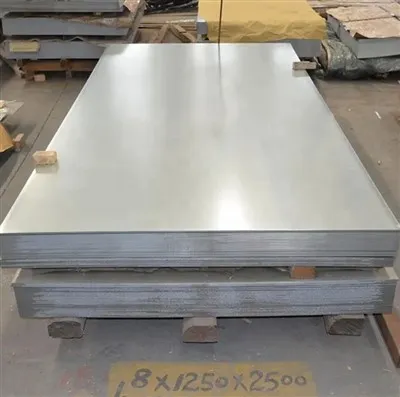
A36 angle bar is a widely used construction material known for its versatility and strength. As a leading supplier of A36 angle bar, I am often asked about the raw materials used in its production. In this blog post, I will delve into the components that make up A36 angle bar, providing you with a comprehensive understanding of what goes into this essential building product.
The Basics of A36 Steel
A36 steel is a carbon steel that is commonly used in structural applications. It is defined by the ASTM International standard A36/A36M, which specifies its chemical composition and mechanical properties. The "A" in A36 indicates that it is a carbon steel, while the "36" refers to its minimum yield strength of 36,000 pounds per square inch (psi).
Raw Materials for A36 Angle Bar
Iron Ore
The primary raw material for A36 angle bar is iron ore. Iron ore is a rock that contains varying amounts of iron oxides, such as hematite (Fe₂O₃) and magnetite (Fe₃O₄). These iron oxides are mined from the earth and then processed to extract the iron. The most common method of extracting iron from iron ore is through a process called smelting, which involves heating the ore with a reducing agent, such as coke, in a blast furnace.
Coke
Coke is a fuel that is made from coal. It is produced by heating coal in the absence of air, which removes volatile components and leaves behind a porous, carbon-rich material. Coke is used in the blast furnace as a reducing agent to convert the iron oxides in the iron ore into metallic iron. It also provides the heat necessary for the smelting process.
Limestone
Limestone is another important raw material in the production of A36 angle bar. It is added to the blast furnace to act as a flux, which helps to remove impurities from the iron ore. Limestone reacts with the impurities in the ore to form a slag, which floats on top of the molten iron and can be easily removed.
Scrap Steel
In addition to iron ore, coke, and limestone, scrap steel is also used in the production of A36 angle bar. Scrap steel is recycled steel that has been collected from various sources, such as old buildings, cars, and appliances. It is melted down and used as a substitute for some of the iron ore in the production process. Using scrap steel helps to reduce the environmental impact of steel production and conserve natural resources.
Alloying Elements
While the primary components of A36 steel are iron and carbon, small amounts of other elements are also added to improve its properties. These alloying elements include:
Manganese
Manganese is added to A36 steel to improve its strength and hardness. It also helps to reduce the brittleness of the steel and improve its weldability.
Phosphorus and Sulfur
Phosphorus and sulfur are impurities that are naturally present in iron ore and coal. However, they can have a negative impact on the properties of the steel if their levels are too high. Therefore, strict limits are placed on the amount of phosphorus and sulfur that can be present in A36 steel.
Silicon
Silicon is added to A36 steel to improve its strength and hardness. It also helps to deoxidize the steel and improve its resistance to oxidation.
Production Process
Once the raw materials have been collected and prepared, they are ready to be used in the production of A36 angle bar. The production process typically involves the following steps:
Melting
The raw materials are melted in a furnace to produce molten steel. The furnace can be a basic oxygen furnace (BOF) or an electric arc furnace (EAF). In a BOF, oxygen is blown into the molten iron to remove impurities and convert it into steel. In an EAF, an electric arc is used to heat the scrap steel and melt it down.
Refining
After the steel has been melted, it is refined to remove any remaining impurities and adjust its chemical composition. This can be done using a variety of techniques, such as ladle refining, vacuum degassing, and continuous casting.
Rolling
Once the steel has been refined, it is rolled into the desired shape and size. In the case of A36 angle bar, the steel is rolled into an L-shaped cross-section. The rolling process can be done using a hot rolling or cold rolling method. Hot rolling is typically used for larger sizes of angle bar, while cold rolling is used for smaller sizes and for producing a smoother surface finish.
Heat Treatment
After the angle bar has been rolled, it may be heat treated to improve its mechanical properties. Heat treatment involves heating the steel to a specific temperature and then cooling it at a controlled rate. This can be done to increase the strength, hardness, and toughness of the steel.
Quality Control
As a supplier of A36 angle bar, we take quality control very seriously. We have a strict quality control system in place to ensure that our products meet the highest standards of quality and performance. Our quality control measures include:
Chemical Analysis
We perform chemical analysis on every batch of A36 angle bar to ensure that it meets the specified chemical composition. This is done using a variety of techniques, such as spectroscopy and wet chemical analysis.


Mechanical Testing
We also perform mechanical testing on our A36 angle bar to ensure that it meets the specified mechanical properties. This includes testing for yield strength, tensile strength, elongation, and hardness.
Visual Inspection
In addition to chemical analysis and mechanical testing, we also perform a visual inspection of our A36 angle bar to ensure that it is free from defects, such as cracks, pits, and surface imperfections.
Applications of A36 Angle Bar
A36 angle bar is a versatile construction material that is used in a wide range of applications. Some of the common applications of A36 angle bar include:
Structural Support
A36 angle bar is commonly used as a structural support in buildings, bridges, and other construction projects. It can be used to form frames, trusses, and other structural components.
Bracing
A36 angle bar is also used as a bracing material to provide stability and support to structures. It can be used to brace walls, floors, and roofs.
Edging and Trim
A36 angle bar can be used as an edging and trim material to provide a finished look to structures. It can be used to trim the edges of countertops, shelves, and other surfaces.
Machinery and Equipment
A36 angle bar is also used in the manufacturing of machinery and equipment. It can be used to form frames, supports, and other components.
Conclusion
In conclusion, A36 angle bar is a widely used construction material that is made from a combination of iron ore, coke, limestone, scrap steel, and alloying elements. The production process involves melting, refining, rolling, and heat treatment to produce a high-quality product that meets the specified chemical composition and mechanical properties. As a supplier of A36 angle bar, we are committed to providing our customers with the highest quality products and services. If you are interested in purchasing A36 angle bar, please [contact us for procurement discussions]. We look forward to working with you.
References
- ASTM International. (n.d.). ASTM A36/A36M - Standard Specification for Carbon Structural Steel. Retrieved from [ASTM Website]
- Steel Manufacturing Process. (n.d.). Retrieved from [Steel Manufacturing Association Website]