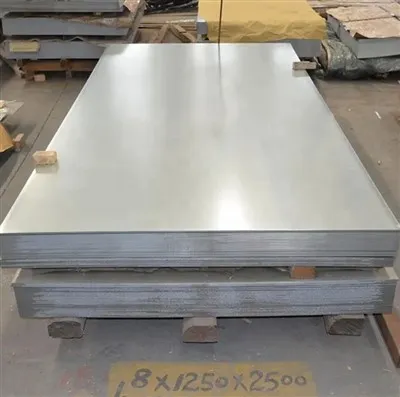
As a dedicated carbon steel coil supplier, I understand the critical role that formability plays in the performance and usability of our products. Formability refers to the ability of a material to undergo plastic deformation without cracking or failing. In the context of carbon steel coils, enhancing formability is essential for meeting the diverse needs of our customers, who often require these coils to be shaped into various components for different industries. In this blog post, I will share some effective strategies and techniques to improve the formability of carbon steel coils.

Understanding the Factors Affecting Formability
Before delving into the methods to improve formability, it is crucial to understand the factors that influence it. The formability of carbon steel coils is affected by several factors, including chemical composition, microstructure, mechanical properties, and processing conditions.

- Chemical Composition: The chemical composition of carbon steel plays a significant role in its formability. Elements such as carbon, manganese, silicon, sulfur, and phosphorus can have a profound impact on the material's mechanical properties and formability. For example, increasing the carbon content generally reduces formability due to the formation of harder and more brittle phases. On the other hand, elements like manganese can improve formability by enhancing the material's ductility.
- Microstructure: The microstructure of carbon steel, which includes the grain size, phase distribution, and texture, also affects its formability. A fine-grained microstructure typically exhibits better formability compared to a coarse-grained one. Additionally, the presence of certain phases, such as ferrite and bainite, can enhance formability, while the presence of martensite can reduce it.
- Mechanical Properties: The mechanical properties of carbon steel, such as yield strength, tensile strength, and elongation, are closely related to its formability. Materials with lower yield strength and higher elongation generally have better formability. These properties can be controlled through appropriate heat treatment and processing techniques.
- Processing Conditions: The processing conditions during the production of carbon steel coils, such as rolling temperature, rolling speed, and reduction ratio, can significantly affect their formability. For example, hot rolling at a suitable temperature can refine the microstructure and improve formability, while cold rolling can increase the strength and hardness of the material but may reduce its formability.
Strategies to Improve Formability
Based on the understanding of the factors affecting formability, the following strategies can be employed to enhance the formability of carbon steel coils:

Optimize Chemical Composition
- Control Carbon Content: As mentioned earlier, the carbon content has a significant impact on formability. By carefully controlling the carbon content within a specific range, it is possible to balance the material's strength and formability. For most applications, a lower carbon content is preferred to improve formability.
- Add Alloying Elements: Alloying elements can be added to carbon steel to improve its formability. For example, the addition of small amounts of niobium, vanadium, or titanium can refine the grain size and enhance the material's ductility. Manganese can also be added to improve formability by increasing the material's hardenability and reducing the formation of brittle phases.
Refine Microstructure
- Thermal Treatment: Heat treatment processes, such as annealing, normalizing, and quenching and tempering, can be used to refine the microstructure of carbon steel coils and improve their formability. Annealing, for example, can relieve internal stresses, reduce hardness, and improve ductility. Normalizing can refine the grain size and improve the material's mechanical properties.
- Thermomechanical Processing: Thermomechanical processing combines deformation and heat treatment to achieve a desired microstructure and improve formability. This process involves controlled rolling at specific temperatures and reduction ratios, followed by appropriate cooling rates. Thermomechanical processing can refine the grain size, improve the texture, and enhance the material's formability.
Control Mechanical Properties
- Reduce Yield Strength: Lowering the yield strength of carbon steel coils can improve their formability. This can be achieved through appropriate heat treatment or by using alloying elements that reduce the material's strength. For example, the addition of certain elements can increase the material's ductility and reduce its yield strength.
- Increase Elongation: Increasing the elongation of carbon steel coils is another effective way to improve formability. This can be accomplished by optimizing the chemical composition, refining the microstructure, and controlling the processing conditions. For example, a fine-grained microstructure and a proper heat treatment can increase the material's elongation.
Improve Processing Conditions
- Optimize Rolling Parameters: The rolling parameters, such as rolling temperature, rolling speed, and reduction ratio, have a significant impact on the formability of carbon steel coils. By optimizing these parameters, it is possible to achieve a desired microstructure and improve formability. For example, hot rolling at a suitable temperature can refine the grain size and improve formability, while cold rolling can increase the strength and hardness of the material but may reduce its formability.
- Apply Surface Treatment: Surface treatment can also improve the formability of carbon steel coils. For example, applying a lubricant during the forming process can reduce friction and prevent cracking. Additionally, surface coatings can protect the material from corrosion and improve its surface quality, which can enhance formability.
Applications of High-Formability Carbon Steel Coils
Improving the formability of carbon steel coils opens up a wide range of applications in various industries. Some of the common applications include:
- Automotive Industry: High-formability carbon steel coils are widely used in the automotive industry for the production of various components, such as body panels, frames, and suspension parts. The ability to form complex shapes without cracking or failing is essential for meeting the design requirements of modern vehicles.
- Construction Industry: In the construction industry, carbon steel coils with good formability are used for the fabrication of structural components, such as beams, columns, and roofing sheets. The formability of these coils allows for easy shaping and installation, making them suitable for a variety of construction projects.
- Manufacturing Industry: The manufacturing industry also relies on high-formability carbon steel coils for the production of a wide range of products, including appliances, machinery, and furniture. The ability to form these coils into different shapes and sizes enables manufacturers to meet the specific requirements of their customers.
Conclusion
Improving the formability of carbon steel coils is essential for meeting the diverse needs of our customers and ensuring the success of various industries. By understanding the factors affecting formability and implementing the strategies discussed in this blog post, we can enhance the quality and performance of our carbon steel coils. At our company, we are committed to providing high-quality carbon steel coils with excellent formability. Our products, such as Hr Sheet Coil, Hr Slit Coil, and Hot Rolled Steel Sheet In Coil, are designed to meet the strictest industry standards and customer requirements.

If you are interested in purchasing high-formability carbon steel coils or have any questions about our products, please feel free to contact us. We look forward to discussing your specific needs and providing you with the best solutions.
References
- ASM Handbook, Volume 1: Properties and Selection: Irons, Steels, and High-Performance Alloys. ASM International, 1990.
- Fundamentals of Metal Forming. By Dieter, G. E. McGraw-Hill, 1986.
- Steelmaking and Refining Volume 2: Steel Products and Applications. Edited by G. Krauss. ASM International, 2004.