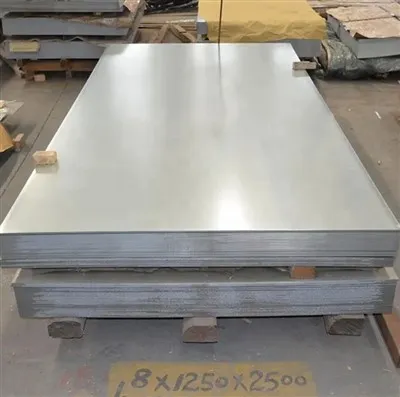
As a supplier of Ss304 Plate, I am often asked about the manufacturing process of this widely used stainless - steel product. In this blog, I will take you through the journey of how Ss304 Plate is made from raw materials.
Raw Materials
The primary raw materials for Ss304 Plate are iron ore, chromium, nickel, and a variety of other alloying elements. Iron ore is the base metal, which provides the bulk of the material. Chromium is added to enhance corrosion resistance. For Ss304, the chromium content is typically around 18 - 20%. Nickel, with a content of about 8 - 10.5%, further improves corrosion resistance and gives the steel its austenitic structure, which makes it non - magnetic and highly formable.
Other alloying elements such as manganese, silicon, and carbon are also added in small amounts. Manganese helps in deoxidation during the melting process and improves the hot - working properties of the steel. Silicon acts as a deoxidizer and also enhances the strength and hardness of the steel. Carbon, although present in a relatively low amount (usually less than 0.08%), can affect the strength and weldability of the Ss304 Plate.
Melting Process
The first step in making Ss304 Plate is the melting of the raw materials. This is usually done in an electric arc furnace (EAF) or a basic oxygen furnace (BOF). In an EAF, high - intensity electric arcs are used to generate heat, which melts the scrap steel and other raw materials. The advantage of an EAF is that it can use a large amount of scrap steel, which is more environmentally friendly and cost - effective.
In a BOF, pure oxygen is blown into the molten iron to remove impurities such as carbon, silicon, and phosphorus. This process is very efficient for large - scale production. After the initial melting, the molten steel is refined in a ladle furnace. Here, the temperature and chemical composition of the steel are precisely adjusted. Alloying elements are added in the right proportions to achieve the desired chemical composition of Ss304.
Continuous Casting
Once the molten steel has the correct chemical composition, it is ready for continuous casting. In this process, the molten steel is poured into a water - cooled copper mold. As the steel passes through the mold, it starts to solidify from the outside. The solidified shell is then pulled out of the mold at a controlled speed, and more molten steel is continuously poured in.

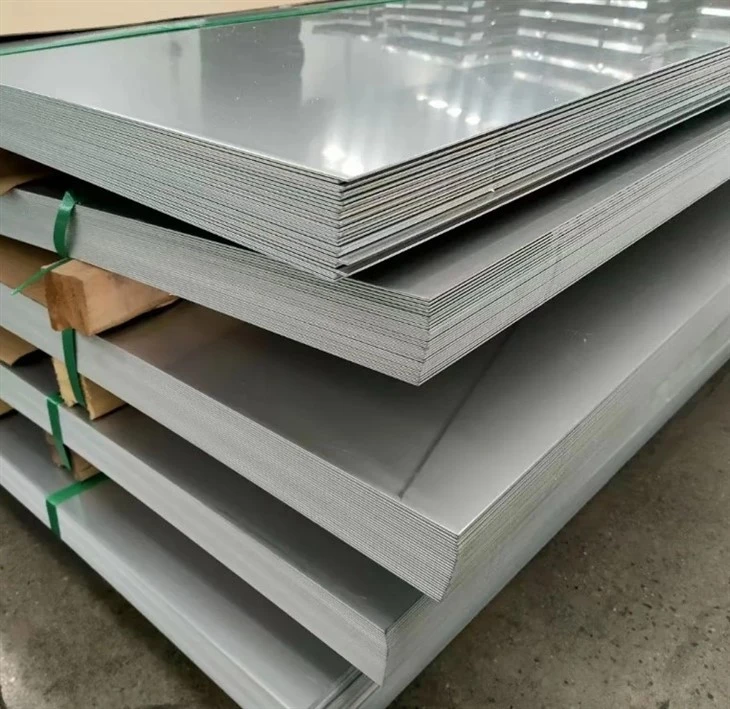
This results in a long, rectangular - shaped slab. The continuous casting process is highly efficient and produces slabs with a uniform cross - section and good surface quality. These slabs are the intermediate product that will be further processed into Ss304 Plate.
Hot Rolling
The next step is hot rolling. The slabs are reheated to a high temperature, usually around 1100 - 1200°C. At this temperature, the steel becomes soft and malleable. The heated slabs are then passed through a series of rolling mills. Each pass through the rolling mill reduces the thickness of the slab and increases its length.
Hot rolling not only reduces the thickness of the slab to the desired plate thickness but also improves the mechanical properties of the steel. The grains in the steel are refined, and the internal stresses are relieved. The hot - rolled Ss304 Plate can have a wide range of thicknesses, from a few millimeters to several centimeters.
Cold Rolling (Optional)
In some cases, the hot - rolled Ss304 Plate may undergo cold rolling. Cold rolling is done at room temperature. The hot - rolled plate is passed through cold - rolling mills, which further reduce its thickness and improve its surface finish. Cold - rolled Ss304 Plate has a smoother surface, better dimensional accuracy, and higher strength compared to hot - rolled plate.
However, cold rolling also work - hardens the steel, which means that it becomes more brittle. To relieve the internal stresses and restore the ductility of the steel, the cold - rolled plate is usually annealed. Annealing involves heating the plate to a specific temperature and then cooling it slowly.
Surface Treatment
After rolling, the Ss304 Plate may undergo various surface treatments. One common surface treatment is pickling. Pickling involves immersing the plate in an acid solution to remove the scale and other impurities on the surface. This gives the plate a clean and smooth surface.
Another surface treatment is passivation. Passivation is a chemical process that forms a thin, protective oxide layer on the surface of the plate. This oxide layer further enhances the corrosion resistance of the Ss304 Plate.
Quality Control
Throughout the manufacturing process, strict quality control measures are in place. Samples are taken at various stages to test the chemical composition, mechanical properties, and surface quality of the Ss304 Plate. Non - destructive testing methods such as ultrasonic testing, magnetic particle testing, and eddy - current testing are used to detect any internal defects in the plate.
The finished Ss304 Plate must meet the relevant industry standards, such as ASTM A240 for stainless - steel plates. Only plates that pass all the quality control tests are considered suitable for sale.
Product Applications
Ss304 Plate is widely used in various industries due to its excellent corrosion resistance, formability, and strength. It is commonly used in the food and beverage industry for making storage tanks, processing equipment, and conveyor belts. In the construction industry, Ss304 Plate is used for building facades, roofing, and structural components.
In the chemical industry, it is used for manufacturing reaction vessels, pipes, and valves. The 304L Stainless Steel Plate is a low - carbon version of Ss304, which is often used in applications where weldability is crucial. The 1 4 Inch Stainless Steel Plate is a specific thickness option that can be used in a variety of projects.
Contact for Purchase
If you are in need of high - quality Ss304 Plate, we are here to serve you. Our Ss304 Plates are manufactured with the highest standards and strict quality control. Whether you need a small quantity for a specific project or a large - scale supply for your business, we can meet your requirements. Contact us today to start a purchase negotiation and find the best Ss304 Plate solution for you.
References
- ASM Handbook Committee. (2004). ASM Handbook Volume 1: Properties and Selection: Irons, Steels, and High - Performance Alloys. ASM International.
- Degarmo, E. P., Black, J. T., & Kohser, R. A. (2003). Materials and Processes in Manufacturing. John Wiley & Sons.
- Schaeffler, A. L. (1949). Constitution Diagram for Stainless Steel Weld Metals. Welding Journal.