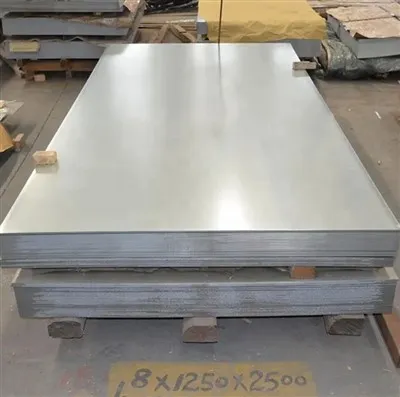
Over the centuries, the production technology of steel plates has undergone a remarkable evolution, shaped by technological advancements, economic demands, and scientific discoveries. As a long - standing steel plate supplier, I've witnessed firsthand how these changes have transformed the industry. This blog post will explore the key milestones in the evolution of steel plate production technology.
Early Beginnings: The Forge and the Bessemer Process
The story of steel plate production dates back to ancient times. In the early days, steel was produced in small quantities through a labor - intensive process in forges. Blacksmiths would heat iron and repeatedly hammer it to remove impurities and shape it into various forms. This method was slow, and the quality of the steel was inconsistent.
The real turning point came in the 19th century with the invention of the Bessemer process by Henry Bessemer in 1856. This was a revolutionary method that allowed for the mass production of steel. The Bessemer converter was a large, pear - shaped vessel where molten pig iron was poured. Air was blown through the molten iron from the bottom, which burned off impurities such as carbon, silicon, and manganese. This oxidation process generated heat, which kept the iron molten. As a result, large quantities of steel could be produced in a relatively short time. The Bessemer process made steel more affordable and accessible, and it led to a boom in the construction of bridges, railways, and buildings. For example, the Eads Bridge in St. Louis, completed in 1874, was one of the first major structures to use Bessemer - made steel plates, demonstrating the new material's strength and durability.
The Open - Hearth Process: Refinement and Quality Improvement
While the Bessemer process was a significant step forward, it had its limitations. It was difficult to control the exact composition of the steel, and it was not suitable for removing certain impurities. In the late 19th century, the open - hearth process emerged as an alternative.
The open - hearth furnace was a large, shallow furnace where iron, scrap metal, and limestone were melted together. The process was slower than the Bessemer process, but it allowed for better control of the steel's composition. By adjusting the amounts of different raw materials and using oxygen to speed up the oxidation process, steelmakers could produce steel with more consistent quality and a wider range of properties. The open - hearth process was widely used for several decades and was instrumental in the development of high - quality steel plates for applications such as shipbuilding and heavy machinery.
The Electric Arc Furnace: A New Era of Efficiency and Flexibility
In the 20th century, the electric arc furnace (EAF) revolutionized steel plate production. The EAF uses electricity to create an arc between electrodes and the scrap metal, which melts the metal. This process has several advantages over the previous methods.
Firstly, it can use a high proportion of scrap metal as a raw material. This not only reduces the demand for virgin iron ore but also makes the production process more environmentally friendly. Secondly, the EAF can be started and stopped relatively quickly, allowing for more flexibility in production. Steelmakers can adjust the production volume according to market demand. Thirdly, the EAF can produce high - quality steel with precise control of the chemical composition. This is particularly important for specialty steel plates used in industries such as aerospace and automotive.
Today, EAF technology continues to evolve. Modern EAFs are equipped with advanced automation systems that can monitor and control every aspect of the melting process, from the temperature and power consumption to the chemical composition of the steel. This has led to even higher quality and more efficient production of steel plates.
Continuous Casting: Streamlining the Production Process
Another significant development in steel plate production is continuous casting. Before continuous casting, steel was cast into ingots, which were then reheated and rolled into plates. This process was time - consuming and energy - intensive.
Continuous casting, introduced in the mid - 20th century, is a more efficient method. In continuous casting, molten steel is poured into a water - cooled mold, where it begins to solidify. As the steel solidifies, it is continuously pulled out of the mold in the form of a long strand. This strand can then be cut into slabs of the desired length, which are further processed into steel plates. Continuous casting reduces the number of production steps, saves energy, and improves the quality of the steel plates. It also allows for the production of steel plates with more uniform thickness and better surface finish.
Advanced Rolling Technologies: Precision and Performance
Rolling is a crucial step in the production of steel plates. Over the years, rolling technologies have advanced significantly to produce steel plates with better mechanical properties and dimensional accuracy.
One of the key advancements is the development of controlled rolling and accelerated cooling. Controlled rolling involves carefully controlling the temperature, deformation, and time during the rolling process. By doing so, the microstructure of the steel can be optimized, resulting in improved strength, toughness, and ductility. Accelerated cooling is often used in conjunction with controlled rolling. After rolling, the steel plate is rapidly cooled, which further refines the microstructure and enhances the mechanical properties.


Another important development is the use of computer - controlled rolling mills. These mills can precisely control the rolling speed, pressure, and gap between the rolls, ensuring that the steel plates meet the exact specifications required by customers. For example, in the production of Astm A36 Carbon Steel Plate, computer - controlled rolling mills can ensure that the plate has the right thickness, flatness, and surface quality.
Specialized Steel Plate Grades: Meeting Diverse Industry Needs
As industries have become more specialized, the demand for steel plates with specific properties has increased. Steelmakers have responded by developing a wide range of specialized steel plate grades.
For example, A992 Steel Plate is a high - strength, low - alloy steel that is commonly used in structural applications. It has excellent weldability and ductility, making it suitable for building frames, bridges, and other large - scale structures. S275Jr Carbon Steel is another popular grade that offers a good balance of strength and toughness. It is often used in general construction and engineering applications.
In addition to these, there are also specialty steel plates for specific industries. For the oil and gas industry, corrosion - resistant steel plates are required to withstand the harsh environments of offshore platforms and pipelines. In the automotive industry, high - strength steel plates are used to reduce the weight of vehicles while maintaining safety standards.
Conclusion: Looking to the Future
The evolution of steel plate production technology has been a continuous journey of innovation and improvement. From the early days of forging to the modern, high - tech production methods, each stage has brought significant advancements in quality, efficiency, and versatility.
As a steel plate supplier, I'm excited to see what the future holds. With the growing demand for sustainable and high - performance materials, I believe that the industry will continue to invest in research and development. New technologies such as additive manufacturing (3D printing) of steel may also play a role in the future of steel plate production, offering even more flexibility in design and production.
If you're in the market for high - quality steel plates, I invite you to contact us for a detailed discussion about your specific requirements. Our team of experts is ready to provide you with the best solutions and products to meet your needs. We look forward to the opportunity to work with you.
References
- Bain, E. C. (1964). Principles of the steelmaking process. Addison - Wesley.
- Campbell, J. (2008). Castings. Butterworth - Heinemann.
- Llewellyn, D. T. (2002). The physical metallurgy of steels. Institute of Materials.