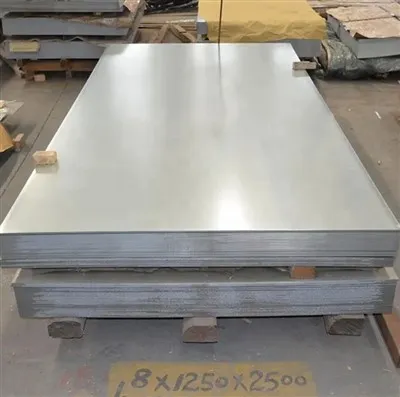
As a supplier of Ipe S235, I've witnessed firsthand the importance of understanding how temperature affects the properties of this widely - used structural steel. In this blog, we'll explore the scientific aspects of how temperature variations can impact the characteristics of Ipe S235, which is crucial for anyone involved in construction, engineering, or related industries.
General Properties of Ipe S235
Ipe S235 is a type of structural steel commonly used in construction projects. It has a minimum yield strength of 235 MPa, which makes it suitable for a variety of applications, such as building frames, bridges, and machinery parts. The steel has good weldability and formability, allowing it to be easily fabricated into different shapes. It also offers reasonable corrosion resistance, although proper surface treatment is often required for long - term durability in harsh environments.
Effect of Low Temperatures
Brittleness
One of the most significant effects of low temperatures on Ipe S235 is an increase in brittleness. At low temperatures, the steel's ability to deform plastically before fracturing is reduced. The atoms in the steel lattice have less thermal energy, which restricts their movement. As a result, when the steel is subjected to stress, it is more likely to crack suddenly rather than bend. For example, in cold climates where the ambient temperature can drop well below freezing, structures made of Ipe S235 need to be carefully designed to account for this increased brittleness.
Impact Resistance
Low temperatures also have a negative impact on the impact resistance of Ipe S235. Impact tests, such as the Charpy V - notch test, show that the energy absorbed by the steel during impact decreases as the temperature drops. This means that the steel is more prone to failure when hit by a sudden load. In applications where impact loads are possible, like in machinery or transportation infrastructure, engineers need to select appropriate grades of Ipe S235 or use additional protective measures to ensure the safety and reliability of the structure at low temperatures.
Effect of High Temperatures
Reduction in Yield Strength
As the temperature of Ipe S235 increases, its yield strength starts to decline. At high temperatures, the thermal energy causes the atoms in the steel to vibrate more vigorously. This increased atomic movement weakens the bonds between the atoms, making it easier for dislocations (defects in the crystal lattice) to move. As a result, the steel can deform more easily under stress. For instance, in a fire situation, the temperature can rise rapidly, and the reduction in yield strength of Ipe S235 can lead to the collapse of structures. Building codes often require fire - resistant coatings or fire - protection systems for steel structures to prevent such failures.
Creep
Another important phenomenon at high temperatures is creep. Creep is the time - dependent deformation of a material under a constant load. In Ipe S235, at elevated temperatures, the steel will gradually deform over time even if the applied load is below its yield strength. This is because the increased thermal energy allows the atoms to rearrange themselves slowly, causing the steel to stretch or deform. In industrial applications where steel components are exposed to high temperatures and constant loads, such as in power plants or furnaces, creep must be considered in the design to ensure the long - term integrity of the structure.
Microstructural Changes
Phase Transformations
Temperature changes can also cause microstructural changes in Ipe S235. At low temperatures, the steel may undergo a phase transformation from a ductile ferrite - pearlite structure to a more brittle martensite structure. Martensite is a very hard and brittle phase that forms when the steel is rapidly cooled. On the other hand, at high temperatures, the steel may experience recrystallization, where new grains are formed in the microstructure. This can change the mechanical properties of the steel, such as its strength and ductility.
Applications and Considerations Based on Temperature Effects
Cold - Climate Construction
In cold - climate regions, engineers need to use Ipe S235 with appropriate impact - resistant properties. They may also choose to use pre - heating techniques during welding to prevent the formation of brittle zones in the weld area. Additionally, proper insulation and heating systems can be installed in buildings to maintain a more stable temperature inside the steel structures.
High - Temperature Environments
For applications in high - temperature environments, such as in industrial furnaces or power generation plants, Ipe S235 may need to be replaced with more heat - resistant alloys or coated with high - temperature - resistant materials. Regular inspections are also necessary to detect any signs of creep or other temperature - related damage.
Related Products and Their Applications
When considering the use of Ipe S235 in different temperature conditions, it's also important to be aware of related products. For example, Profil Upn 100 is a type of steel profile that can be used in combination with Ipe S235 in construction projects. It offers different structural characteristics and can be used to enhance the overall strength and stability of the structure.
Carbon Steel H Beam is another popular product. H - beams are known for their high load - carrying capacity and are often used in large - scale construction projects. They can be used in conjunction with Ipe S235 to create more complex and robust structures.
H Beam 300 X 300 is a specific size of H - beam that provides a good balance between strength and cost - effectiveness. It can be used in various applications, including building frames and bridges, and can work well with Ipe S235 depending on the design requirements.
Conclusion
Understanding how temperature affects the properties of Ipe S235 is essential for ensuring the safety and reliability of steel structures. Whether it's in cold - climate construction or high - temperature industrial applications, engineers and construction professionals need to take into account the changes in brittleness, yield strength, impact resistance, and other properties caused by temperature variations.


As a supplier of Ipe S235, I'm committed to providing high - quality products and sharing technical knowledge with our customers. If you're involved in a project that requires Ipe S235 or any of our related products, I encourage you to contact us for further discussion and procurement. We can offer expert advice on selecting the right materials based on the specific temperature conditions of your project.
References
- ASM Handbook, Volume 1: Properties and Selection: Irons, Steels, and High - Performance Alloys
- Eurocode 3: Design of Steel Structures, Part 1 - 1: General Rules and Rules for Buildings
- "Steel Structures: Design and Behavior" by S. Timoshenko and J. M. Gere