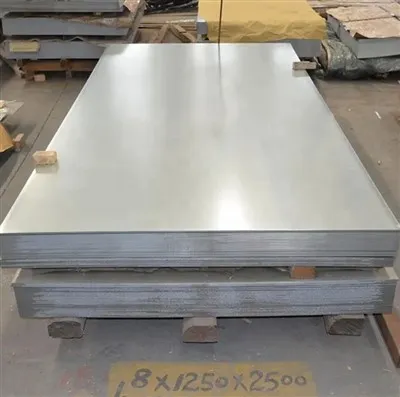
A36 angle bar is a commonly used structural steel product known for its versatility and strength. As a reliable supplier of A36 angle bar, I often receive inquiries about its performance in various applications, including thermal insulation. In this blog post, I will delve into how A36 angle bar performs in terms of thermal insulation, exploring its properties, influencing factors, and practical implications.
Understanding A36 Angle Bar
Before discussing thermal insulation, it's essential to understand what A36 angle bar is. A36 is a carbon steel with a relatively low carbon content, typically around 0.29%. The angle bar, as the name suggests, has an L - shaped cross - section, which provides excellent structural support in construction, machinery, and other engineering projects. It comes in different sizes and thicknesses to meet diverse requirements. You can explore our Equal Angle Bar, Galvanised Angle Bar, and Perforated Angle Bar options for more details.


Thermal Conductivity of A36 Angle Bar
Thermal conductivity is a key parameter when evaluating the thermal insulation performance of a material. It measures the ability of a material to conduct heat. A36 angle bar, being a metal, has a relatively high thermal conductivity. The thermal conductivity of carbon steel like A36 is approximately 45 - 50 W/(m·K) at room temperature. This high value indicates that A36 angle bar can transfer heat quite efficiently.
In comparison, materials known for good thermal insulation, such as fiberglass (thermal conductivity around 0.03 - 0.04 W/(m·K)) or expanded polystyrene (around 0.033 - 0.044 W/(m·K)), have significantly lower thermal conductivities. This means that in terms of pure thermal insulation, A36 angle bar is not a good choice on its own.
Factors Affecting Thermal Insulation Performance
Surface Coating
One way to improve the thermal insulation performance of A36 angle bar is through surface coating. For example, galvanizing, which involves applying a layer of zinc to the surface of the angle bar, can have a minor impact on thermal transfer. The zinc layer acts as a barrier to some extent, reducing the direct contact between the steel and the surrounding environment. Our Galvanised Angle Bar not only offers corrosion resistance but also a small improvement in thermal insulation.
Thickness and Geometry
The thickness and geometry of the A36 angle bar can also affect its thermal behavior. A thicker angle bar may have a slightly lower heat transfer rate compared to a thinner one, as there is more material for the heat to pass through. Additionally, the L - shaped geometry can create some air pockets within the structure. Although these air pockets are not as effective as dedicated insulation materials, they can still contribute to a small reduction in heat transfer.
Surrounding Insulation
In practical applications, the thermal insulation performance of A36 angle bar is often considered in the context of the surrounding insulation materials. When used in a building structure, for example, the angle bar may be surrounded by insulation boards or other insulating materials. These materials can significantly reduce the overall heat transfer through the structure, even though the angle bar itself has high thermal conductivity.
Practical Implications in Different Applications
Construction
In construction, A36 angle bar is widely used for structural support. However, due to its poor thermal insulation properties, it can cause thermal bridging. Thermal bridging occurs when a material with high thermal conductivity creates a path for heat to bypass the insulation. In a building wall, for instance, if A36 angle bars are used as framing members and are in direct contact with the interior and exterior environments, they can allow heat to flow more easily, leading to energy losses.
To mitigate this issue, construction professionals often use thermal breaks. A thermal break is a material with low thermal conductivity placed between the angle bar and the surrounding structure to reduce heat transfer. This can improve the overall energy efficiency of the building.
Industrial Equipment
In industrial equipment, A36 angle bar is used for various structural components. In applications where temperature control is crucial, such as in refrigeration units or high - temperature furnaces, additional insulation measures need to be taken. For example, in a refrigeration unit, the angle bar used for the frame may be wrapped with insulation materials to prevent heat from entering the cold space.
Improving Thermal Insulation in A36 Angle Bar Applications
Insulation Wrapping
One straightforward method is to wrap the A36 angle bar with insulation materials. Fiberglass insulation blankets or foam insulation sleeves can be used to cover the angle bar. This effectively reduces the heat transfer by adding a layer of low - conductivity material around the bar.
Composite Structures
Another approach is to use composite structures. For example, the angle bar can be integrated with insulation panels. This way, the structural strength of the angle bar is combined with the thermal insulation properties of the panels.
Conclusion
In conclusion, A36 angle bar, with its high thermal conductivity, is not a good thermal insulation material on its own. However, in practical applications, its role in thermal insulation is more complex. Through surface coating, proper design considering thickness and geometry, and the use of surrounding insulation materials, its negative impact on thermal insulation can be mitigated.
If you are considering using A36 angle bar in your project and have concerns about thermal insulation, I encourage you to contact us for more information. Our team of experts can provide you with detailed advice on how to optimize the use of A36 angle bar in terms of both structural strength and thermal performance. Whether you need Equal Angle Bar, Galvanised Angle Bar, or Perforated Angle Bar, we are here to support your procurement needs. Let's discuss your project requirements and find the best solutions together.
References
- Incropera, F. P., & DeWitt, D. P. (2002). Fundamentals of Heat and Mass Transfer. John Wiley & Sons.
- ASM Handbook Committee. (1990). ASM Handbook: Properties and Selection: Irons, Steels, and High - Performance Alloys. ASM International.