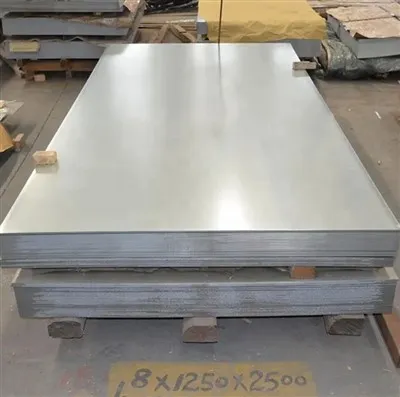
Hey there! As a supplier of Ss304 Plate, I often get asked about how its tensile and yield strengths stack up against other materials. So, I thought I'd take a deep dive into this topic and share some insights with you.
First off, let's quickly go over what tensile and yield strengths mean. Tensile strength is the maximum amount of stress a material can handle before it breaks or fractures when being pulled or stretched. Yield strength, on the other hand, is the stress at which a material starts to deform permanently. These two properties are super important when it comes to choosing the right material for different applications.
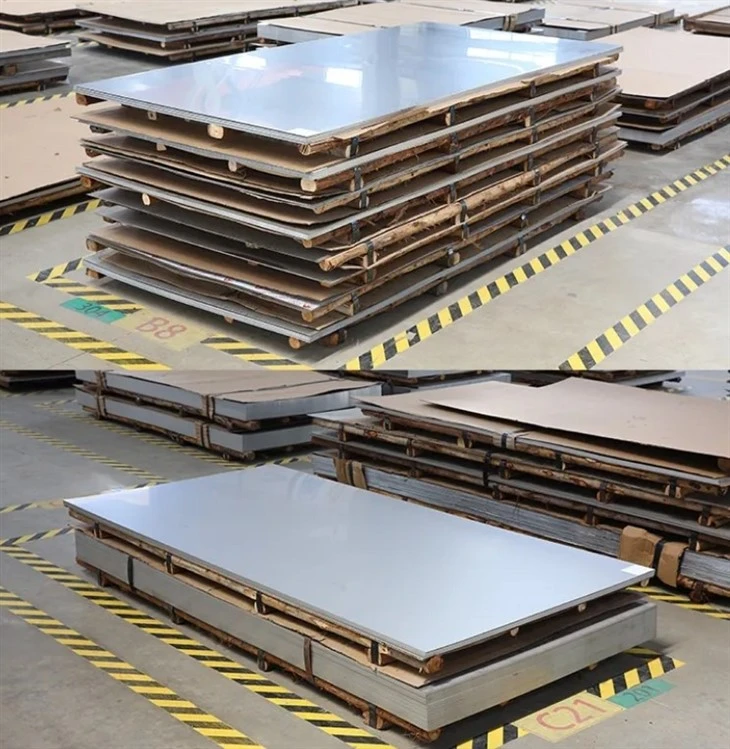

Ss304 Plate is a popular choice in many industries, and for good reason. It's a type of austenitic stainless steel that contains about 18% chromium and 8% nickel. This composition gives it excellent corrosion resistance, good formability, and decent strength.
Now, let's compare its tensile and yield strengths with some other common materials.
Comparison with Mild Steel
Mild steel is one of the most widely used materials in construction and manufacturing. It's relatively inexpensive and easy to work with. But when it comes to strength, Ss304 Plate has an edge.
The typical tensile strength of mild steel ranges from about 400 - 550 MPa. In contrast, Ss304 Plate usually has a tensile strength of around 515 - 650 MPa. That means Ss304 can withstand more pulling force before breaking.
As for yield strength, mild steel typically has a yield strength of about 250 - 350 MPa. Ss304 Plate has a yield strength of around 205 - 240 MPa in the annealed condition. However, through cold working, the yield strength of Ss304 can be significantly increased. Cold working involves processes like rolling or bending the material at room temperature, which makes the grains in the metal structure smaller and more tightly packed, thus increasing its strength.
Comparison with 316 Stainless Steel Plate
316 Stainless Steel Plate is another austenitic stainless steel, but it contains molybdenum in addition to chromium and nickel. This gives it even better corrosion resistance, especially in environments with chloride ions, like coastal areas or chemical processing plants.
In terms of tensile strength, 316 Stainless Steel Plate has a similar range to Ss304 Plate, usually around 515 - 650 MPa. The yield strength of 316 is also comparable, with values around 205 - 240 MPa in the annealed state. However, the addition of molybdenum in 316 can give it slightly better strength in certain corrosive environments.
If you're working in a less corrosive environment and cost is a factor, Ss304 Plate might be a better choice. But if you need maximum corrosion resistance, 316 could be worth the extra investment.
Comparison with 309 Stainless Steel Plate
309 Stainless Steel Plate is designed for high - temperature applications. It has a higher chromium and nickel content than Ss304, which gives it better oxidation resistance at elevated temperatures.
The tensile strength of 309 Stainless Steel Plate is generally higher than Ss304. It can have a tensile strength of around 585 - 760 MPa. The yield strength of 309 is also higher, typically around 240 - 310 MPa. So, if you're dealing with high - temperature applications where strength at elevated temperatures is crucial, 309 might be the way to go. But for normal, room - temperature applications, Ss304 is often sufficient and more cost - effective.
Applications Based on Strength
The differences in tensile and yield strengths between Ss304 Plate and other materials determine their suitability for different applications.
- Food and Beverage Industry: Ss304 Plate is a top choice here because of its corrosion resistance and relatively good strength. It's used in equipment like storage tanks, processing vessels, and conveyor systems. The strength of Ss304 ensures that these structures can withstand the weight of the contents and any mechanical stresses during operation.
- Construction: In building construction, mild steel is often used for structural frames because it's cheap and has sufficient strength for most low - to medium - rise buildings. However, Ss304 Plate can be used in areas where corrosion resistance is a concern, such as in coastal buildings or in structures exposed to chemicals. For example, it can be used for handrails, cladding, and decorative elements.
- Chemical Processing: 316 Stainless Steel Plate is commonly used in chemical processing plants due to its superior corrosion resistance. But Ss304 can still be used in less aggressive chemical environments where its strength and corrosion resistance are sufficient.
Why Choose Our Ss304 Plate
As a supplier of Ss304 Plate, I can tell you that our product is of the highest quality. We source our raw materials from reliable suppliers and use advanced manufacturing processes to ensure consistent strength and quality.
Our Ss304 Plate is available in a variety of thicknesses and sizes to meet your specific needs. Whether you need a small quantity for a DIY project or a large order for an industrial application, we've got you covered.
We also offer excellent customer service. Our team of experts can help you choose the right grade and size of Ss304 Plate for your project, and we can provide technical support throughout the process.
If you're in the market for Ss304 Plate or have any questions about its tensile and yield strengths or how it compares to other materials, don't hesitate to reach out. We're here to help you make the best choice for your project.
Conclusion
In conclusion, Ss304 Plate offers a good balance of strength, corrosion resistance, and cost - effectiveness. While it may not be the strongest material out there in all conditions, it's well - suited for a wide range of applications. By understanding how its tensile and yield strengths compare to other materials, you can make an informed decision when choosing the right material for your project.
If you're interested in purchasing Ss304 Plate or want to learn more about our products, feel free to get in touch. We'd love to have a chat and see how we can meet your requirements.
References
- ASM Handbook Volume 1: Properties and Selection: Irons, Steels, and High - Performance Alloys
- Stainless Steel World Magazine
- Materials Science and Engineering: An Introduction by William D. Callister Jr. and David G. Rethwisch