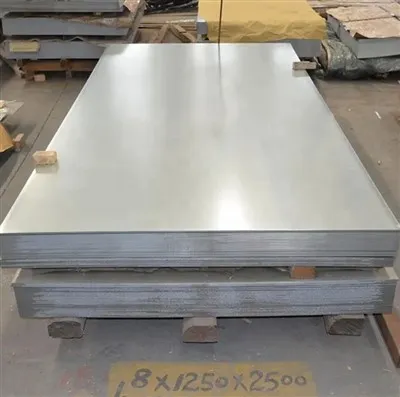
Hey there! As a supplier of Ss304 plates, I often get asked whether the hardness of Ss304 plates can be changed. Well, the short answer is yes, it can. But let's dig deeper into this topic and explore how and why.
First off, let's understand what Ss304 is. Ss304, also known as 304 Stainless Steel Plate, is one of the most widely used grades of stainless steel. It's austenitic, which means it has a face - centered cubic crystal structure. This structure gives it good corrosion resistance, formability, and weldability. You can find more about it on our website 304 Stainless Steel Plate.
Now, the hardness of a material is a measure of its resistance to localized deformation, usually by indentation. In the case of Ss304 plates, the as - received hardness is typically in a certain range. But depending on the application, sometimes we need to adjust this hardness.
One of the most common ways to change the hardness of Ss304 plates is through cold working. Cold working involves deforming the metal at room temperature. When we roll, bend, or draw the Ss304 plate at room temperature, we're essentially introducing dislocations in the crystal structure. These dislocations interact with each other and with other defects in the material, making it harder for the atoms to move past each other. As a result, the hardness of the plate increases.
For example, if we take a thin Ss304 plate and roll it multiple times to reduce its thickness, we'll notice that the plate becomes harder and stronger. However, cold working also has its limitations. As we keep cold working the material, it becomes more brittle. This is because the high density of dislocations can lead to crack initiation and propagation under stress. So, there's a balance that we need to strike between increasing the hardness and maintaining the ductility of the Ss304 plate.
Another method to change the hardness is heat treatment, although it's a bit more complex for Ss304 compared to some other steels. Unlike ferritic or martensitic steels, austenitic stainless steels like Ss304 don't harden significantly by conventional quenching and tempering. But we can still use heat treatment for other purposes.
Solution annealing is a common heat - treatment process for Ss304 plates. We heat the plate to a high temperature (usually around 1010 - 1120°C) and then quench it rapidly. This process dissolves any carbides that may have formed in the material and puts the alloying elements in solid solution. After solution annealing, the plate becomes softer and more ductile. This is useful when we need to perform further forming operations on the plate.
On the other hand, if we want to increase the surface hardness of the Ss304 plate, we can use processes like nitriding. Nitriding involves introducing nitrogen into the surface of the metal. At high temperatures, nitrogen atoms diffuse into the surface layer of the Ss304 plate and form nitrides. These nitrides are very hard and can significantly improve the wear resistance and surface hardness of the plate. However, nitriding can also change the corrosion resistance of the material, so we need to be careful and optimize the process parameters.
Now, you might be wondering why we would want to change the hardness of Ss304 plates in the first place. Well, different applications have different requirements. For example, in the automotive industry, Ss304 plates may be used for structural components. In these cases, a higher hardness can provide better strength and resistance to deformation under load. On the other hand, in the food - processing industry, Ss304 plates are often used for equipment like tanks and conveyor belts. Here, a softer and more ductile plate may be preferred to allow for easy forming and welding, while still maintaining good corrosion resistance.
When it comes to our product range, we also offer 303 Stainless Plate and 304L Stainless Steel Plate. The 303 grade is known for its good machinability, while the 304L grade has a lower carbon content, which gives it better resistance to intergranular corrosion, especially in welded applications.


If you're in the market for Ss304 plates or any of our other stainless - steel products, and you have specific hardness requirements, we're here to help. We have a team of experts who can advise you on the best way to achieve the desired hardness for your application. Whether you need a plate with increased hardness for a high - stress application or a softer plate for easy forming, we can customize the manufacturing process to meet your needs.
So, don't hesitate to reach out to us for more information and to start a discussion about your procurement needs. We're committed to providing high - quality stainless - steel plates and excellent customer service.
References
- ASM Handbook, Volume 1: Properties and Selection: Irons, Steels, and High - Performance Alloys
- Stainless Steel: A Practical Guide by George E. Totten