As a supplier of H Beam Ss400, I often encounter inquiries from customers about the most suitable welding methods for this material. The choice of welding method is crucial as it directly affects the quality, strength, and durability of the welded joints. In this blog, I will discuss several welding methods that are well - suited for H Beam Ss400, providing you with comprehensive information to make an informed decision.
Understanding H Beam Ss400
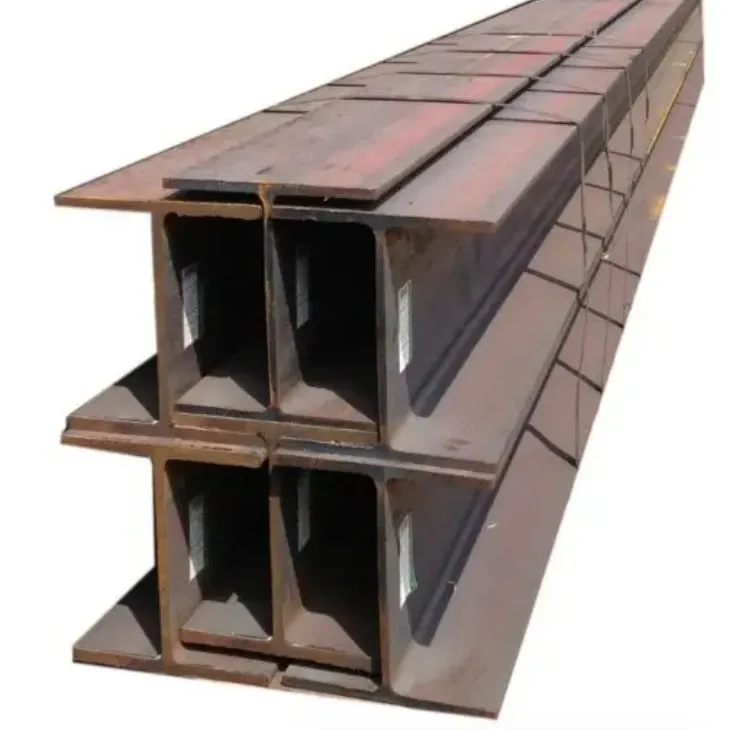
Before delving into the welding methods, it's essential to understand the characteristics of H Beam Ss400. Ss400 is a type of general structural steel in the Japanese standard. It has good ductility, toughness, and weldability, which makes it widely used in various construction and engineering projects. H Beam Ss400, with its distinctive H - shaped cross - section, offers high strength and excellent load - bearing capacity, making it a popular choice for building frames, bridges, and industrial structures. You can find more details about H Beam Ss400 on our website.
Suitable Welding Methods for H Beam Ss400
Shielded Metal Arc Welding (SMAW)
Shielded Metal Arc Welding, also known as stick welding, is one of the oldest and most widely used welding methods. It is a versatile process that can be used in various environments, including outdoor and in confined spaces.
Advantages:
- Portability: SMAW equipment is relatively simple and portable, making it suitable for on - site welding of H Beam Ss400 in construction projects.
- Versatility: It can be used to weld a wide range of thicknesses of H Beam Ss400. Whether you are working on thin or thick sections, SMAW can provide satisfactory results.
- Cost - effective: The equipment and consumables for SMAW are relatively inexpensive, which is beneficial for small - scale projects or when cost is a major concern.
Disadvantages:
- Low efficiency: The welding speed is relatively slow compared to some other methods, which may increase the overall welding time for large - scale projects.
- Quality control: The quality of the weld depends largely on the skill of the welder. Inconsistent welding techniques can lead to defects such as porosity, slag inclusions, and lack of fusion.
Gas Metal Arc Welding (GMAW)
Gas Metal Arc Welding, also called MIG (Metal Inert Gas) or MAG (Metal Active Gas) welding, is a high - speed welding process that uses a continuous solid wire electrode and a shielding gas to protect the weld pool.
Advantages:
- High welding speed: GMAW can achieve much higher welding speeds than SMAW, which is ideal for large - scale H Beam Ss400 welding projects. This can significantly reduce the overall production time.
- Good weld quality: The process provides a stable arc and produces high - quality welds with good appearance and mechanical properties. It also has better control over the heat input, which helps to minimize distortion.
- Automation potential: GMAW can be easily automated, which is suitable for mass production of H Beam Ss400 structures in factories.
Disadvantages:
- Equipment cost: The initial investment for GMAW equipment is relatively high, including the welding machine, gas supply system, and wire feeder.
- Environmental sensitivity: The process is sensitive to wind and draft, which can disrupt the shielding gas and affect the weld quality. Therefore, it is more suitable for indoor or sheltered welding environments.
Submerged Arc Welding (SAW)
Submerged Arc Welding is a high - productivity welding process where the arc is shielded by a layer of granular flux. The flux not only protects the weld from atmospheric contamination but also provides additional alloying elements to the weld metal.
Advantages:
- High deposition rate: SAW can deposit a large amount of weld metal in a short time, making it extremely efficient for welding thick - section H Beam Ss400.
- Excellent weld quality: The welds produced by SAW have high strength, good toughness, and low defect rates. The flux also helps to reduce spatter and provides a smooth weld surface.
- Low labor intensity: Once the welding parameters are set, the process can be automated, reducing the physical labor of the welder.
Disadvantages:

- Limited flexibility: SAW is mainly suitable for flat or horizontal fillet welding positions. It is not as flexible as SMAW or GMAW for welding in other positions.
- Flux management: The use of flux requires proper handling and recycling to avoid environmental pollution and cost - inefficiency.
Flux - Cored Arc Welding (FCAW)
Flux - Cored Arc Welding is similar to GMAW but uses a tubular wire filled with flux instead of a solid wire. It can be used with or without a shielding gas.
Advantages:
- High deposition rate: FCAW can achieve a high deposition rate, similar to SAW, which is suitable for welding thick - section H Beam Ss400.
- Good penetration: The flux in the wire helps to improve the penetration of the weld, resulting in strong and reliable joints.
- Versatility: It can be used in various welding positions and is less sensitive to wind compared to GMAW.
Disadvantages:
- Slag removal: The process produces slag, which needs to be removed after welding. This additional step can increase the post - welding labor and time.
- Cost of consumables: The flux - cored wires are generally more expensive than solid wires used in GMAW, which may increase the overall welding cost.
Considerations When Choosing a Welding Method
When choosing a welding method for H Beam Ss400, several factors need to be considered:
Thickness of the H Beam
For thin - section H Beam Ss400 (less than 6mm), SMAW or GMAW with appropriate welding parameters can be used. For thicker sections (greater than 6mm), SAW or FCAW may be more suitable due to their high deposition rates.
Welding position
If the welding needs to be done in various positions, such as vertical or overhead, SMAW or FCAW may be better choices as they offer more flexibility. For flat or horizontal fillet welding, SAW can provide high - efficiency results.
Project scale
For small - scale projects or on - site repairs, SMAW may be the most practical option due to its portability and low cost. For large - scale mass production in factories, GMAW or SAW with automation capabilities are more appropriate.
Quality requirements
If high - quality welds with strict mechanical properties are required, GMAW or SAW may be preferred as they can provide better control over the welding process and produce more consistent results.
Conclusion
In conclusion, there are several welding methods suitable for H Beam Ss400, each with its own advantages and disadvantages. The choice of the welding method depends on various factors such as the thickness of the H Beam, welding position, project scale, and quality requirements. As a supplier of H Beam Ss400, we can provide you with not only high - quality products but also professional advice on welding methods. If you are interested in our A572 A992 Steel H Beam or Ipe S235, please feel free to contact us for more information and to discuss your specific procurement needs. We look forward to working with you to achieve your project goals.
References
- AWS Welding Handbook, American Welding Society.
- Welding Metallurgy, John C. Lippold and David J. Kotecki.
- Steel Construction Manual, American Institute of Steel Construction.