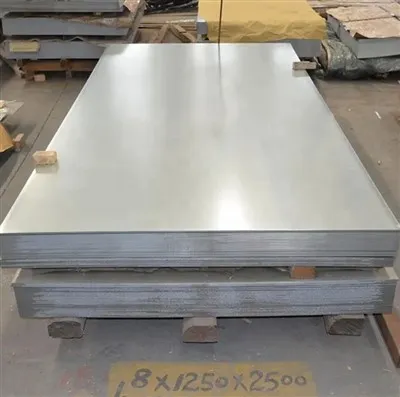
When it comes to welding Ss304 Plate, which we are proud to supply, there are numerous precautions that need to be taken to ensure a successful and high - quality weld. SS304, also known as 18 - 8 stainless steel, is a popular choice due to its excellent corrosion resistance, good formability, and high strength. However, its unique properties also present specific challenges during the welding process.
Material Preparation
Before starting the welding process, proper material preparation is crucial. First and foremost, the Ss304 Plate should be cleaned thoroughly. Any contaminants such as oil, grease, dirt, or oxides on the surface can cause defects in the weld. A common method is to use a stainless - steel wire brush to remove loose oxides and debris. For more stubborn contaminants, a suitable solvent can be used. However, it's important to ensure that the solvent is compatible with stainless steel to avoid any chemical reactions.
The edges of the Ss304 Plate to be welded should be properly beveled according to the welding joint design. The bevel angle and root face dimensions depend on the thickness of the plate and the welding process to be used. For example, for thicker plates, a larger bevel angle may be required to ensure complete penetration. It's also essential to check the alignment of the plates. Misalignment can lead to uneven welds and weak joints. Clamps or fixtures can be used to hold the plates in place during welding.
Welding Environment
The welding environment plays a significant role in the quality of the weld. Welding should be carried out in a well - ventilated area. During the welding process, harmful fumes are generated, which contain elements such as chromium and nickel. Prolonged exposure to these fumes can be hazardous to health. Adequate ventilation helps to remove these fumes from the work area.
Temperature and humidity also need to be controlled. Extreme temperatures can affect the cooling rate of the weld, which in turn can influence the microstructure and properties of the weld. High humidity can introduce moisture into the weld, leading to porosity and other defects. If possible, the welding should be done in an environment with a stable temperature and low humidity.
Welding Process Selection
There are several welding processes available for welding Ss304 Plate, such as TIG (Tungsten Inert Gas) welding, MIG (Metal Inert Gas) welding, and Stick welding. Each process has its own advantages and disadvantages.
TIG welding is a popular choice for welding Ss304 Plate, especially for thin - walled applications. It provides precise control over the weld pool and produces high - quality welds with excellent appearance. The use of an inert gas (usually argon) protects the weld from oxidation. However, TIG welding is a relatively slow process and requires a high level of skill.
MIG welding is faster than TIG welding and is suitable for thicker Ss304 Plates. It uses a consumable wire electrode and an inert gas shield. MIG welding can be semi - automatic or automatic, which increases productivity. But it may require more careful control of the welding parameters to avoid spatter and other defects.
Stick welding is a versatile process that can be used in various environments. It uses a flux - coated electrode, which provides its own shielding gas. However, stick welding may produce more slag and require more post - weld cleaning.


When selecting a welding process, factors such as the thickness of the Ss304 Plate, the required weld quality, and the production volume should be considered.
Welding Parameters
Proper selection of welding parameters is essential for achieving a good weld. The main welding parameters include welding current, voltage, travel speed, and gas flow rate (for TIG and MIG welding).
The welding current should be adjusted according to the thickness of the Ss304 Plate and the welding process. Too low a current may result in incomplete fusion, while too high a current can cause excessive melting and distortion. For example, in TIG welding, a higher current is required for thicker plates.
The voltage affects the arc length and the shape of the weld bead. A stable arc is necessary for a uniform weld. The travel speed determines the amount of heat input per unit length of the weld. A slow travel speed can lead to overheating and distortion, while a fast travel speed may result in incomplete penetration.
For TIG and MIG welding, the gas flow rate is crucial. The inert gas protects the weld from oxidation and contamination. An insufficient gas flow rate may not provide adequate protection, while an excessive flow rate can cause turbulence and waste gas.
Filler Material Selection
When welding Ss304 Plate, the choice of filler material is important. The filler material should have similar chemical composition and mechanical properties to the base metal. For Ss304 Plate, ER308 or ER308L filler wires are commonly used.
ER308 filler wire is suitable for most applications where the weld is not exposed to highly corrosive environments. It has good strength and ductility. ER308L filler wire contains less carbon than ER308, which makes it more resistant to intergranular corrosion. This is especially important when the weld will be exposed to corrosive substances.
Post - Weld Treatment
After welding, post - weld treatment is often required to improve the properties of the weld. One common post - weld treatment is stress relieving. Welding can introduce residual stresses in the plate, which can lead to cracking and reduced corrosion resistance. Stress relieving involves heating the welded part to a specific temperature and holding it for a certain period of time, followed by slow cooling.
Another important post - weld treatment is passivation. Passivation is a chemical process that removes free iron from the surface of the weld and forms a protective oxide layer. This helps to improve the corrosion resistance of the weld.
Comparison with Other Stainless Steel Plates
It's also worth comparing Ss304 Plate with other stainless steel plates such as 303 Stainless Plate and 304L Stainless Steel Plate.
303 Stainless Plate is more machinable than Ss304 Plate due to the addition of sulfur. However, its corrosion resistance is slightly lower, especially in welding applications. When welding 303 Stainless Plate, more attention needs to be paid to the welding process to ensure good corrosion resistance.
304L Stainless Steel Plate has a lower carbon content than Ss304 Plate, which makes it more resistant to intergranular corrosion. In applications where corrosion resistance is of utmost importance, 304L may be a better choice. However, the welding process for 304L is similar to that of Ss304, but the post - weld treatment may need to be adjusted accordingly.
Conclusion
In conclusion, welding Ss304 Plate requires careful attention to various aspects, including material preparation, welding environment, process selection, parameter setting, filler material choice, and post - weld treatment. By taking these precautions, high - quality welds can be achieved, which will ensure the performance and durability of the welded structure.
If you are in the market for high - quality Ss304 Plate, we are here to provide you with the best products and technical support. Whether you are a small - scale workshop or a large - scale manufacturing enterprise, we can meet your needs. Feel free to contact us for more information and to start a procurement negotiation.
References
- "Welding of Stainless Steels" by The Welding Institute
- "Stainless Steel Handbook" by ASM International