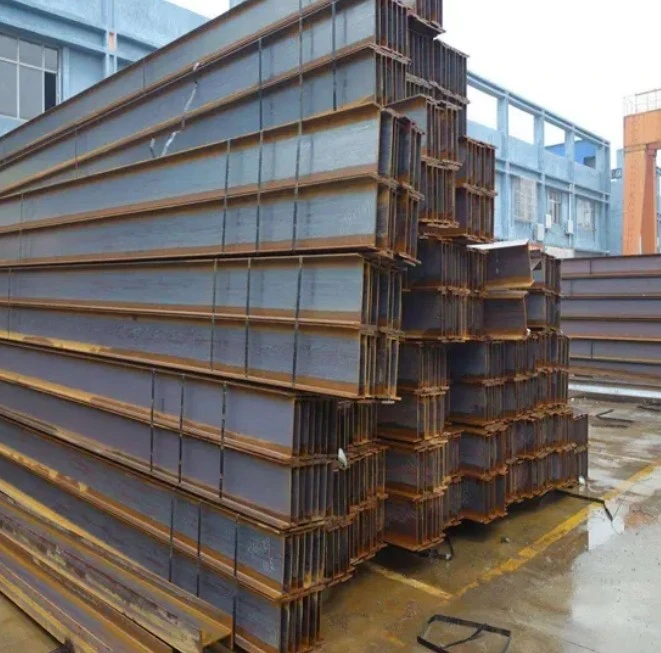
As a trusted supplier of H Beam 300 X 300, I've witnessed firsthand the diverse applications and critical roles these beams play in construction and industrial projects. One crucial factor that significantly impacts the performance and integrity of H Beam 300 X 300 is temperature. In this blog, I'll delve into the intricate relationship between temperature and H Beam 300 X 300, exploring how different temperature conditions can affect its properties and performance.
Thermal Expansion and Contraction
One of the most fundamental effects of temperature on H Beam 300 X 300 is thermal expansion and contraction. When the temperature rises, the atoms within the steel beam gain energy and start to vibrate more vigorously, causing the beam to expand. Conversely, when the temperature drops, the atoms lose energy, and the beam contracts.
The coefficient of thermal expansion for steel is approximately 1.2 x 10^-5 per degree Celsius. This means that for every one-degree Celsius increase in temperature, a one-meter-long H Beam 300 X 300 will expand by about 0.012 millimeters. While this may seem like a small amount, in large structures or projects where multiple beams are used, the cumulative effect of thermal expansion can be significant.
For example, in a long-span bridge made of H Beam 300 X 300, the expansion and contraction caused by daily temperature variations can lead to stress and deformation in the structure. If the bridge is not designed to accommodate these thermal movements, it can result in cracking, joint failure, or even structural collapse. To mitigate these risks, engineers often incorporate expansion joints and flexible connections in the design of structures to allow for thermal expansion and contraction.
Mechanical Properties
Temperature also has a profound impact on the mechanical properties of H Beam 300 X 300. As the temperature increases, the strength and stiffness of the steel beam gradually decrease. This is because the higher temperature causes the steel to become more ductile, meaning it can deform more easily under stress.
At elevated temperatures, the yield strength and ultimate tensile strength of H Beam 300 X 300 can be significantly reduced. For instance, at a temperature of 400 degrees Celsius, the yield strength of steel can drop to about 70% of its room temperature value. At 600 degrees Celsius, the yield strength can be reduced to less than 30% of its original value.
This reduction in strength can have serious implications for the structural integrity of buildings and other structures during a fire. In a fire situation, the high temperatures can cause the H Beam 300 X 300 to lose its load-bearing capacity, leading to the collapse of the structure. To enhance the fire resistance of H Beam 300 X 300, fireproof coatings or insulation materials are often applied to the beams to slow down the rate of temperature increase and maintain their strength for a longer period.
On the other hand, at low temperatures, the steel becomes more brittle, which can increase the risk of fracture. Cold temperatures can cause the steel to lose its ductility and become more prone to cracking under stress. This is particularly important in regions with cold climates, where H Beam 300 X 300 is used in outdoor structures such as oil rigs, bridges, and transmission towers. To prevent cold brittleness, special grades of steel with improved low-temperature toughness are often used in these applications.
Corrosion
Temperature can also affect the corrosion rate of H Beam 300 X 300. Corrosion is a chemical process that occurs when the steel reacts with oxygen and moisture in the environment, forming rust. The rate of corrosion is influenced by several factors, including temperature, humidity, and the presence of corrosive substances.

In general, higher temperatures accelerate the corrosion process. This is because the increased temperature provides more energy for the chemical reactions to occur, and it also increases the solubility of oxygen in water, which promotes the oxidation of the steel. In hot and humid environments, the corrosion rate of H Beam 300 X 300 can be significantly higher than in cold and dry environments.
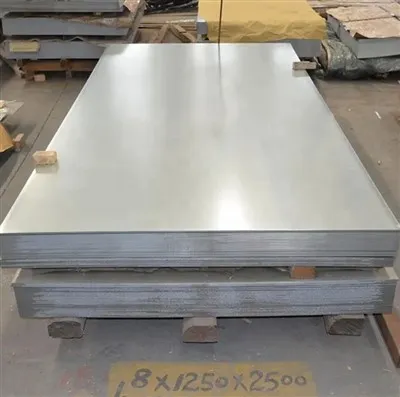
To protect H Beam 300 X 300 from corrosion, various corrosion protection methods are commonly used, such as galvanizing, painting, and the application of corrosion inhibitors. These methods create a barrier between the steel and the environment, preventing oxygen and moisture from coming into contact with the steel and reducing the risk of corrosion.
Impact on Welding
Welding is a common method used to join H Beam 300 X 300 in construction and industrial projects. However, temperature can have a significant impact on the quality and integrity of the welds.
During the welding process, the high temperatures generated by the welding arc can cause the steel to expand and contract rapidly. If the temperature is not controlled properly, it can lead to residual stresses in the weld and the surrounding area, which can weaken the joint and increase the risk of cracking.
In addition, the cooling rate of the weld also affects its microstructure and mechanical properties. If the weld cools too quickly, it can result in the formation of hard and brittle martensite, which can reduce the toughness and ductility of the joint. On the other hand, if the weld cools too slowly, it can lead to the formation of coarse-grained structures, which can also reduce the strength and toughness of the joint.
To ensure the quality of the welds, it is important to control the welding parameters, such as the welding current, voltage, and speed, and to use appropriate preheating and post-weld heat treatment techniques. These measures can help to minimize the thermal stress and ensure the proper microstructure and mechanical properties of the welds.
Conclusion
In conclusion, temperature has a significant influence on the performance and integrity of H Beam 300 X 300. Thermal expansion and contraction, changes in mechanical properties, corrosion, and the impact on welding are all important factors that need to be considered in the design, construction, and maintenance of structures using H Beam 300 X 300.
As a supplier of H Beam 300 X 300, I understand the importance of providing high-quality products that can withstand the challenges posed by different temperature conditions. We offer a wide range of H Beam Ss400, H Shaped Steel, and A572 A992 Steel H Beam that are designed to meet the specific requirements of various applications.
If you are interested in purchasing H Beam 300 X 300 or have any questions about the temperature influence on these beams, please feel free to contact us for more information. We are committed to providing you with the best products and services to ensure the success of your projects.
References
- "Structural Steel Design" by Jack C. McCormac
- "Fire Resistance of Structural Steel" by Thomas J. Murray
- "Corrosion of Steel in Concrete" by V. M. Malhotra