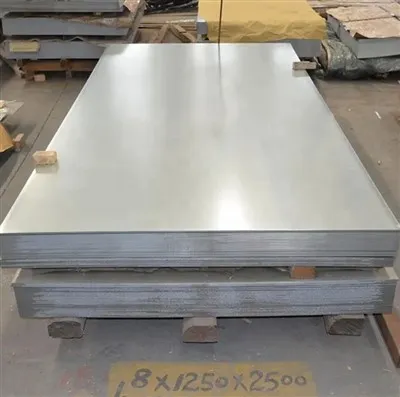
As a supplier of Ss304 Plate, I've witnessed firsthand the growing demand for this versatile material across various industries. One of the most frequently asked questions from our clients is about the impact resistance of Ss304 Plate. In this blog post, I'll delve into the factors that influence its impact resistance, compare it with other stainless steel plates, and discuss its applications in high - impact environments.
Understanding Ss304 Plate
Ss304 Plate is a type of austenitic stainless steel plate. It contains approximately 18% chromium and 8% nickel, which gives it excellent corrosion resistance, formability, and weldability. These properties make it a popular choice in many industries, including construction, food processing, and automotive manufacturing.


The chemical composition of Ss304 Plate plays a crucial role in determining its impact resistance. Chromium forms a passive oxide layer on the surface of the steel, protecting it from corrosion and enhancing its durability. Nickel, on the other hand, improves the toughness and ductility of the steel, allowing it to absorb energy during an impact without fracturing easily.
Factors Affecting the Impact Resistance of Ss304 Plate
- Temperature: The impact resistance of Ss304 Plate is highly temperature - dependent. At room temperature, Ss304 Plate has good impact toughness. However, as the temperature decreases, its impact resistance may decline. This is because the ductile - to - brittle transition temperature (DBTT) of Ss304 Plate can be affected by its microstructure and impurities. In extremely cold environments, the steel may become more brittle, increasing the risk of fracture under impact.
- Microstructure: The microstructure of Ss304 Plate can significantly influence its impact resistance. A fine - grained microstructure generally provides better impact toughness compared to a coarse - grained one. This is because fine grains can impede the propagation of cracks, allowing the material to absorb more energy before failure. Heat treatment processes, such as annealing, can be used to refine the grain structure and improve the impact resistance of Ss304 Plate.
- Stress Concentration: Stress concentration points, such as sharp corners, notches, or holes in the Ss304 Plate, can reduce its impact resistance. These areas can act as initiation sites for cracks, which can propagate rapidly under impact loading. To improve the impact resistance, it is important to minimize stress concentrations during the design and fabrication process. For example, using rounded corners and smooth surfaces can help distribute the stress more evenly.
Comparing Ss304 Plate with Other Stainless Steel Plates
- 303 Stainless Plate: 303 Stainless Plate is known for its excellent machinability. However, its impact resistance is generally lower than that of Ss304 Plate. The addition of sulfur in 303 Stainless Plate improves its machinability but also reduces its ductility and toughness. As a result, 303 Stainless Plate is more prone to cracking under impact compared to Ss304 Plate.
- 304L Stainless Steel Plate: 304L Stainless Steel Plate is a low - carbon version of Ss304 Plate. It has similar corrosion resistance and impact resistance to Ss304 Plate. However, the lower carbon content in 304L Stainless Steel Plate reduces the risk of carbide precipitation during welding, which can improve its weldability and long - term corrosion resistance in some applications. In terms of impact resistance, the difference between Ss304 Plate and 304L Stainless Steel Plate is relatively small, and the choice between them often depends on other factors such as welding requirements and cost.
Applications of Ss304 Plate in High - Impact Environments
- Construction: In the construction industry, Ss304 Plate is used in structural components that may be subject to impact, such as building facades, handrails, and support brackets. Its good impact resistance, combined with its corrosion resistance, makes it suitable for outdoor applications where it may be exposed to harsh weather conditions and accidental impacts.
- Food Processing: Ss304 Plate is widely used in food processing equipment, such as conveyors, mixing tanks, and storage containers. In these applications, the plate may be subjected to impacts from food products, cleaning equipment, or other machinery. The high impact resistance of Ss304 Plate ensures the durability of the equipment and helps maintain the safety and hygiene of the food processing environment.
- Automotive Manufacturing: In the automotive industry, Ss304 Plate is used in various components, including exhaust systems, body panels, and safety structures. These components may experience impacts during normal driving or in the event of a collision. The impact resistance of Ss304 Plate helps to protect the vehicle and its occupants by absorbing and dissipating energy during an impact.
Testing the Impact Resistance of Ss304 Plate
To ensure the quality and performance of Ss304 Plate, impact testing is often carried out. The most common method for testing impact resistance is the Charpy impact test. In this test, a notched specimen of Ss304 Plate is struck by a pendulum, and the energy absorbed during the fracture is measured. The Charpy impact energy is an important indicator of the material's impact toughness.
Another method is the Izod impact test, which is similar to the Charpy impact test but uses a different specimen configuration. These tests can provide valuable information about the impact resistance of Ss304 Plate under different conditions and help in the selection of the appropriate material for specific applications.
Conclusion
In conclusion, the impact resistance of Ss304 Plate is influenced by various factors, including temperature, microstructure, and stress concentration. It offers good impact toughness at room temperature and is suitable for a wide range of applications in high - impact environments. When compared to other stainless steel plates, such as 303 Stainless Plate and 304L Stainless Steel Plate, Ss304 Plate has its own unique advantages in terms of impact resistance, corrosion resistance, and cost - effectiveness.
If you are in need of high - quality Ss304 Plate for your projects, we are here to provide you with the best products and services. Our Ss304 Plate is carefully manufactured and tested to ensure excellent impact resistance and other performance characteristics. Contact us today to discuss your specific requirements and start a procurement negotiation. We look forward to working with you!
References
- ASM Handbook Volume 1: Properties and Selection: Irons, Steels, and High - Performance Alloys.
- Metals Handbook Desk Edition, 3rd Edition.
- Stainless Steel: A Practical Guide, Second Edition by George E. Totten.