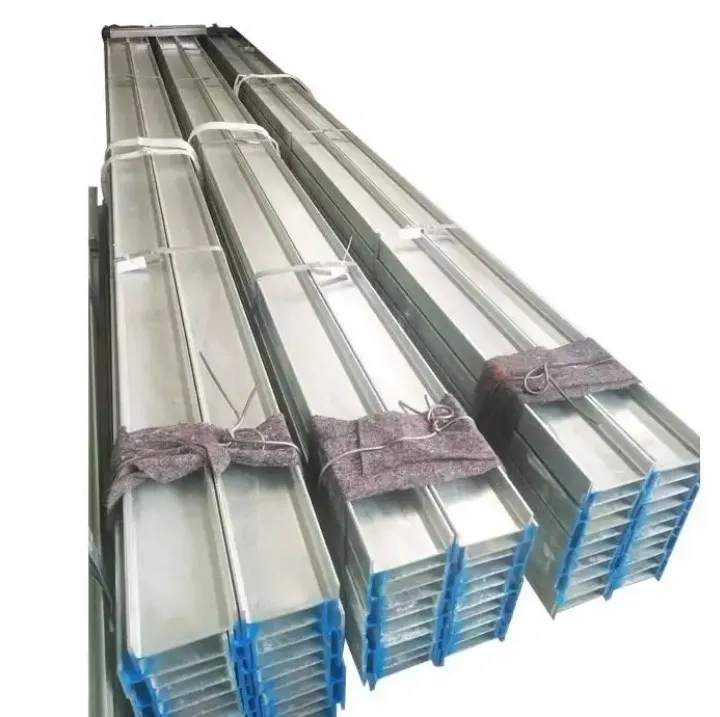
Hey there! As a supplier of H Beam Ss400, I often get asked about various technical details of this product. One question that pops up quite frequently is, "What is the elongation rate of H Beam Ss400?" Today, I'm gonna break it down for you.

First off, let's understand what elongation rate means. In simple terms, the elongation rate is a measure of how much a material can stretch before it breaks. It's a crucial property, especially for construction materials like H Beam Ss400, which are used in structures that need to withstand various forces.
H Beam Ss400 is a popular choice in the construction industry. It's known for its strength and durability. But the elongation rate gives us an idea of its flexibility. A higher elongation rate means the beam can deform more before failure, which can be a huge advantage in earthquake - prone areas or in structures that might experience dynamic loads.
Now, the elongation rate of H Beam Ss400 typically falls within a certain range. Generally, for Ss400 steel, the elongation rate is around 21% - 25%. This value is determined through standard testing procedures. During these tests, a sample of the H Beam Ss400 is subjected to a tensile force, and the amount it stretches before breaking is measured. The result is then calculated as a percentage of the original length of the sample.
But why does this matter? Well, in construction, it's all about balance. You need a material that is strong enough to support the load but also flexible enough to handle unexpected stresses. The elongation rate of H Beam Ss400 allows it to absorb energy during an earthquake or other dynamic events. Instead of suddenly breaking, it can bend and stretch, which helps in preventing catastrophic failures.
Let's compare H Beam Ss400 with other types of H beams. For example, the A572 A992 Steel H Beam has different mechanical properties. A572 A992 steel is often used in high - rise buildings and bridges. It usually has a higher yield strength compared to Ss400, but its elongation rate might be different. Depending on the specific grade of A572 A992, the elongation rate can vary, but it's generally in a range that suits its intended applications.
Another related product is the Profil Upn 100. Profil Upn 100 is a different shape of steel profile. It has its own set of mechanical properties, including an elongation rate that is specific to its material and manufacturing process. While it may not be directly comparable to H Beam Ss400 in terms of shape and application, understanding its elongation rate can give you a broader perspective on steel profiles in general.
When it comes to choosing the right H beam for your project, the elongation rate is just one factor to consider. You also need to look at the yield strength, the ultimate tensile strength, and the chemical composition. For H Beam Ss400, its chemical composition mainly consists of iron, carbon, and small amounts of other elements. These elements play a role in determining its mechanical properties, including the elongation rate.
In my experience as a supplier, I've seen many projects where the choice of H beam was critical. For small - scale construction projects, H Beam Ss400 is often a great option. Its combination of strength and flexibility makes it suitable for a wide range of applications, from building small warehouses to residential structures.
If you're in the process of planning a construction project, it's important to work closely with engineers and architects. They can help you determine the right type of H beam based on the specific requirements of your project. And as a supplier, I'm here to provide you with high - quality H Beam Ss400 that meets all the necessary standards.
The elongation rate of H Beam Ss400 is an important property that affects its performance in construction. Whether you're building a small shed or a large commercial building, understanding this property can help you make an informed decision.
If you're interested in purchasing H Beam Ss400 for your project, I'd love to have a chat with you. We can discuss your specific needs, the quantity you require, and any other details you might have. Feel free to reach out and start a conversation about how we can work together to make your construction project a success.
References
- ASTM standards for steel testing
- Technical literature on Ss400 steel properties
- Industry reports on construction materials