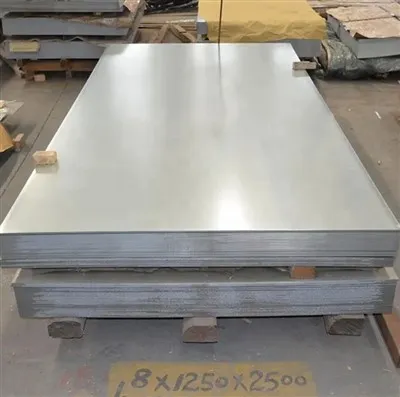
As a supplier of Ss304 plates, I've witnessed firsthand the importance of understanding the factors that affect their lifespan. Ss304 plates, also known as 304 Stainless Steel Plates [/stainless-steel-plate/304-stainless-steel-plate.html], are widely used in various industries due to their excellent corrosion resistance, formability, and strength. However, like any material, their lifespan can be influenced by several factors. In this blog post, I'll explore these factors in detail to help you make informed decisions when using and purchasing Ss304 plates.
Chemical Composition
The chemical composition of Ss304 plates plays a crucial role in determining their lifespan. The primary alloying elements in 304 stainless steel are chromium (Cr) and nickel (Ni). Chromium forms a passive oxide layer on the surface of the steel, which protects it from corrosion. A higher chromium content generally leads to better corrosion resistance. Typically, 304 stainless steel contains about 18 - 20% chromium. Nickel enhances the ductility and toughness of the steel, as well as its resistance to certain types of corrosion, such as stress - corrosion cracking. The nickel content in 304 stainless steel is usually around 8 - 10.5%.
Other elements like carbon (C), silicon (Si), and manganese (Mn) also have an impact. A lower carbon content can reduce the risk of carbide precipitation, which can lead to intergranular corrosion. This is why 304L Stainless Steel Plate [/stainless-steel-plate/304l-stainless-steel-plate.html], a low - carbon version of 304, is often preferred in applications where welding is involved.
Manufacturing Process
The manufacturing process of Ss304 plates significantly affects their quality and lifespan. Hot rolling and cold rolling are two common methods. Hot rolling is performed at high temperatures, which allows for large - scale production of plates with relatively low costs. However, the surface finish of hot - rolled plates may be rougher, and they may have some internal stresses. Cold rolling, on the other hand, is carried out at room temperature. It can produce plates with a smoother surface finish, better dimensional accuracy, and improved mechanical properties.
Heat treatment is another important step. Annealing, for example, can relieve internal stresses, improve the microstructure, and enhance the corrosion resistance of the plates. Improper heat treatment can lead to uneven grain size, reduced ductility, and increased susceptibility to corrosion.
Environmental Conditions
The environment in which Ss304 plates are used has a profound impact on their lifespan. In a clean, dry atmosphere, Ss304 plates can last for a long time. However, in harsh environments, the situation is different.
Corrosive Media
Exposure to corrosive substances such as acids, alkalis, and salts can accelerate the corrosion of Ss304 plates. For instance, in marine environments, the high salt content in the air and water can cause pitting corrosion. Chloride ions in seawater can break down the passive oxide layer on the surface of the steel, allowing corrosion to occur. In industrial settings, exposure to chemicals like sulfuric acid or hydrochloric acid can also lead to rapid corrosion.
Temperature
Temperature can affect the corrosion rate and mechanical properties of Ss304 plates. At high temperatures, the corrosion rate generally increases. For example, in high - temperature steam environments, oxidation and corrosion can occur more rapidly. Additionally, high temperatures can reduce the strength and toughness of the steel, leading to potential failures. On the other hand, extremely low temperatures can make the steel more brittle, increasing the risk of cracking.
Humidity
High humidity can create a moist environment on the surface of the plates, which is conducive to the formation of an electrolyte layer. This can accelerate the electrochemical corrosion process. In areas with high humidity and poor ventilation, the lifespan of Ss304 plates may be significantly reduced.
Mechanical Stress
Mechanical stress can also influence the lifespan of Ss304 plates. Tensile stress, compressive stress, and shear stress can all have an impact.


Static Stress
Static stress, such as the weight of objects placed on the plates or the pressure exerted in a structural application, can cause deformation over time. If the stress exceeds the yield strength of the steel, permanent deformation will occur. This can lead to changes in the microstructure of the steel, making it more susceptible to corrosion and cracking.
Dynamic Stress
Dynamic stress, such as vibration or cyclic loading, can cause fatigue failure. Fatigue cracks can initiate at stress - concentration points, such as holes, notches, or welds. These cracks can propagate over time, eventually leading to the failure of the plate.
Maintenance and Protection
Proper maintenance and protection can significantly extend the lifespan of Ss304 plates.
Regular Cleaning
Regular cleaning can remove dirt, dust, and corrosive substances from the surface of the plates. Using mild detergents and soft cloths can prevent scratching the surface. After cleaning, the plates should be thoroughly dried to avoid the formation of a moist environment.
Coating and Painting
Applying protective coatings or paints can provide an additional barrier against corrosion. There are various types of coatings available, such as epoxy coatings and polyurethane coatings. These coatings can prevent the direct contact of the plates with corrosive media, thereby reducing the corrosion rate.
Inspection
Regular inspection can detect early signs of corrosion, cracking, or other defects. Non - destructive testing methods such as ultrasonic testing, magnetic particle testing, and penetrant testing can be used to identify internal and surface defects. Once defects are detected, appropriate measures can be taken to repair or replace the plates in a timely manner.
In conclusion, the lifespan of Ss304 plates is affected by multiple factors, including chemical composition, manufacturing process, environmental conditions, mechanical stress, and maintenance. As a supplier, I understand the importance of providing high - quality Ss304 plates that can withstand different conditions. We ensure strict control over the chemical composition and manufacturing process to deliver products with excellent performance.
If you are in need of Ss304 plates or have any questions about their application and lifespan, I encourage you to contact us for further discussion. We are committed to providing you with the best solutions and products to meet your specific requirements.
References
- ASM Handbook Volume 13A: Corrosion: Fundamentals, Testing, and Protection.
- Stainless Steel: A Guide to Selection and Application by Robert D. Peaslee.
- Corrosion Engineering by Mars G. Fontana.