Is H Beam Ss400 Suitable for Offshore Platform Construction?
As a supplier of H Beam Ss400, I've been frequently asked whether this particular type of steel beam is suitable for offshore platform construction. Offshore platforms are complex structures that operate in harsh marine environments, so the selection of construction materials is crucial. In this blog, I'll delve into the characteristics of H Beam Ss400 and evaluate its suitability for offshore platform construction.

Understanding H Beam Ss400
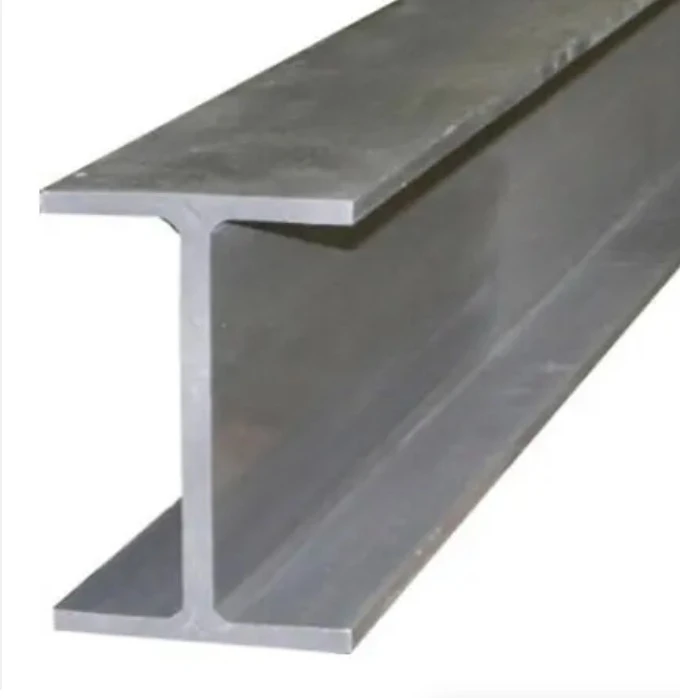
H Beam Ss400 is a type of structural steel that is widely used in various construction projects. The "SS" in its name stands for "Structural Steel," and "400" indicates its minimum yield strength of 400 N/mm². This steel grade is known for its good mechanical properties, including high strength and excellent ductility. It is also relatively easy to process and weld, which makes it a popular choice for many construction applications.
One of the key advantages of H Beam Ss400 is its cost - effectiveness. Compared to some high - performance steel grades, it offers a good balance between strength and cost. This makes it an attractive option for large - scale construction projects where cost control is an important factor.
Requirements for Offshore Platform Construction
Offshore platforms are exposed to a variety of harsh environmental conditions, including strong winds, waves, saltwater corrosion, and seismic activities. Therefore, the materials used in their construction must meet several strict requirements:
- High Strength: Offshore platforms need to withstand significant loads, such as the weight of equipment, personnel, and the forces exerted by waves and winds. The steel used must have sufficient strength to ensure the structural integrity of the platform.
- Corrosion Resistance: Saltwater is highly corrosive, and the steel used in offshore platforms must be able to resist corrosion over a long period. Otherwise, the structural strength of the platform will be gradually reduced, leading to safety risks.
- Toughness and Ductility: In the event of extreme events such as earthquakes or collisions, the steel should have good toughness and ductility to absorb energy and prevent sudden brittle failure.
- Weldability: Since offshore platforms are usually assembled on - site, the steel must be easily weldable to ensure reliable connections between different components.
Evaluating the Suitability of H Beam Ss400 for Offshore Platforms
Let's analyze how H Beam Ss400 measures up against the requirements for offshore platform construction:
- Strength: With a minimum yield strength of 400 N/mm², H Beam Ss400 has sufficient strength to support the loads typically encountered in offshore platform construction. It can handle the static and dynamic loads from equipment, waves, and winds, provided that the platform is properly designed.
- Corrosion Resistance: Unfortunately, H Beam Ss400 is not inherently corrosion - resistant. In a saltwater environment, it will corrode relatively quickly if not properly protected. However, this can be mitigated through the use of protective coatings, cathodic protection systems, or by choosing a more corrosion - resistant steel grade for critical components.
- Toughness and Ductility: H Beam Ss400 has good ductility, which allows it to deform plastically under stress without sudden failure. This is an important property for offshore platforms, as it helps the structure to absorb energy during extreme events.
- Weldability: As mentioned earlier, H Beam Ss400 is easy to weld, which is an advantage for on - site assembly of offshore platforms. Good weldability ensures that the connections between different components are strong and reliable.
Comparing with Other Steel Grades
When considering the suitability of H Beam Ss400 for offshore platform construction, it's also useful to compare it with other commonly used steel grades. For example, Ipe S235 is another popular structural steel. However, its yield strength is lower than that of H Beam Ss400, which may limit its use in some high - load applications.
H Shaped Steel comes in various grades, and some of them may offer better corrosion resistance or higher strength than H Beam Ss400. Similarly, A36 A572 50 Standard Steel I Beam has different mechanical properties and may be more suitable for certain offshore platform designs.
Mitigating the Limitations of H Beam Ss400
Although H Beam Ss400 has some limitations in terms of corrosion resistance, there are several ways to mitigate these issues:
- Coatings: Applying high - quality anti - corrosion coatings can significantly extend the service life of H Beam Ss400 in a saltwater environment. These coatings act as a barrier between the steel and the corrosive medium, preventing direct contact.
- Cathodic Protection: Cathodic protection systems can be used to protect the steel from corrosion. This involves connecting the steel structure to a sacrificial anode or an impressed current source, which provides electrons to the steel and reduces the corrosion rate.
- Material Selection for Critical Components: For critical components that are more exposed to corrosion or high - stress areas, a more corrosion - resistant steel grade can be used in combination with H Beam Ss400. This way, the overall performance and durability of the offshore platform can be improved.
Conclusion
In conclusion, H Beam Ss400 can be a suitable option for offshore platform construction, especially when cost is a major consideration. It has sufficient strength, good ductility, and excellent weldability. However, its lack of inherent corrosion resistance is a significant drawback. By implementing appropriate corrosion - protection measures and careful design, H Beam Ss400 can be used effectively in offshore platform construction.
If you are considering using H Beam Ss400 for your offshore platform project, I encourage you to contact me for more detailed information and to discuss your specific requirements. Our team of experts can provide you with professional advice and high - quality steel products to ensure the success of your project.
References
- API RP 2A - WSD, "Recommended Practice for Planning, Designing, and Constructing Fixed Offshore Platforms - Working Stress Design," American Petroleum Institute.
- ISO 19902, "Petroleum and natural gas industries - Specific requirements for offshore structures - Concrete offshore structures," International Organization for Standardization.
- "Steel Structures in Offshore Engineering" by C. M. Wang and B. S. Kim.