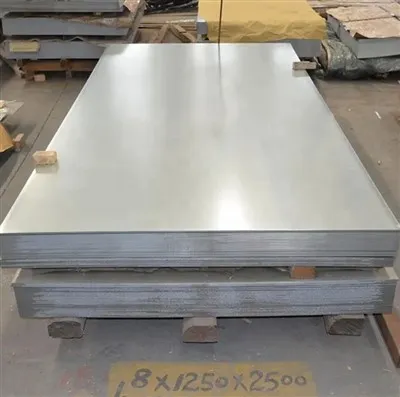
Calculating the load - bearing capacity of a steel plate is a crucial aspect in various engineering and construction projects. As a seasoned steel plate supplier, I understand the significance of this knowledge for our clients. In this blog, I'll guide you through the process of calculating the load - bearing capacity of a steel plate, which will help you make informed decisions when purchasing steel plates for your projects.
Understanding the Basics of Steel Plate Load - Bearing Capacity
Before we delve into the calculations, it's essential to understand what load - bearing capacity means. The load - bearing capacity of a steel plate refers to the maximum amount of load or force that the plate can withstand without undergoing excessive deformation or failure. This capacity is influenced by several factors, including the type of steel, the dimensions of the plate, and the support conditions.
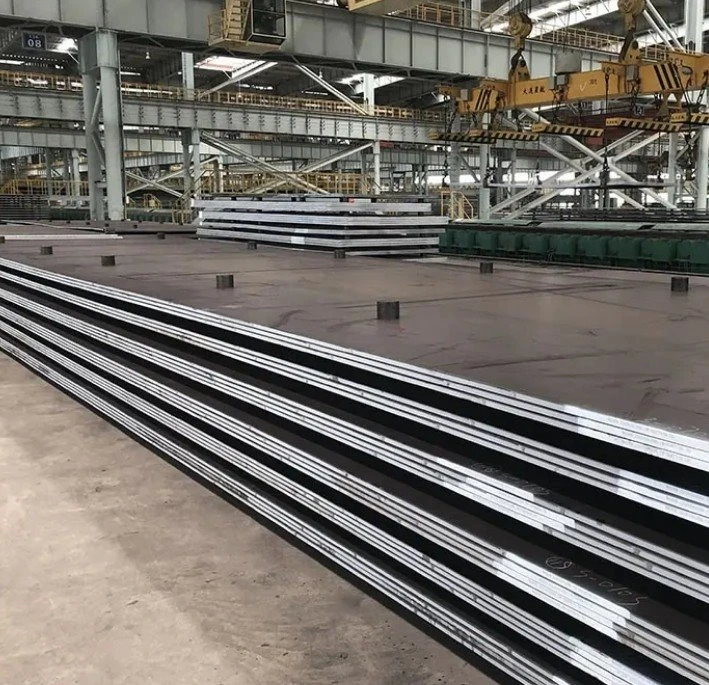
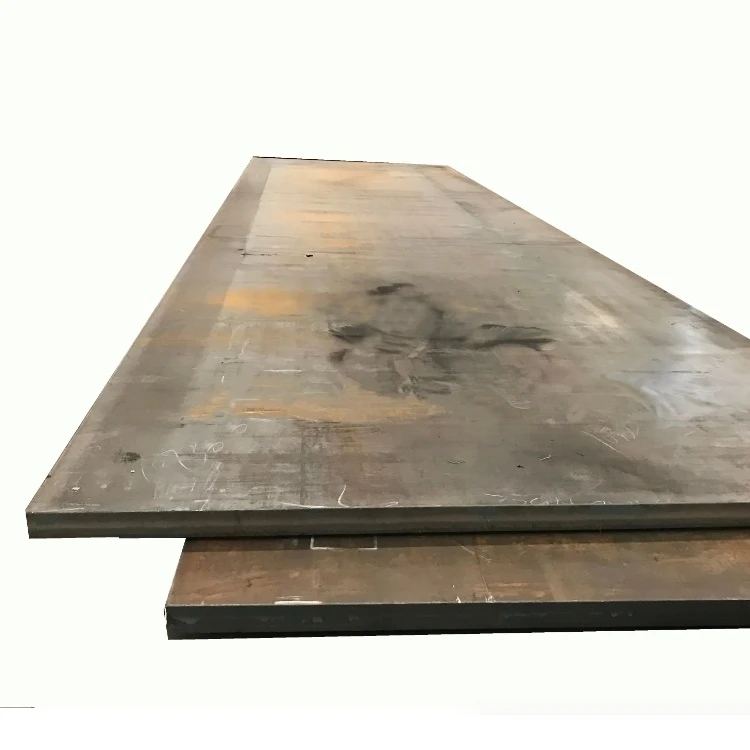
Types of Steel and Their Properties
Different types of steel have varying mechanical properties, which directly affect their load - bearing capacity. For instance, Mild Steel Ss400 is a commonly used mild steel with good ductility and weldability. It has a relatively lower strength compared to some high - strength steels but is still suitable for many general - purpose applications.
SS355Jr Steel Plate is a high - strength, low - alloy steel. It offers better mechanical properties, including higher yield strength and tensile strength, which means it can bear heavier loads compared to mild steel.
Astm Carbon Steel Plate is another type of steel that is widely used in construction and engineering. It has a range of carbon content, which affects its hardness, strength, and ductility. The specific properties of each type of steel need to be considered when calculating the load - bearing capacity.
Dimensions of the Steel Plate
The thickness, width, and length of the steel plate play a significant role in determining its load - bearing capacity. Generally, a thicker steel plate can bear more load than a thinner one. The width and length also affect the distribution of the load across the plate. For example, a wider plate may distribute the load more evenly, reducing the stress concentration at a particular point.
Support Conditions
The way the steel plate is supported also impacts its load - bearing capacity. There are different support conditions, such as simply supported, fixed - supported, and cantilevered. In a simply - supported plate, the plate is supported at its edges and can rotate freely. A fixed - supported plate is held firmly at its edges, which restricts rotation and can increase the load - bearing capacity. A cantilevered plate is supported at one end only, and it is more prone to bending and failure under load.
Calculating the Load - Bearing Capacity of a Steel Plate
Step 1: Determine the Material Properties
The first step in calculating the load - bearing capacity is to determine the material properties of the steel plate. You need to know the yield strength ($f_y$) and the ultimate tensile strength ($f_u$) of the steel. These values can usually be obtained from the material specification provided by the steel manufacturer. For example, for Mild Steel Ss400, the yield strength is typically around 235 - 275 MPa, while for S355Jr, it can be around 355 MPa.
Step 2: Calculate the Section Modulus
The section modulus ($S$) is a geometric property of the steel plate that is related to its ability to resist bending. For a rectangular steel plate with width ($b$) and thickness ($h$), the section modulus can be calculated using the following formula:
[S=\frac{bh^2}{6}]
where $b$ is the width of the plate and $h$ is the thickness of the plate. The section modulus is an important parameter because it is used to calculate the bending stress in the plate.
Step 3: Calculate the Bending Stress
The bending stress ($\sigma$) in the steel plate can be calculated using the formula:
[\sigma=\frac{M}{S}]
where $M$ is the bending moment acting on the plate. The bending moment depends on the load applied to the plate and the support conditions. For a simply - supported plate with a uniformly distributed load ($w$) over its length ($L$), the maximum bending moment can be calculated as:
[M=\frac{wL^2}{8}]
Step 4: Check the Bending Stress Against the Yield Strength
To ensure that the steel plate does not yield under the applied load, the calculated bending stress ($\sigma$) must be less than the yield strength ($f_y$) of the steel. That is:
[\sigma<f_y]
If the bending stress exceeds the yield strength, the plate will start to deform plastically, and it may eventually fail.
Step 5: Consider Shear Stress
In addition to bending stress, the steel plate may also be subjected to shear stress. The shear stress ($\tau$) can be calculated using the formula:
[\tau=\frac{V}{A}]
where $V$ is the shear force acting on the plate and $A$ is the cross - sectional area of the plate. Similar to bending stress, the shear stress must be less than the allowable shear stress of the steel, which is usually a fraction of the yield strength.
Example Calculation
Let's assume we have a simply - supported Mild Steel Ss400 plate with a width ($b$) of 1000 mm, a thickness ($h$) of 10 mm, and a length ($L$) of 2000 mm. The plate is subjected to a uniformly distributed load ($w$) of 5 kN/m.
-
Material properties: For Mild Steel Ss400, assume $f_y = 235$ MPa.
-
Section modulus:
[S=\frac{bh^2}{6}=\frac{1000\times10^2}{6}\approx166667\ mm^3] -
Bending moment:
[M=\frac{wL^2}{8}=\frac{5\times2^2}{8}= 2.5\ kN\cdot m = 2.5\times10^6\ N\cdot mm] -
Bending stress:
[\sigma=\frac{M}{S}=\frac{2.5\times10^6}{166667}\approx15\ MPa]
Since $\sigma = 15$ MPa $< f_y=235$ MPa, the plate is safe against bending. -
Shear stress:
The maximum shear force $V=\frac{wL}{2}=\frac{5\times2}{2}=5\ kN = 5000\ N$
The cross - sectional area $A = b\times h=1000\times10 = 10000\ mm^2$
[\tau=\frac{V}{A}=\frac{5000}{10000}=0.5\ MPa]
Conclusion
Calculating the load - bearing capacity of a steel plate is a complex but essential process. By understanding the material properties, dimensions, and support conditions of the steel plate, and following the steps outlined above, you can accurately determine the maximum load that the plate can bear. As a steel plate supplier, we can provide you with high - quality steel plates and the necessary technical support to help you with your projects.
If you are in need of steel plates for your construction or engineering projects and want to discuss the load - bearing requirements, feel free to contact us for a detailed consultation. We are committed to providing you with the best solutions and products that meet your specific needs.
References
- Bickford, J. H. (1998). Advanced Mechanics of Materials. McGraw - Hill.
- Gere, J. M., & Timoshenko, S. P. (1997). Mechanics of Materials. PWS Publishing Company.
- Structural Steel Design Handbook, AISC.