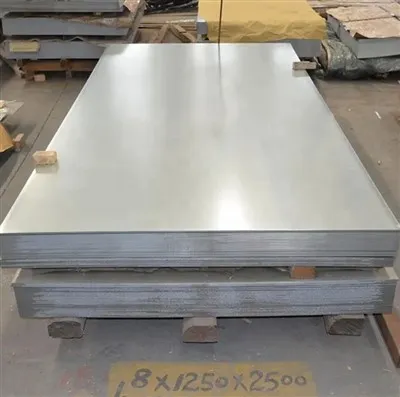
The production process of the Ipe 200 Profile is a complex and multi - faceted journey that significantly influences its quality. As a supplier of the Ipe 200 Profile, I have witnessed firsthand how each step in the production can either enhance or detract from the final product's performance and durability.
Raw Material Selection
The foundation of a high - quality Ipe 200 Profile lies in the selection of raw materials. Just like in the construction of any reliable structural component, the right starting materials are crucial. For the Ipe 200 Profile, we carefully source steel that meets strict chemical and physical property requirements. The carbon content, for example, needs to be within a specific range. Too much carbon can make the steel brittle, while too little can result in insufficient strength.
We also look at the presence of other alloying elements such as manganese, silicon, and sulfur. Manganese helps improve the strength and hardness of the steel, while silicon acts as a deoxidizer during the steel - making process. Sulfur, on the other hand, needs to be kept at a low level as it can cause brittleness and reduce the weldability of the steel.
In comparison, when considering similar products like the H Beam Ss400, raw material selection also plays a vital role. The SS400 grade of steel has its own set of chemical composition requirements that ensure its suitability for various structural applications. The quality of the raw material directly impacts the overall performance of the beam, including its ability to withstand loads and resist corrosion.
Melting and Refining
Once the raw materials are selected, they are melted in a furnace. This is a critical stage where impurities are removed, and the chemical composition of the steel is fine - tuned. In modern steel - making, electric arc furnaces (EAF) or basic oxygen furnaces (BOF) are commonly used.
EAFs are known for their flexibility as they can use scrap steel as a significant part of the raw material input. This not only helps in recycling but also reduces the environmental impact of steel production. During the melting process, electrodes are used to create an electric arc that generates intense heat, melting the steel.
Refining follows the melting process. This involves removing unwanted elements such as phosphorus and sulfur through various chemical reactions. The steel is also adjusted to have the correct amount of alloying elements to achieve the desired mechanical properties. For the Ipe 200 Profile, the refining process ensures that the steel has the right balance of strength, ductility, and toughness.
The production of Carbon Steel H Beam also goes through similar melting and refining processes. The goal is to produce a steel with consistent quality and properties. Any errors or inefficiencies in the melting and refining stages can lead to variations in the final product, which can affect its performance in real - world applications.
Rolling
After the steel has been melted and refined, it is ready for the rolling process. Rolling is the process of passing the steel through a series of rollers to shape it into the Ipe 200 Profile. There are two main types of rolling: hot rolling and cold rolling.
Hot rolling is typically the first step in the production of the Ipe 200 Profile. The steel is heated to a high temperature, usually above 1000°C, and then passed through the rollers. At this high temperature, the steel is malleable and can be easily shaped. Hot rolling helps in getting the basic shape of the profile and also improves the internal structure of the steel. It aligns the grain structure of the steel, which enhances its mechanical properties such as strength and toughness.
Cold rolling, on the other hand, is often used to achieve a more precise shape and a better surface finish. After hot rolling, the Ipe 200 Profile may be cold rolled at room temperature. Cold rolling reduces the thickness of the steel slightly and can also increase its strength. However, it can also make the steel more brittle if not done correctly.
The rolling process needs to be carefully controlled. The speed of the rollers, the pressure applied, and the temperature of the steel all need to be monitored to ensure a uniform and high - quality Ipe 200 Profile. In contrast, A36 A572 50 Standard Steel I Beam also undergoes a similar rolling process. The specific requirements for these beams, such as their standard dimensions and mechanical properties, are achieved through precise control of the rolling parameters.
Heat Treatment
Heat treatment is another important step in the production of the Ipe 200 Profile. It is used to further improve the mechanical properties of the steel. There are several types of heat treatment processes, including annealing, quenching, and tempering.
Annealing involves heating the steel to a specific temperature and then slowly cooling it. This process relieves internal stresses in the steel, improves its ductility, and makes it easier to machine. Quenching, on the other hand, is a rapid cooling process. The steel is heated to a high temperature and then quickly cooled in a quenching medium such as water or oil. Quenching increases the hardness of the steel but can also make it brittle.
To reduce the brittleness caused by quenching, tempering is often carried out. Tempering involves reheating the quenched steel to a lower temperature and then cooling it. This process helps in balancing the hardness and toughness of the steel.
For the Ipe 200 Profile, heat treatment can be tailored to meet specific customer requirements. If the profile is going to be used in a high - stress application, a more aggressive heat treatment process may be applied to increase its strength. However, if it is for an application where ductility is more important, a different heat treatment regime will be chosen.
Quality Control
Throughout the production process, quality control is of utmost importance. At every stage, from raw material selection to the final product, various tests are conducted to ensure that the Ipe 200 Profile meets the required standards.
Non - destructive testing (NDT) methods such as ultrasonic testing, magnetic particle testing, and radiographic testing are used to detect internal and surface defects in the steel. These tests can identify cracks, inclusions, and other flaws that could affect the performance of the profile.
Mechanical testing is also carried out to determine the strength, ductility, and toughness of the steel. Tensile tests, for example, are used to measure the maximum stress the steel can withstand before breaking. Hardness tests are also performed to ensure that the steel has the correct hardness for its intended application.


As a supplier, we are committed to maintaining the highest level of quality control. We have a team of experienced quality control engineers who monitor the production process closely and ensure that every Ipe 200 Profile that leaves our facility meets or exceeds the industry standards.
Impact on the Final Product
The production process has a direct impact on the quality of the Ipe 200 Profile. A well - controlled production process results in a profile with consistent mechanical properties, a smooth surface finish, and a precise shape. This means that the profile can be used with confidence in various structural applications, knowing that it will perform as expected.
On the other hand, any deviations in the production process can lead to a lower - quality product. For example, if the raw material selection is not done properly, the profile may have inconsistent strength or poor corrosion resistance. If the rolling process is not well - controlled, the profile may have dimensional inaccuracies or internal stresses that can lead to premature failure.
Conclusion
In conclusion, the production process of the Ipe 200 Profile is a complex and interrelated series of steps that all contribute to the final quality of the product. From raw material selection to heat treatment and quality control, each stage plays a crucial role in ensuring that the profile meets the high standards required for structural applications.
As a supplier, we understand the importance of a well - managed production process. We are dedicated to continuously improving our production techniques to provide our customers with the highest - quality Ipe 200 Profiles. If you are in the market for high - quality Ipe 200 Profiles or have any questions about our products, we encourage you to contact us for a detailed discussion about your requirements and how we can meet them.
References
- "Steelmaking and Refining", ASM International Handbook Committee, ASM International, 2004.
- "Mechanical Metallurgy", George E. Dieter, McGraw - Hill, 1986.
- "Non - Destructive Testing Handbook", American Society for Nondestructive Testing, 2008.