As a seasoned supplier of carbon steel pipes, I've witnessed firsthand the critical role that the expansion coefficient plays in the installation process. The expansion coefficient, also known as the coefficient of thermal expansion (CTE), is a measure of how much a material expands or contracts when its temperature changes. In the context of carbon steel pipes, understanding this property is essential for ensuring a successful and long - lasting installation.
Understanding the Expansion Coefficient of Carbon Steel
Carbon steel is an alloy primarily composed of iron and carbon, with small amounts of other elements. Different types of carbon steel, such as A53 Erw Pipe, Api 5L Steel Pipe, and Low Carbon Steel Pipe, have slightly different expansion coefficients due to variations in their chemical composition and microstructure.
The expansion coefficient of carbon steel is typically in the range of approximately 10.8 - 12.8 x 10⁻⁶ /°C. This means that for every degree Celsius increase in temperature, a carbon steel pipe will expand by about 10.8 - 12.8 millionths of its original length. While this may seem like a small amount, over long pipe runs or in applications with significant temperature variations, the cumulative expansion can be substantial.
Effects on Pipe Installation
Pipe Length and Layout
When installing carbon steel pipes, the expansion coefficient must be considered in the design of the pipe layout. For instance, in a long - straight pipe run, thermal expansion can cause the pipe to push against its supports or fittings, leading to excessive stress. This stress can result in pipe deformation, leaks, or even structural failure. To accommodate thermal expansion, expansion joints or loops are often incorporated into the pipe system. These components allow the pipe to expand and contract freely without causing damage.
Let's say we are installing a Low Carbon Steel Pipe in an industrial plant where the temperature can vary by 50°C. If the initial length of the pipe is 100 meters, using an expansion coefficient of 12 x 10⁻⁶ /°C, the pipe will expand by approximately 0.06 meters (or 60 millimeters) when the temperature increases by 50°C. Without proper expansion provisions, this expansion can cause significant problems.
Fittings and Connections
The expansion coefficient also affects the choice of fittings and connections in a carbon steel pipe system. Different materials have different expansion coefficients, and when joining pipes to fittings made of dissimilar materials, differential expansion can occur. This can lead to loosening of connections, leaks, or even breakage.
For example, if a carbon steel pipe is connected to a brass fitting, and the temperature rises, the brass fitting may expand at a different rate than the carbon steel pipe. Over time, this can cause the joint to become loose, compromising the integrity of the entire system. To avoid such issues, it is crucial to select fittings made of materials with similar expansion coefficients or use flexible connectors that can accommodate the differential expansion.
Pipe Supports
Pipe supports are another critical aspect of pipe installation that is influenced by the expansion coefficient. The supports must be designed to allow for thermal movement while still providing adequate support for the pipe. Fixed supports are used to anchor the pipe at specific points, while sliding or roller supports are used to allow the pipe to expand and contract freely along its length.
In some cases, the expansion coefficient can also affect the spacing of pipe supports. If the supports are too close together, they can restrict the natural expansion of the pipe, leading to increased stress. On the other hand, if the supports are too far apart, the pipe may sag or vibrate, which can also cause damage over time.
Installation Considerations Based on Application
Industrial Applications
In industrial applications, such as power plants, refineries, and chemical processing facilities, carbon steel pipes are often exposed to extreme temperature variations. In a power plant, for example, steam pipes can reach temperatures of several hundred degrees Celsius. The expansion coefficient of the carbon steel pipes used in these applications must be carefully considered to ensure the safe and efficient operation of the system.
In these high - temperature applications, special insulation materials are often used to reduce heat loss and minimize the temperature gradient along the pipe. This helps to control the expansion of the pipe and reduces the stress on the system. Additionally, expansion joints and flexible connectors are commonly used to accommodate the large thermal movements.
Residential and Commercial Applications
In residential and commercial applications, such as plumbing and heating systems, the temperature variations are generally less extreme than in industrial applications. However, the expansion coefficient of carbon steel pipes still needs to be considered. For example, in a hot water heating system, the pipes will expand when the water is heated and contract when it cools.
Proper installation techniques, such as using expansion loops or flexible connectors, can help to prevent problems such as pipe noise, leaks, and damage to the system. In addition, the choice of pipe size and material can also affect the expansion characteristics of the system.
Importance of Accurate Calculations
Accurate calculations of the expansion coefficient and its effects are essential for a successful pipe installation. Engineers and installers must take into account factors such as the initial temperature, the maximum and minimum operating temperatures, the length of the pipe run, and the type of carbon steel being used.
Advanced computer - aided design (CAD) software and engineering tools are often used to perform these calculations. These tools can simulate the thermal behavior of the pipe system under different operating conditions, allowing for the optimization of the pipe layout, the selection of appropriate fittings and supports, and the design of expansion provisions.
Mitigating the Effects of Expansion
Expansion Joints
Expansion joints are one of the most common ways to mitigate the effects of thermal expansion in carbon steel pipe systems. These joints are designed to absorb the expansion and contraction of the pipe by compressing or extending. There are several types of expansion joints, including bellows expansion joints, slip - type expansion joints, and universal expansion joints.
Bellows expansion joints are made of thin - walled metal bellows that can expand and contract axially, laterally, or angularly. They are suitable for applications where the expansion is relatively small and the movement is mainly in one direction. Slip - type expansion joints consist of a sleeve that slides inside a housing, allowing for linear expansion. Universal expansion joints can accommodate multiple types of movement and are often used in complex pipe systems.
Pipe Insulation
Pipe insulation not only helps to reduce heat loss but also plays a role in controlling the expansion of carbon steel pipes. By reducing the temperature gradient along the pipe, insulation can minimize the amount of expansion and contraction. This can help to reduce stress on the pipe and its supports, as well as improve the energy efficiency of the system.
Conclusion
The expansion coefficient of carbon steel pipes is a crucial factor that must be carefully considered during the installation process. From pipe layout and fittings to supports and expansion provisions, every aspect of the installation is affected by the thermal expansion characteristics of the pipe.

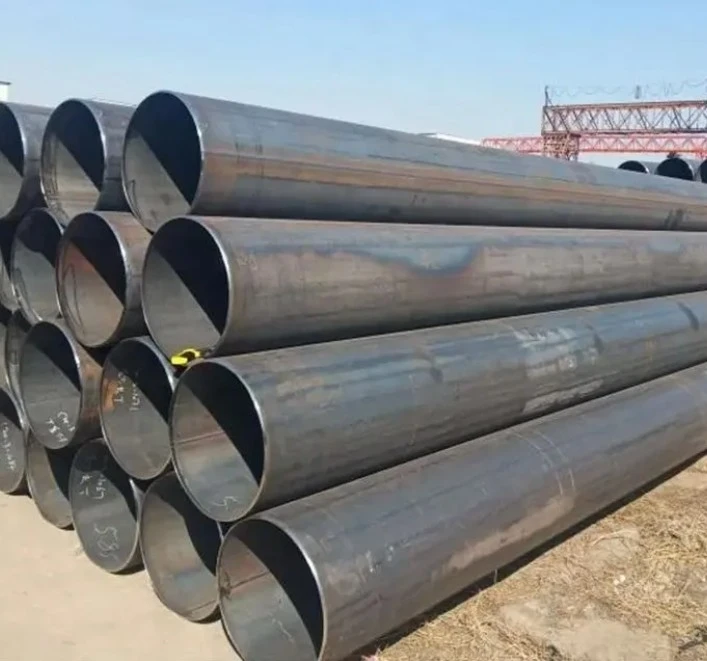
As a carbon steel pipe supplier, I understand the importance of providing high - quality pipes and accurate technical information to our customers. By working closely with engineers, installers, and end - users, we can ensure that the carbon steel pipes are installed correctly and perform optimally in their intended applications.
If you are in the market for carbon steel pipes or need more information about how the expansion coefficient affects pipe installation, please feel free to contact us. We are here to help you make the right choices for your project and ensure a successful installation.
References
- ASME B31.1 - Power Piping Code
- ASME B31.3 - Process Piping Code
- "Handbook of Thermal Expansion" by John R. Barclay